From Rancho Land to Coastal Village: Carmel Before Incorporation
Carmel-by-the-Sea may be famous today for storybook cottages, white sand beaches, art galleries, courtyards, cypress trees, and some of the most desirable real estate on the California coast, but the village did not appear overnight. Before Carmel became an incorporated city in 1916, the land passed through several important historical chapters: Indigenous homeland, Spanish mission influence, Mexican-era land grants, ranching, early land speculation, and finally the dream of a coastal village shaped by nature, art, and architecture.
This is the third article in our Carmel-by-the-Sea history series. The first article explored Carmel Mission and the Spanish colonial roots of Carmel-by-the-Sea. The second article looked at the First People of Carmel and the Indigenous history of the Monterey Peninsula. This article moves forward into the period between the mission era and Carmel’s official incorporation as a city. Explore the complete history of Carmel-by-the-Sea, from Indigenous roots and Carmel Mission to the artist colony, storybook cottages, Carmel Beach, preservation, and luxury real estate.
It is during this in-between period that the future village began to take shape. Carmel’s later identity as a quiet, artistic, architecturally distinctive seaside community can be traced to decisions made before incorporation, when early developers and residents imagined something very different from a conventional resort town.
.jpg)
Oriana Weatherbee Day, Public domain, via Wikimedia Commons
Carmel After the Mission Era
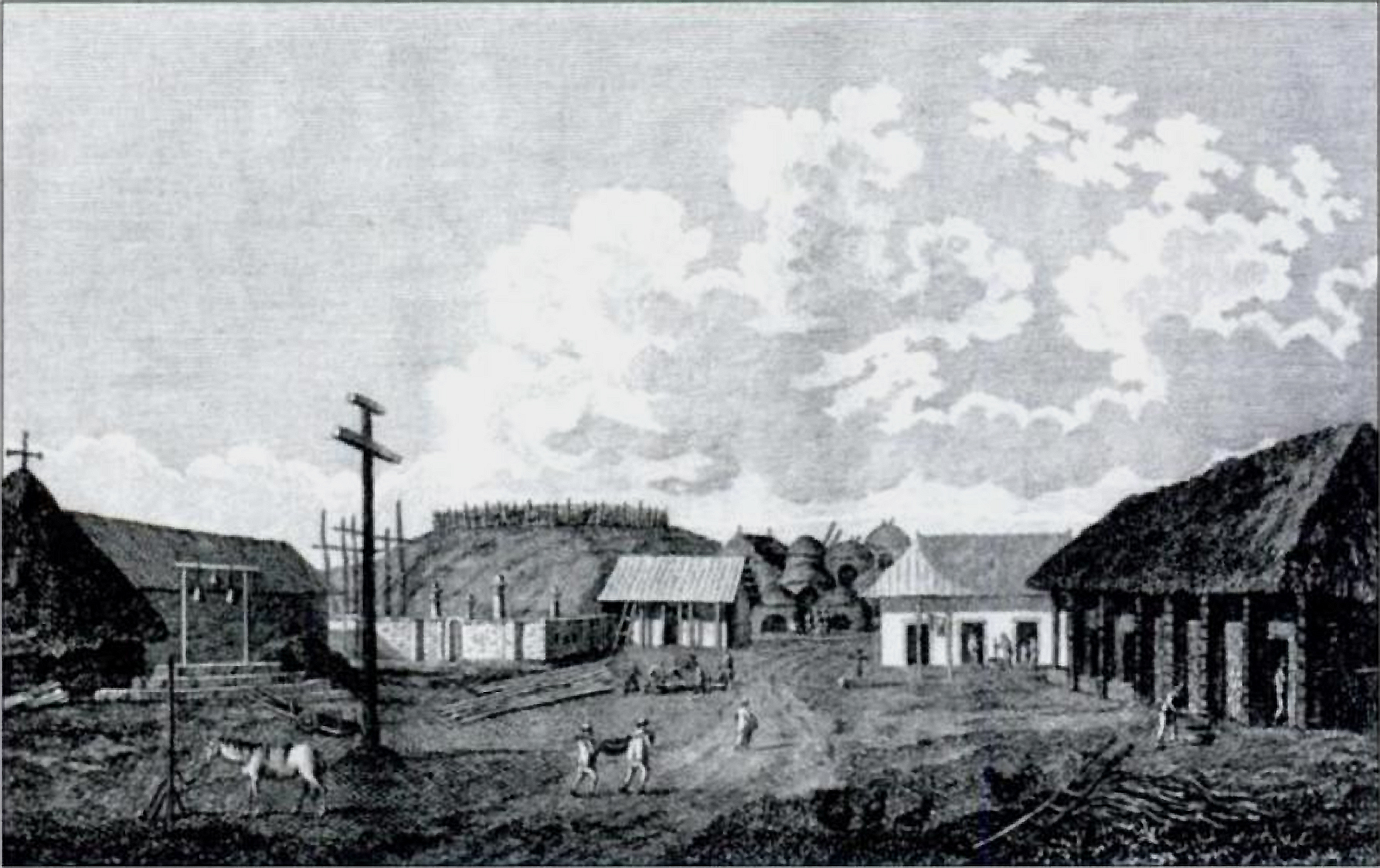
The Spanish mission period gave Carmel one of its most important landmarks, Mission San Carlos Borromeo de Río Carmelo, commonly known as Carmel Mission. But the later story of Carmel-by-the-Sea required a new set of forces: land ownership, ranching, settlement patterns, transportation access, and the growing appeal of the California coast.
After Mexican independence from Spain, mission lands throughout California were secularized, and large land grants became a defining feature of the Mexican rancho period. Across the Monterey Peninsula and Big Sur coast, these ranchos shaped patterns of ownership, agriculture, grazing, and later subdivision.
The Carmel area was not yet a village in the modern sense. It was a landscape of river, beach, pine forest, coastal scrub, mission lands, ranching activity, and scattered settlement. What would eventually become Carmel-by-the-Sea still had to be imagined, mapped, promoted, built, and protected.
The Rancho Landscape Around Carmel
To understand Carmel before incorporation, it helps to understand the rancho landscape that surrounded it. Mexican land grants in the greater Carmel and Big Sur region helped define ownership patterns that would influence later development.
One of the important Mexican land grants south of the Carmel River was Rancho San José y Sur Chiquito, which included Point Lobos and extended south along the coast. Historical accounts describe the grant as covering land south of the Carmel River, including coastal and mountain areas connected with San Jose Creek, Malpaso Creek, Soberanes Creek, Garrapata Creek, and the Point Lobos region.
These rancho lands were used for a mixture of ranching, dairy, farming, quarrying, whaling, fishing, and later land speculation. This matters because Carmel’s later development did not happen in isolation. It emerged from a broader landscape where large landholdings, coastal resources, and changing ownership patterns were already shaping the future of the Monterey Peninsula.
Greghenderson2006, CC BY-SA 4.0 <https://creativecommons.org/licenses/by-sa/4.0>, via Wikimedia Commons
Mission Ranch and the Carmel River Setting
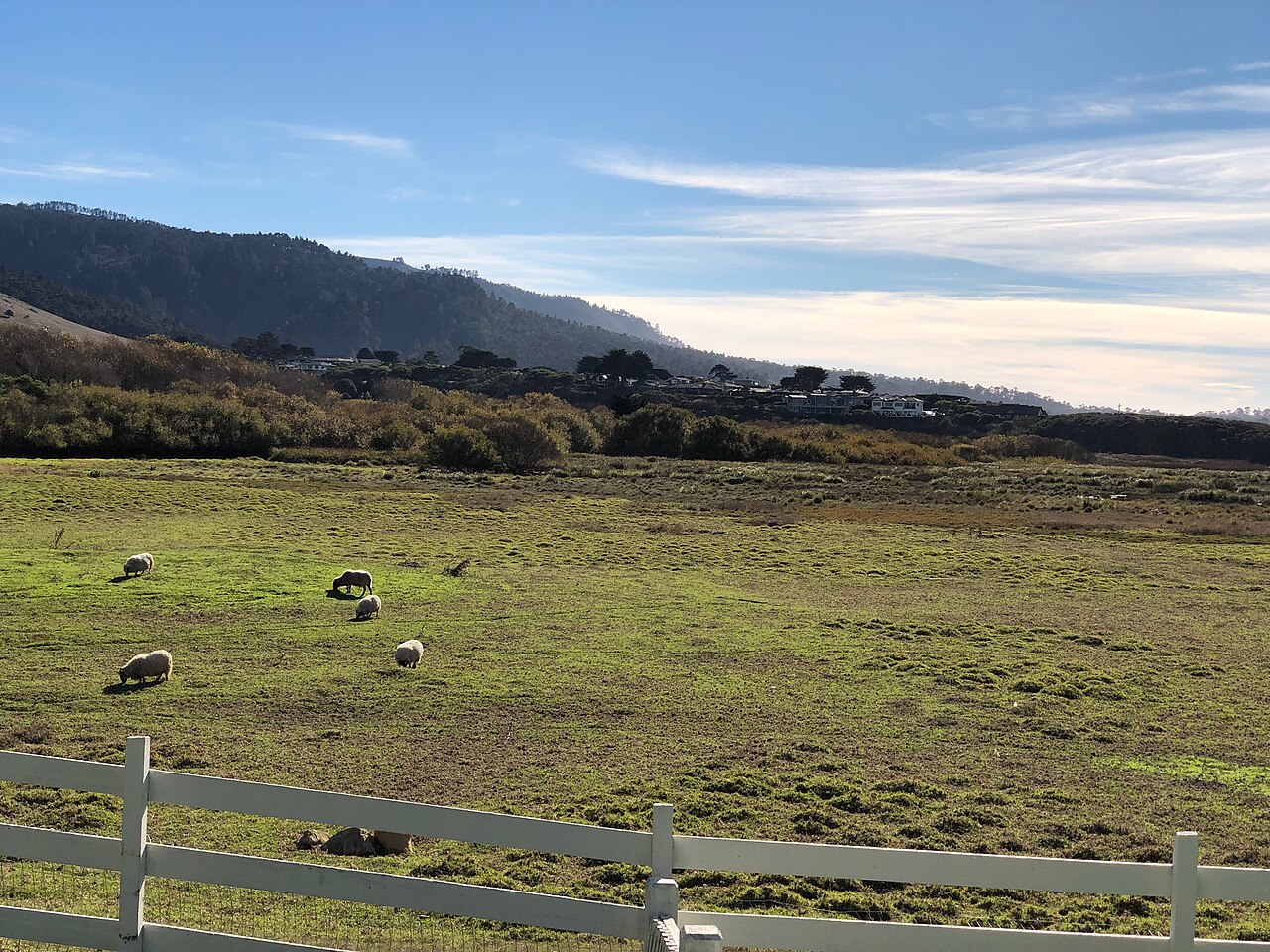
One of the most visible reminders of Carmel’s ranching past is Mission Ranch, located near the Carmel River and Carmel Mission. Long before Carmel-by-the-Sea became known as a refined coastal village, portions of the surrounding area were used for grazing and agricultural purposes.
The Carmel River area was especially important because it connected the mission, the valley, the coast, and the future village. The same natural qualities that made the area significant to Indigenous people and attractive to Spanish missionaries also made it valuable in the rancho and early settlement periods: water, fertile land, access to the coast, and a dramatic natural setting.
Today, this landscape remains part of Carmel’s appeal. Buyers looking at Carmel real estate are often responding to more than a home. They are responding to the way the village sits between ocean, river, valley, forest, and historic landmarks.
Artwork created by John Sykes, Public domain, via Wikimedia Commons
Early Settlement and the Idea of a Village
By the late 19th century, Carmel was still not the polished village we recognize today. The area had natural beauty, but it lacked the developed streets, cottages, commercial core, and civic identity that would later define Carmel-by-the-Sea.
Small-scale settlement began to appear, and the idea of Carmel as a village gradually became more realistic. Early homes, boarding houses, paths, and land sales helped create the beginnings of a community. But the transformation from coastal land to village required a more deliberate vision.
That vision would arrive in the early 20th century with the Carmel Development Company.
The Carmel Development Company and the Birth of a Village Vision
In 1902, J. Frank Devendorf and Frank H. Powers founded the Carmel Development Company, a real estate development firm that played a central role in shaping Carmel-by-the-Sea. Their approach was not simply to sell lots. They promoted Carmel as a place for people who valued natural beauty, artistic life, simplicity, and a close relationship with the landscape.
This was a crucial distinction. Carmel could have developed into a more conventional seaside subdivision. Instead, its early identity leaned toward a village in the forest by the sea, with irregular paths, modest cottages, artistic residents, and a strong appreciation for the natural environment.
Carmel’s official historical timeline describes the dream of Carmel as a “village-by-the-sea” as something that developed slowly at the beginning of the 20th century. That dream became one of the most important turning points in Carmel’s history.
J. Frank Devendorf and Carmel’s Early Identity
J. Frank Devendorf is one of the key figures in Carmel’s pre-incorporation story. He helped shape both the physical and cultural direction of the village. Rather than marketing Carmel only as a land investment, Devendorf and his associates helped position it as a place for writers, painters, musicians, thinkers, and people seeking a more natural and creative way of life.
That early positioning is one reason Carmel became associated with artists and writers so quickly. The village was not built around heavy industry, a port, or a large commercial district. It was marketed and experienced as a retreat into beauty, nature, and creative life.
This identity still influences Carmel today. Many buyers who fall in love with Carmel are not simply looking for square footage or conventional luxury. They are looking for charm, privacy, texture, walkability, architecture, and emotional connection. Those qualities were embedded in Carmel’s early development story before the city was ever incorporated.
The Role of Artists, Writers, and Early Residents
Even before incorporation, Carmel was becoming known as a place that attracted creative people. Artists, writers, poets, and independent-minded residents were drawn to the village’s natural beauty, affordability at the time, and unusual freedom from the rigid structure of larger towns.
This early creative population helped establish the atmosphere that later made Carmel famous. The village became known for theatrical performances, literary culture, painting, music, handmade homes, informal lanes, and a strong sense of local identity.
The artist colony deserves its own article in this series, but it is important to understand that its roots were already present before incorporation. Carmel’s creative identity did not arrive after the city became official. It helped create the need for a civic structure in the first place.
Why Carmel Did Not Become a Typical Beach Town
Many California coastal communities developed around boardwalks, amusement districts, large hotels, commercial piers, rail depots, or resort infrastructure. Carmel took a different path.
Its earliest village identity was smaller, quieter, and more intimate. The natural setting was not treated merely as a backdrop for commercial development. It became part of the village’s defining character. Trees, beach, courtyards, cottage scale, and walkability became more important than grand boulevards or high-density resort construction.
This distinction is central to Carmel’s modern real estate value. Carmel’s charm is not accidental. It comes from a long pattern of choices that favored village character over conventional growth.
Carmel’s Early Built Environment
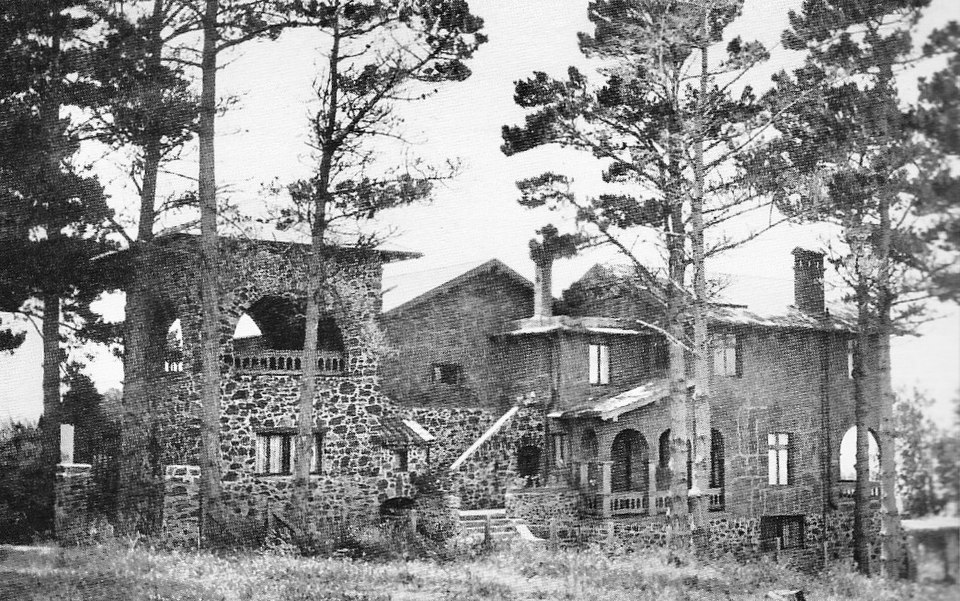
Before incorporation, Carmel’s early built environment was modest but important. Small cottages, simple commercial buildings, artist studios, gathering places, and early civic structures began to give the village shape. Many of these buildings reflected practical needs, limited budgets, and a desire to live close to nature.
The result was not polished uniformity. It was texture. Carmel’s architecture developed through variety, individuality, and adaptation to the landscape. That is one of the reasons the village still feels so different from more formulaic coastal communities.
Later, builders and designers such as Michael J. Murphy and Hugh Comstock would help define Carmel’s cottage and storybook architecture. But the foundation was laid before incorporation, when the village first embraced the idea that homes could be personal, artistic, and deeply connected to place.
La Playa Hotel Circa 1906 -Photograph courtesy of the Harrison Memorial Library Collection, Public domain, via Wikimedia Commons
The Road Toward Incorporation
By the early 1900s, Carmel had grown from an idea into a functioning community. The population was still small, but the village had residents, businesses, cultural life, homes, and a distinct identity. With growth came the need for more formal civic organization.
Carmel-by-the-Sea was incorporated as a city in 1916. Incorporation gave the village a local government structure, but the essential identity of Carmel had already been formed. By then, Carmel was already known as a seaside village shaped by nature, art, individuality, and resistance to conventional urban development.
That is why the pre-incorporation period is so important. It explains how Carmel became Carmel before it became an official city.
How the Pre-Incorporation Era Still Shapes Carmel Real Estate
For modern buyers and sellers, Carmel’s pre-incorporation history is more than background information. It helps explain why Carmel real estate behaves differently from many other luxury markets.
In Carmel, value is often tied to character. A home’s setting, architectural charm, proximity to the village, relationship to the beach, and sense of history can matter as much as size or modern amenities. Buyers often pay premiums for homes that feel authentically Carmel rather than simply large or new.
That is especially true in areas close to the village core, Carmel Beach, the Golden Rectangle, and historic residential pockets where the original village character is most strongly felt. The limited supply of homes, the small-lot pattern, and the long-standing preservation ethic all trace back to Carmel’s early development choices.
Explore current Carmel homes for sale to see how the village’s history, architecture, and coastal setting continue to shape buyer demand.
From Land to Lifestyle
The transformation of Carmel from rancho land to coastal village was not just a real estate development story. It was a lifestyle story.
Early Carmel attracted people who valued beauty, quiet, creativity, nature, and community. Those values shaped the physical village and created the foundation for Carmel’s modern reputation. The storybook cottages, hidden courtyards, walkable lanes, and unusually strong sense of place all grew from the same roots.
That is why Carmel remains so difficult to replicate. You cannot simply build another Carmel by creating expensive homes near a beach. Carmel’s value comes from accumulated history, cultural identity, architectural individuality, and decades of restraint.
Why This Chapter Matters in the Carmel History Cluster
This chapter connects the mission era to the village era. Without the rancho and early development period, the story would jump too abruptly from Carmel Mission to the artist colony. But the land ownership patterns, ranching history, early settlement, and Carmel Development Company vision are what made the later artist colony possible.
In the next article in this series, we will explore one of the most defining chapters in Carmel’s identity: the rise of Carmel’s artist colony and how writers, painters, performers, and independent thinkers helped shape the village’s cultural soul.
Carmel’s official history timeline
Learn more about the vision of J. Frank Devendorf
Thinking About Buying or Selling in Carmel?
If you are considering buying or selling a home in Carmel-by-the-Sea, understanding the village’s history can help you better understand why certain properties command such strong emotional and financial appeal. Carmel’s most desirable homes are often valuable not only because of location, but because they reflect the character, architecture, and sense of place that make the village unique.
The Monterey Peninsula Home Team helps buyers and sellers navigate the Carmel real estate market with local knowledge, neighborhood insight, and a deep appreciation for what makes this community so special.
Explore current Carmel homes for sale, learn more about Carmel Golden Rectangle homes for sale, or browse Carmel oceanfront real estate to see how Carmel’s history, village setting, and coastal lifestyle continue to shape one of California’s most distinctive housing markets.