


The Complete History of Carmel-by-the-Sea, California
Carmel-by-the-Sea is one of California’s most beloved coastal villages, known for its storybook cottages, white sand beach, art galleries, hidden courtyards, walkable village center, and some of the most desirable real estate on the Monterey Peninsula. But Carmel’s appeal did not happen by accident. It is the result of a long and layered history shaped by Indigenous people, Spanish mission settlement, Mexican-era land grants, artists, writers, builders, preservationists, and generations of residents who protected the village’s unusual character.
Today, Carmel-by-the-Sea is often described as a one-square-mile fairytale village with restaurants, wine tasting, boutique shopping, art galleries, a white-sand beach, and stunning scenery all within walking distance. But behind that postcard image is a much deeper story.
This complete history of Carmel-by-the-Sea brings together the major chapters that shaped the village: the Indigenous landscape, Carmel Mission, the rancho period, early village development, the artist colony, Robinson Jeffers and Tor House, storybook architecture, the no-address tradition, Carmel Beach and Scenic Road, historic preservation, and the evolution of Carmel into one of California’s most distinctive luxury real estate markets.
For anyone interested in Carmel real estate, this history matters. Carmel’s value is not based only on location, square footage, or ocean views. Its value is tied to history, architecture, walkability, scarcity, preservation, and the emotional appeal of living in a village that still feels deeply connected to its past.

Jose Cardero, Public domain, via Wikimedia Commons
Before Carmel-by-the-Sea: The First People of the Carmel Area
The history of Carmel does not begin with the village, the mission, or the cottages. Long before European settlement, the Carmel River, Carmel Bay, coastal terraces, oak woodlands, hills, and nearby marine environment were part of an Indigenous cultural landscape.
The Carmel and Monterey Peninsula region is historically connected with Indigenous peoples including the Rumsen Ohlone, Esselen, Salinan, and other Native communities of the Central Coast. These communities understood the land through seasonal movement, food gathering, resource stewardship, cultural practice, and deep relationship with the natural world.
For Native people, Carmel was not a scenic destination or future real estate market. It was homeland. The river, beach, wetlands, oak groves, grasslands, and coast formed a living landscape that supported food, tools, trade, ceremony, and community identity.
Understanding this first chapter is essential because it corrects the common misconception that Carmel’s history began with Spanish colonization. Carmel Mission is important, but it was built into a landscape that already had a long human history.
Read more: The First People of Carmel: Indigenous History Before Carmel-by-the-Sea
 Captain William Smyth, Public domain, via Wikimedia Commons
Carmel Mission and the Spanish Colonial Roots of Carmel
Carmel Mission, officially known as Mission San Carlos Borromeo de Río Carmelo, is one of the most important landmarks in Carmel history. Founded in 1771 by Father Junípero Serra, it was the second of the 21 Alta California missions and became a major religious, cultural, and architectural site in early California.
The mission was originally associated with Monterey, but Serra moved it to the Carmel River area because the location offered better agricultural potential, fresh water, and greater separation from the Presidio of Monterey. That relocation helped give Carmel a historic identity distinct from Monterey.
Carmel Mission is a beautiful landmark, an active parish, and a major cultural destination. It is also part of a complicated colonial history. The mission system deeply affected Indigenous communities through conversion efforts, labor systems, cultural disruption, disease, displacement, and loss of autonomy.
A full understanding of Carmel Mission requires holding both truths at once: it is one of California’s most historically significant mission sites, and it is also part of a colonial system that profoundly changed Native life.
Read more: Carmel Mission History: The Spanish Colonial Roots of Carmel-by-the-Sea
From Rancho Land to Coastal Village
After the mission era, Carmel and the surrounding region moved into the Mexican rancho period. Large land grants, ranching, grazing, agriculture, coastal resource use, and shifting ownership patterns shaped the landscape that would eventually become Carmel-by-the-Sea.
Before incorporation, Carmel was not yet the refined village we know today. It was a landscape of beach, pine forest, Carmel River, mission lands, ranching activity, scattered settlement, and early development ambition.
The early 20th century brought a turning point. J. Frank Devendorf and Frank H. Powers, through the Carmel Development Company, helped promote the idea of Carmel as a village-by-the-sea. Their vision emphasized natural beauty, art, simplicity, and a more personal relationship with the landscape.
This early development vision mattered. Carmel could have become a conventional seaside subdivision. Instead, it became a place that attracted artists, writers, teachers, performers, and people seeking a quieter, more creative life near the coast.
Read more: From Rancho Land to Coastal Village: Carmel Before Incorporation

Carmel’s Artist Colony and Creative Identity
One of the defining chapters in Carmel history is the rise of its artist colony. By the early 1900s, Carmel had begun to attract writers, painters, poets, performers, musicians, photographers, and independent-minded residents who were drawn to its natural beauty and informal village life.
The 1906 San Francisco earthquake helped accelerate this movement as artists and writers displaced from the Bay Area looked for new places to live and work. Carmel offered affordability by the standards of the time, dramatic scenery, a supportive creative community, and distance from conventional city life.
Figures associated with Carmel’s literary and artistic world include George Sterling, Mary Austin, Jack London, Robinson Jeffers, Upton Sinclair, Sinclair Lewis, and many others. Carmel’s cultural organizations, galleries, performances, and outdoor theater traditions helped make art part of daily village life.
This artistic identity still matters today. Carmel’s real estate appeal is tied not only to location, but to the feeling that the village has a creative soul. Buyers respond to charm, individuality, architecture, gardens, courtyards, and the sense that Carmel is more than a luxury beach town.
Read more: Carmel’s Artist Colony: How Writers, Painters, and Bohemians Shaped the Village
Robinson Jeffers, Tor House, and Carmel’s Literary Legacy
Robinson Jeffers is one of the most important literary figures associated with Carmel-by-the-Sea. His home, Tor House, and the adjacent Hawk Tower remain among the village’s most meaningful cultural landmarks.
Jeffers built Tor House near Carmel Point using granite boulders gathered from the rocky shore of Carmel Bay. The home and tower became physical expressions of the same landscape that shaped his poetry: stone, sea, wind, hawks, cypress, and the power of the Central Coast.
Tor House is not just a preserved residence. It is a literary landmark where Jeffers wrote major works and where Carmel’s relationship between architecture, landscape, and art becomes visible in stone.
The Robinson Jeffers Tor House Foundation continues to preserve Tor House, Hawk Tower, and the surrounding gardens, allowing visitors to experience one of Carmel’s most important links between literature and place.
Read more: Robinson Jeffers, Tor House, and Carmel’s Literary Legacy
 Carmel Architecture: Cottages, Storybook Homes, and Village Character
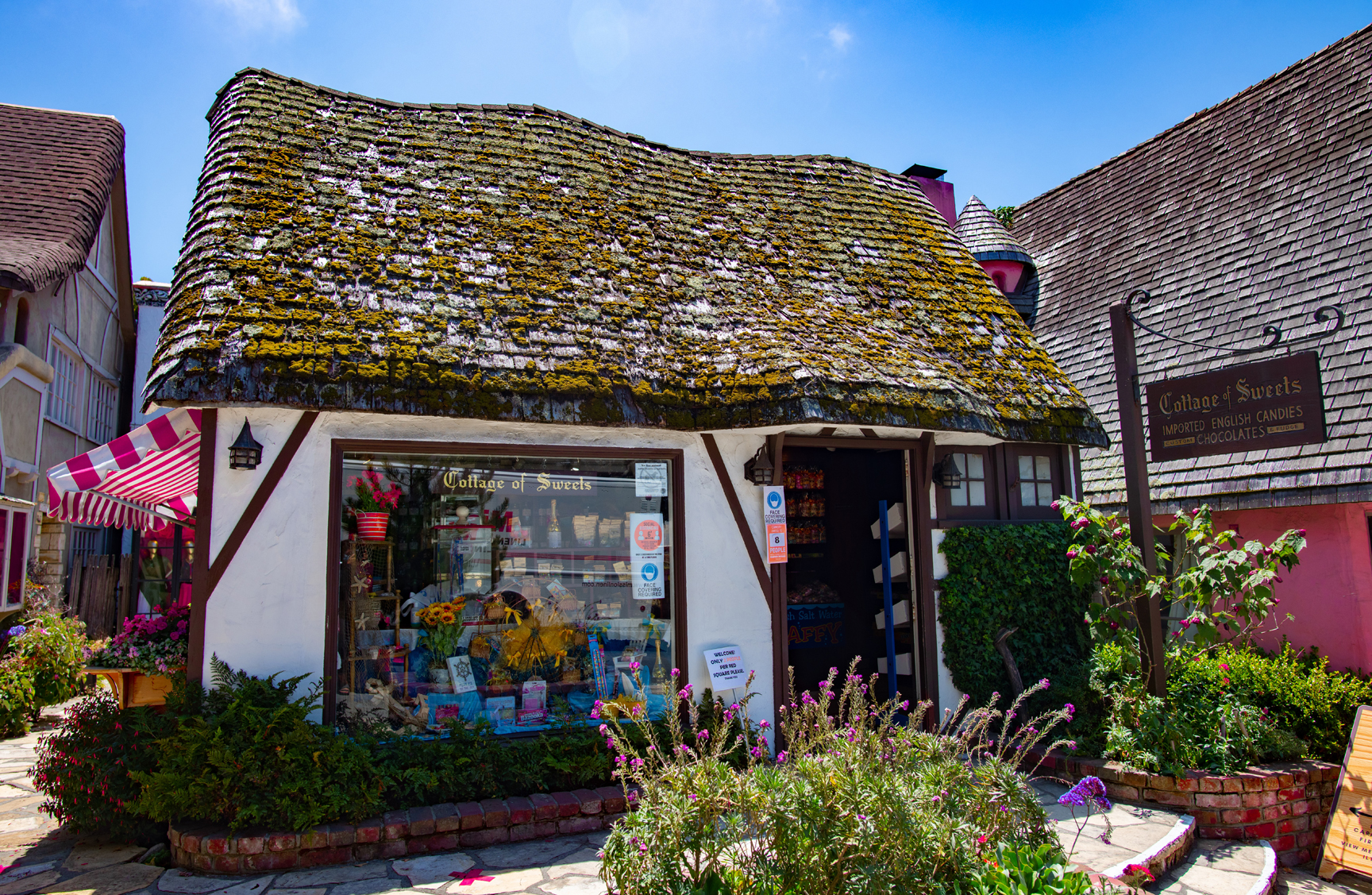
Carmel’s architecture is one of the main reasons the village feels so distinctive. The built environment is defined by cottages, stone chimneys, garden walls, arched doors, irregular rooflines, hidden courtyards, wood details, textured plaster, mature trees, and homes that often feel handcrafted rather than standardized.
Michael J. Murphy was one of Carmel’s most important early builders. The First Murphy House, built in 1902, remains an important early architectural landmark. Later, Hugh Comstock became famous for storybook cottages that helped define Carmel’s fairytale architectural identity.
Comstock’s cottages, including homes associated with the Hansel and Gretel names, helped transform Carmel’s artistic spirit into physical architecture. These homes were whimsical, romantic, intimate, and deeply connected to the village’s creative culture.
Architecture is also central to Carmel real estate value. In many luxury markets, bigger is often assumed to be better. In Carmel, charm, authenticity, scale, garden privacy, walkability, and architectural character can matter just as much as square footage.
Read more: The Architecture of Carmel-by-the-Sea: Cottages, Storybook Homes, and Village Character
Carmel’s Famous No-Address Tradition and the New Street Numbers
For generations, one of Carmel-by-the-Sea’s most famous quirks was that homes in the village did not have traditional numbered street addresses. Instead, properties were identified by house names, cross streets, directional descriptions, landmarks, and local knowledge.
This tradition became part of Carmel’s identity. It reinforced the idea that Carmel was not trying to be ordinary. Along with the village’s cottages, P.O. Box mail tradition, hidden courtyards, and resistance to standardization, the lack of street numbers became part of Carmel’s charm.
Recently, however, Carmel-by-the-Sea has moved toward implementing a street address system. The City has framed the change as “New Numbers. Same Traditions,” emphasizing that the addition of street numbers does not mean home mail delivery or residential mailboxes. The P.O. Box tradition at the downtown post office is expected to continue.
This change illustrates Carmel’s ongoing balancing act: how to remain a distinctive historic village while adapting to modern needs such as emergency response, mapping technology, insurance, deliveries, property identification, and building-code compliance.
Read more: Why Carmel Has No Street Addresses: The Quirks That Made the Village Famous
 Carmel Beach and Scenic Road
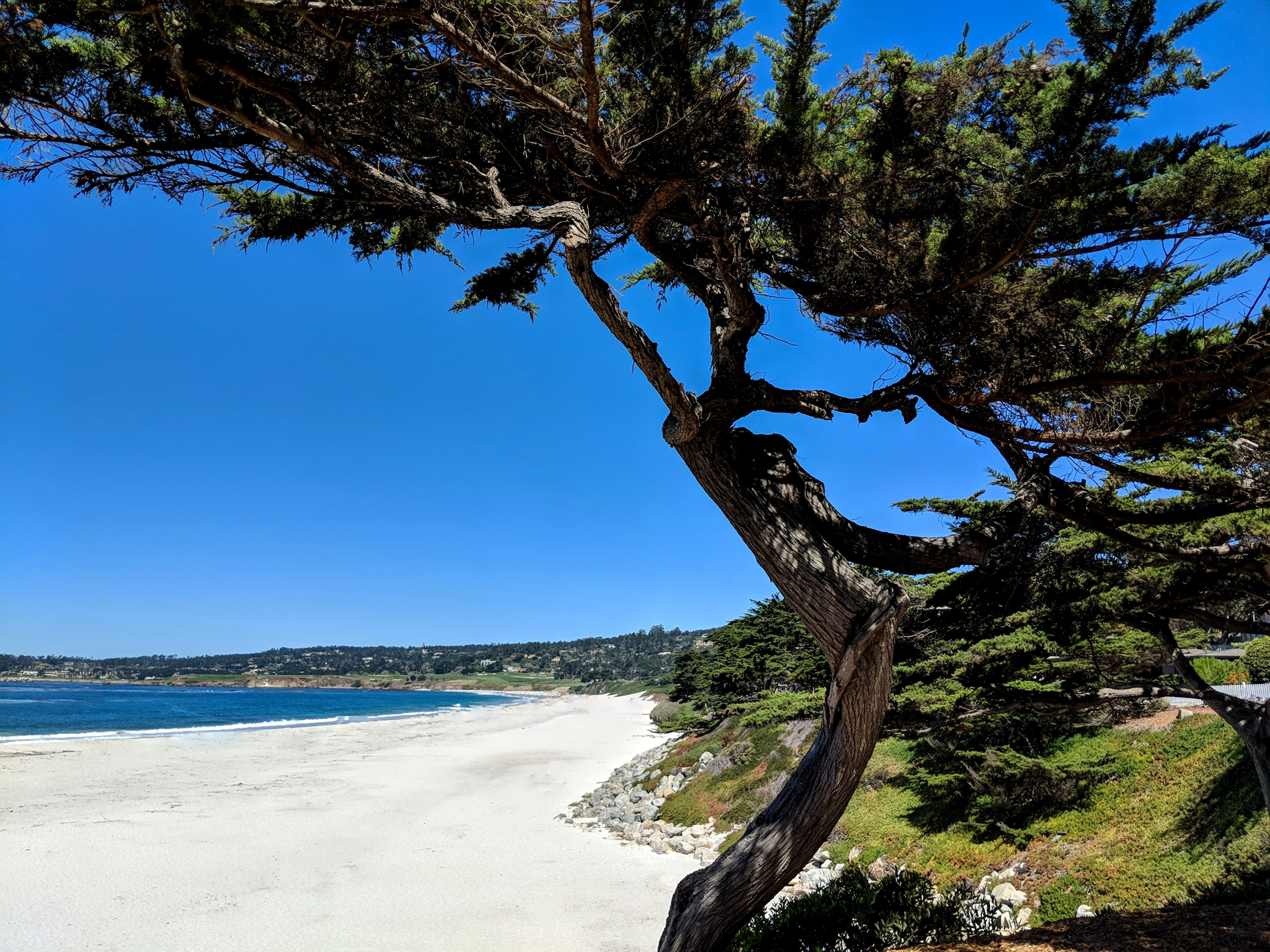
Carmel Beach is one of the defining features of the village. At the foot of Ocean Avenue, the town opens directly toward white sand, surf, sunset, and Carmel Bay. This direct village-to-beach relationship is one of the most powerful reasons people fall in love with Carmel.
Scenic Road extends the coastal experience south along Carmel Bay toward Carmel Point and the Carmel River area. The bluffside pathway, beach access points, benches, cypress trees, stone walls, and coastal views all help make Scenic Road one of the village’s most memorable settings.
Carmel Beach is more than an amenity. It functions almost like the village’s front yard. Residents walk dogs, gather for sunsets, meet friends, and incorporate the beach into daily life.
From a real estate perspective, beach proximity is a major value driver. Homes near Carmel Beach, Scenic Road, the Golden Rectangle, and Carmel Point benefit from one of Carmel’s strongest lifestyle promises: the ability to live close to the village and the sand at the same time.
Read more: Carmel Beach and Scenic Road: How the Coastline Defined Carmel’s Identity
Carmel’s Preservation Ethic
Carmel still feels like Carmel because generations of residents, city leaders, preservationists, builders, and property owners made choices to protect its character. That preservation ethic includes historic preservation, design review, tree protection, small-scale planning, coastal restraint, and resistance to over-commercialization.
The City’s historic preservation program is designed to identify and preserve historic resources that reflect Carmel’s architectural, cultural, historic, and prehistoric identity. Exterior changes to potentially historic properties may require review before development approval.
Carmel’s design review standards also help maintain the village’s special character as a compact residential community shaped by its natural setting and architectural variety. The goal is not uniformity. Carmel is known for diversity. The goal is compatibility, scale, and respect for the village environment.
This preservation ethic protects more than buildings. It protects value. The charm, scarcity, architecture, tree canopy, walkability, beach access, and emotional appeal that buyers value today are all supported by Carmel’s long-standing resistance to becoming generic.
Read more: Carmel’s Preservation Ethic: How the Village Protected Its Character
From Bohemian Village to Luxury Real Estate Market
Carmel’s transformation into a luxury real estate market is one of the most interesting parts of its modern history. The village did not become valuable by becoming generic luxury. It became valuable by preserving the qualities that made it unusual.
The same characteristics that attracted artists and writers more than a century ago now attract luxury buyers: beauty, individuality, architecture, landscape, creativity, walkability, beach access, and escape from the ordinary.
Carmel’s market is driven by limited supply and high emotional demand. Buyers are often seeking not only a home, but a feeling: a cottage near the beach, a garden behind a gate, a walk to dinner, a sunset on the sand, a view of Carmel Bay, or a place that feels rooted in history.
This is why Carmel real estate behaves differently from many conventional luxury markets. In Carmel, a home’s story can be as important as its specifications.
Read more: From Bohemian Village to Luxury Real Estate Market
Why Carmel’s History Matters to Buyers
For buyers, Carmel’s history provides context for value. A Carmel cottage is not just an old house. A home near the beach is not just a location. A property in the Golden Rectangle is not just a point on a map. Each is part of a larger village story.
Understanding that story helps buyers make better decisions. It explains why walkability matters so much, why architecture affects demand, why preservation rules protect value, why beach proximity carries a premium, and why smaller homes can sometimes create stronger emotional appeal than larger properties outside the village core.
Buyers should also understand that Carmel is a micro-location market. A few blocks can make a meaningful difference in walkability, views, sun exposure, traffic patterns, beach access, and overall feel.
Why Carmel’s History Matters to Sellers
For sellers, Carmel’s history is a marketing advantage. The strongest Carmel property marketing does not simply list square footage, bedrooms, baths, and lot size. It explains why the home matters within the village.
A seller should consider the home’s story: Is it a classic cottage? Does it have Carmel stone? Is it near the beach? Does it sit behind a private garden gate? Is it walkable to town? Does it reflect the village’s architecture, preservation ethic, or artist-colony charm?
In Carmel, emotional presentation matters. Photography, staging, copywriting, garden preparation, and neighborhood storytelling can all influence how buyers experience a property.
Important Carmel Real Estate Areas Connected to This History
Carmel’s history shows up differently across the village and surrounding areas. The Golden Rectangle is strongly associated with walkability, beach proximity, and classic Carmel charm. Carmel Point connects coastal setting, literary history, Tor House, and access to Carmel Beach and Carmel River State Beach. Scenic Road and nearby streets offer some of the village’s most powerful coastal settings. The downtown village core connects galleries, restaurants, courtyards, shops, and daily walkability.
For buyers interested in the classic village lifestyle, explore Carmel Golden Rectangle homes for sale. For those drawn to the coastline, browse Carmel oceanfront real estate. For a broader view of the market, view all current Carmel homes for sale.
How Carmel Fits Into the Greater Monterey Peninsula
Carmel-by-the-Sea is one of the signature communities of the Monterey Peninsula, but its appeal is strengthened by its relationship to nearby destinations. Pebble Beach, Pacific Grove, Monterey, Carmel Valley, Big Sur, and Point Lobos all contribute to the lifestyle that makes this region so desirable.
Carmel offers village charm and beach walkability. Pebble Beach offers world-famous golf, gated estates, and dramatic coastline. Pacific Grove offers Victorian character, coastal recreation, and small-town charm. Monterey offers history, the harbor, Cannery Row, and cultural depth. Carmel Valley offers sunshine, acreage, wineries, and a more rural lifestyle.
For many buyers, Carmel is the emotional center of a larger Monterey Peninsula lifestyle. It offers immediate village charm while keeping the rest of the Peninsula close.
The Enduring Appeal of Carmel-by-the-Sea
The story of Carmel-by-the-Sea is not one simple history. It is a layered story of land, water, architecture, culture, creativity, preservation, and market evolution.
Its appeal begins with the natural landscape: Carmel Bay, Carmel River, white sand, cypress, oaks, and coastal light. It deepens through Indigenous history, the mission era, rancho lands, early village development, and the artist colony. It becomes visible in cottages, stone walls, gardens, courtyards, and the village’s walkable scale. It is protected through preservation, design review, and local traditions. And it continues today in a real estate market where buyers are drawn to charm, scarcity, architecture, beach proximity, and emotional connection.
Carmel-by-the-Sea became valuable because it remained itself.
Additional Information regarding the History of Carmel-by-the-Sea
Carmel Mission’s official history
Carmel-by-the-Sea street address information
One-square-mile fairytale village
Thinking About Buying or Selling in Carmel?
If you are considering buying or selling a home in Carmel-by-the-Sea, understanding the history of the village can help you better understand the market. In Carmel, value is shaped by location, architecture, walkability, beach proximity, preservation, scarcity, and story.
The Monterey Peninsula Home Team helps buyers and sellers navigate the Carmel real estate market with local knowledge, neighborhood insight, and a deep appreciation for what makes this community so special.
Explore current Carmel homes for sale, learn more about Carmel Golden Rectangle homes for sale, or browse Carmel oceanfront real estate to see how Carmel’s history, architecture, beach lifestyle, and preservation ethic continue to shape one of California’s most desirable coastal real estate markets.