Originally published April 16, 2026; substantially updated September 2026.
_(cropped).tif.jpg)
Long before Monterey became known for Cannery Row, the Monterey Bay Aquarium and its dramatic coastline, it occupied a very different position in California.
Monterey was the political, military and commercial center of Alta California.
Under Spanish rule, governors administered an enormous frontier province from Monterey. Under Mexico, the city remained California's capital while its harbor became the territory's most important gateway for international trade.
Foreign merchants arrived by ship. Customs duties collected at Monterey helped finance the Mexican government. Diplomats and traders established themselves among Californio families. And within a remarkably small area around today's Old Monterey, decisions were being made that affected territory stretching hundreds of miles beyond Monterey Bay.
Then, in 1846, the American flag was raised at the Monterey Custom House and the city's role changed again.
Part of our Monterey History Series: This article focuses on Monterey's years as the capital of Spanish and Mexican Alta California. For the complete chronology, visit our Complete History of Monterey, California.
Many of the buildings and streets associated with this period survive within today's Old Town Monterey.
1770: Spain Establishes Monterey
Spain had claimed California generations earlier, but permanent European settlement at Monterey did not begin until 1770.
On June 3, Captain Gaspar de Portolá and Franciscan missionary Junípero Serra formally established the Royal Presidio of Monterey and Mission San Carlos Borromeo.
The mission soon moved south to the Carmel River, where it developed into today's Carmel Mission.
The Presidio remained in Monterey.
That military installation became the foundation for Monterey's political importance.
For the complete military story, see The Presidio of Monterey: History, Military Legacy and Lasting Impact.
Why Monterey?
Spain's interest in Monterey was strategic.
The protected bay provided an anchorage on a remote Pacific coastline, while the Presidio allowed Spain to reinforce its territorial claims at a time when other European powers were showing increasing interest in the North Pacific.
Monterey was isolated from the major centers of New Spain, but that isolation actually increased its administrative importance.
Someone had to govern the enormous northern territory.
Monterey became that place.
1774–1777: Monterey Becomes the Capital
The transition occurred in stages.
Monterey was designated the capital of Las Californias—Alta and Baja California—in the 1770s as Spanish administrators shifted the provincial seat northward.
On February 3, 1777, Monterey became the official capital of Alta California.
From this small settlement beside Monterey Bay, Spanish governors administered a territory extending far beyond the modern Monterey Peninsula.
The Royal Presidio served both military and governmental functions, while the settlement gradually expanded outside its walls.
What Did It Mean to Be the Capital of Alta California?
The word "capital" can create a misleading modern image.
Monterey was not filled with monumental government buildings or broad ceremonial avenues.
It remained a relatively small frontier settlement.
But politically, its importance was substantial.
The governor resided in Monterey. Military officers operated from the Presidio. Government correspondence flowed through the settlement. Ships brought officials, supplies and news from distant parts of the Spanish Empire.
The significance of Monterey came from the functions performed there—not from the size of the city.
The Spanish Capital Develops Beyond the Presidio
During Monterey's earliest years, much of the population lived within or immediately around the Presidio.
Gradually, civilian houses began appearing outside its walls.
Adobe became the characteristic building material.
Thick earthen walls moderated temperatures, while tile roofs and enclosed courtyards reflected building traditions adapted from Spanish and Mexican settlements elsewhere.
Many of the historic adobes that distinguish modern Old Monterey trace their origins to the political and commercial world that grew from the capital.
1818: The Capital Is Attacked
Monterey's isolation also made it vulnerable.
In 1818, Argentine revolutionary privateer Hipólito Bouchard attacked Monterey.
Spanish defenders withdrew, and Bouchard's forces briefly occupied the settlement and burned portions of it.
The episode was short-lived, but it demonstrated how difficult it was for Spain to defend its remote California capital.
1822: Monterey Becomes the Capital of Mexican California
Mexico won independence from Spain in 1821.
In 1822, Monterey formally transferred its allegiance to the new Mexican government.
Its political role continued.
For approximately the next quarter century, Monterey served as the political, social and economic capital of Mexican Alta California.
But Mexican rule changed Monterey in another important way.
California became increasingly open to international commerce.
Monterey Becomes an International Port
Spanish colonial policy had placed tight restrictions on foreign trade.
Independent Mexico relaxed those restrictions.
Ships from the United States, Britain and South America increasingly entered California waters looking to exchange manufactured goods for hides, tallow and other products from California's growing cattle economy.
Monterey's harbor became the principal gateway.
By 1831, Monterey had been designated California's official port of entry.
This made the capital not merely an administrative center but California's leading commercial marketplace.
The Hide and Tallow Economy
Cattle dominated much of Mexican California's economy.
Large ranchos produced hides and tallow that could be exchanged with visiting merchant ships.
Hides became so important that they were sometimes described as "California banknotes."
Ships brought manufactured goods that were difficult or impossible to produce locally.
Monterey therefore connected the ranchos of Alta California with an international maritime economy.
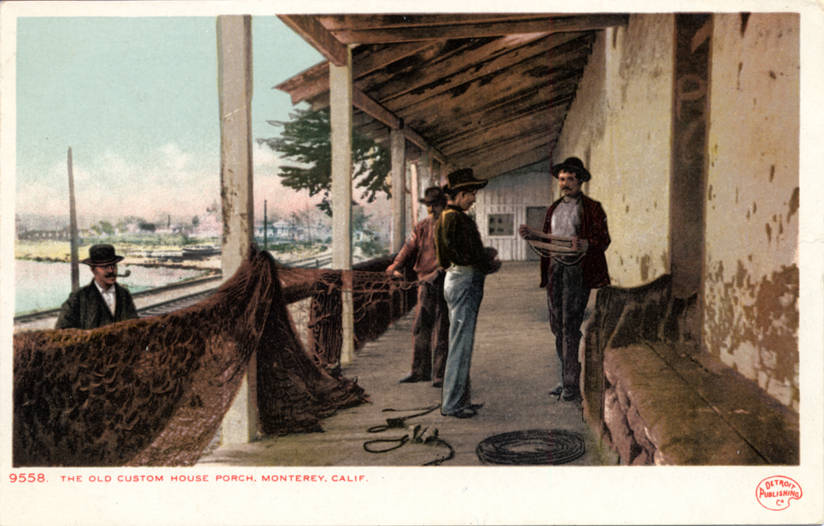
The Monterey Custom House
The most important surviving symbol of this trade is the Monterey Custom House.
The Mexican government constructed the principal portion of the building in 1827.
Foreign merchants entering California were required to declare their cargo and pay customs duties.
Those duties mattered enormously because revenue from international trade helped support the Mexican government in California.
California State Parks identifies the Custom House as California's oldest surviving government building and California Historical Landmark No. 1.
A Capital Filled With Foreign Merchants
International trade brought outsiders into what had previously been a more isolated Spanish colonial community.
British, Scottish and American merchants settled in Monterey.
Some married into prominent Californio families and became influential figures in business and politics.
This produced a society that was increasingly multicultural and internationally connected.
Monterey was geographically remote, but politically and commercially it was becoming one of the most cosmopolitan places in California.
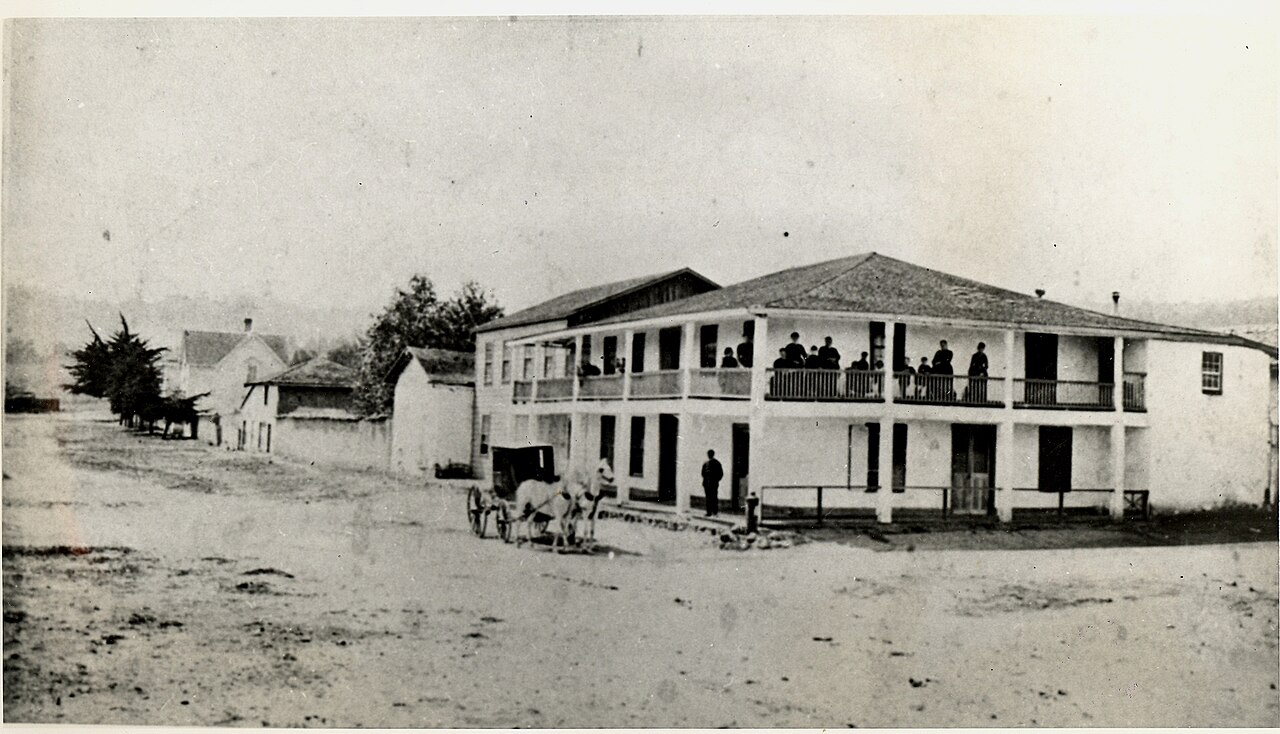
Thomas Oliver Larkin
Among the most influential American residents was Thomas Oliver Larkin.
Larkin arrived in California in the early 1830s and became a successful Monterey merchant.
His 1835 home combined traditional adobe construction with architectural ideas imported from New England.
The resulting hybrid became associated with the distinctive Monterey Colonial style.
Larkin later became the only United States consul to Mexican California, serving from his Monterey home between 1844 and 1846.
His commercial and diplomatic roles placed him directly inside the political transition that was approaching.
Monterey Becomes a Center of Diplomacy
By the 1840s, Monterey contained more than provincial government offices and merchants.
Foreign governments had an interest in California's future.
The United States maintained its consular presence through Larkin, while France also established consular representation in Monterey.
The city had effectively become the diplomatic center of a Mexican territory increasingly coveted by foreign powers.
1842: The United States Accidentally Captures Monterey
One of the strangest episodes in Monterey history occurred four years before the real American takeover.
In 1842, U.S. Commodore Thomas ap Catesby Jones mistakenly believed that the United States and Mexico had gone to war.
He sailed into Monterey, landed troops and took possession of the capital for the United States.
Then he learned there was no war.
Jones lowered the American flag, restored Mexican authority and apologized.
The incident might seem almost comic in retrospect, but it revealed how seriously the United States was already considering California's strategic importance. Monterey's official historical timeline records the mistaken seizure and subsequent apology.
1846: This Time the War Was Real
Four years later, circumstances were very different.
The United States and Mexico were at war.
Commodore John Drake Sloat, commanding the U.S. Pacific Squadron, entered Monterey Bay.
On July 7, 1846, American sailors and Marines landed and marched to the Custom House.
Sloat's proclamation was read and the American flag was raised.
The event marked the U.S. military takeover of Monterey and became one of the defining moments in California history.
1846 Was the Military Takeover—1848 Was the Legal Cession
This distinction is worth making because the two events are frequently compressed into one.
The United States established military control at Monterey in 1846.
But the Mexican-American War continued.
Mexico formally ceded California and other northern territories to the United States through the Treaty of Guadalupe Hidalgo in 1848.
Monterey therefore witnessed the practical change of government before the international treaty formally transferred sovereignty.
Monterey Under American Military Rule
Monterey continued functioning as an important government center during the American military period.
The Presidio again became central to military administration.
Thomas Larkin's house was used as military headquarters by prominent American officers.
And in August 1846, Monterey became home to The Californian, the first newspaper published in California under American rule.
1849: Monterey Helps Create the State of California
Monterey's capital era was nearly over, but its political importance had one final extraordinary chapter.
In September 1849, 48 delegates gathered at Colton Hall in Monterey.
Over the following weeks, they drafted California's first state constitution.
That constitution established the governmental framework under which California entered the Union on September 9, 1850.
Monterey was no longer destined to remain California's capital.
But the political system of the new state had been shaped within the former capital.
Why Monterey Lost Its Capital Role
California changed extraordinarily quickly after the American takeover and the discovery of gold.
Population and economic power shifted north toward San Francisco and the mining regions.
The new state capital moved several times before becoming permanently established in Sacramento.
Monterey became a comparatively quiet coastal town.
Ironically, that economic slowdown helped preserve parts of its earlier built environment.
While rapidly growing California cities replaced older structures, many of Monterey's Spanish- and Mexican-era adobes survived.
_(cropped).jpg)
The Capital Is Still Visible in Old Monterey
The strongest evidence of Monterey's former political importance is not hidden in an archive.
You can still walk through it.
The Custom House, Larkin House, Colton Hall, Royal Presidio Chapel, Pacific House and numerous historic adobes survive within or near today's Old Monterey.
California State Parks recognizes the Monterey Old Town Historic District as nationally significant for its role as the Spanish and Mexican capital of California.
That makes Old Town Monterey more than a neighborhood with historic architecture.
It occupies the actual landscape where early California government, international trade and diplomacy took place.
Why Monterey's Capital History Still Matters
Modern Monterey is known for entirely different reasons.
Cannery Row, marine science, tourism, military education and coastal recreation have all become part of its identity.
But those later chapters grew from a city that already possessed an unusual concentration of government, military and commercial infrastructure.
The capital period established Monterey as a place connected to the world beyond Monterey Bay.
That pattern continued through the Presidio, Hotel Del Monte, the fishing industry, Cannery Row and the modern institutions that followed.
To continue chronologically, read The Presidio of Monterey and Its Military Legacy, then The History of Hotel Del Monte and The Sardine Boom and Cannery Row.
Frequently Asked Questions About Monterey as the Capital of Alta California
When did Monterey become the capital of Alta California?
Monterey's capital role developed during the 1770s. It was named the capital of Las Californias in 1774 and became the official capital of Alta California in 1777.
Was Monterey the capital under both Spain and Mexico?
Yes. Monterey served as the seat of government during Spanish rule and retained its role as the political capital of Alta California after California came under Mexican authority in 1822.
Why was Monterey selected as the capital?
Its protected harbor and strategic location made Monterey valuable as both a military outpost and administrative center on Spain's remote northern Pacific frontier.
Why was the Monterey Custom House important?
The Custom House collected duties on foreign goods arriving in California. International trade became an important source of government revenue during Mexican rule, and Monterey served as California's principal port of entry.
When was the Monterey Custom House built?
California State Parks dates the principal Mexican government Custom House to 1827, although portions of the site's customs facilities have an earlier history. The building was later expanded and altered, particularly under Thomas Larkin.
What happened in Monterey in 1842?
U.S. Commodore Thomas ap Catesby Jones mistakenly believed war had begun with Mexico and briefly seized Monterey for the United States. After discovering that the countries were still at peace, he restored Mexican authority and apologized.
When did the United States take Monterey?
Commodore John D. Sloat raised the American flag at the Custom House on July 7, 1846 during the Mexican-American War, establishing U.S. military control at Monterey.
When did California officially become U.S. territory?
The United States took military control of Monterey in 1846, but Mexico formally ceded California to the United States through the Treaty of Guadalupe Hidalgo in 1848.
Was California's first constitution written in Monterey?
Yes. Delegates met at Colton Hall in Monterey from September through October 1849 and drafted the constitution under which California entered the United States in 1850.
Continue the Monterey History Series
Monterey's years as California's capital were only the beginning of the city's story.
Continue with our Presidio of Monterey history, explore the complete chronology in our Complete History of Monterey, California, or see how this early history survives in today's Old Town Monterey.
Considering a home in historic Monterey or elsewhere on the Monterey Peninsula?
Explore Monterey real estate and homes for sale or call Mark Bruno and the Monterey Peninsula Home Team at (831) 917-8190.