


Originally published April 14, 2026; substantially updated September 2026.
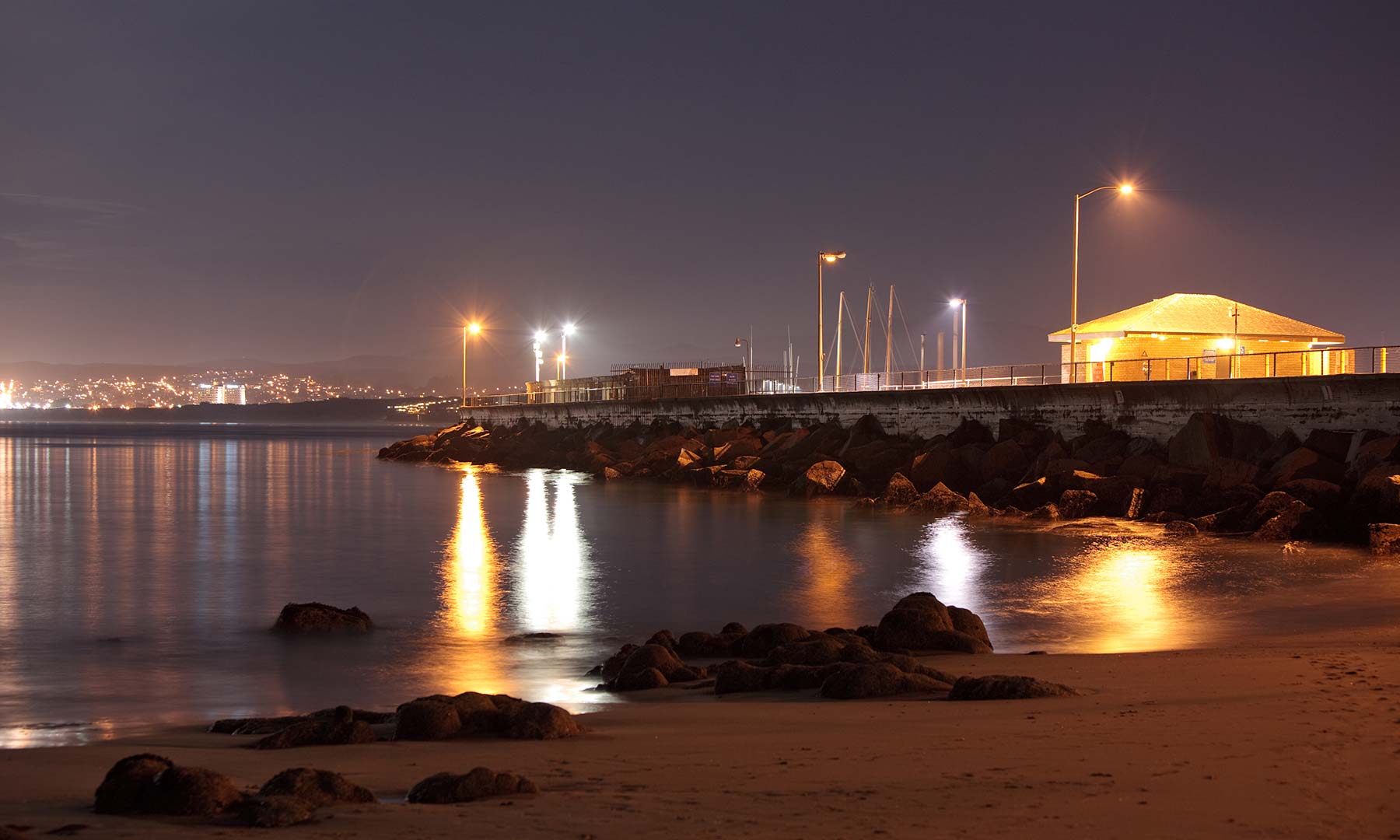
Few cities in California have played as many different roles as Monterey.
Long before California became a state, the Monterey Peninsula was home to Indigenous communities whose relationship with Monterey Bay, the surrounding forests and inland valleys extended back thousands of years.
Monterey later became a Spanish presidio and mission settlement, the capital of Alta California, Mexico's principal California port of entry, the place where the American flag was raised during the U.S. takeover of California, and the city where delegates drafted California's first state constitution.
That would be enough history for most places.
But Monterey continued reinventing itself.
A railroad-era resort helped introduce the Monterey Peninsula to wealthy travelers. Chinese, Portuguese, Japanese, Italian and other fishing communities built a maritime economy along the bay. Cannery Row became an industrial powerhouse. John Steinbeck and Ed Ricketts gave the waterfront literary and scientific significance. Military education became a permanent part of the city. And after the sardine industry collapsed, Monterey transformed its industrial shoreline into one of America's best-known centers for marine science, conservation, recreation and tourism.
Even the city's residential neighborhoods tell parts of the story.
Old adobes remain in Old Monterey. Cannery workers once lived in New Monterey. Painter Charles Rollo Peters gave his name to Peter's Gate. The Olmsted Brothers planned Alta Mesa in the 1920s. Mar Vista and Skyline Forest record Monterey's postwar expansion into its hills, while Del Monte Beach documents California's changing approach to development along an active coastline.
This guide brings those stories together.
Monterey History Series: This is the master guide to our Monterey history collection. Each major section below links to a more detailed article exploring that chapter of the city's history.
Monterey History Timeline at a Glance
- Thousands of years before European arrival: Rumsen people inhabit the Monterey Peninsula and surrounding region.
- 1602: Sebastián Vizcaíno enters and names Monterey Bay for the Viceroy of New Spain.
- 1770: Gaspar de Portolá and Junípero Serra establish the Presidio of Monterey and Mission San Carlos Borromeo.
- Mid-1770s: Monterey becomes the political capital of Spanish Alta California.
- 1818: Argentine privateer Hipólito Bouchard attacks and briefly occupies Monterey.
- 1822: Monterey comes under Mexican rule following Mexican independence from Spain.
- 1827: The Mexican government constructs the Monterey Custom House.
- 1846: Commodore John D. Sloat raises the American flag at the Custom House.
- 1849: California's Constitutional Convention meets at Colton Hall.
- 1850: California becomes the 31st state.
- 1850s: Chinese fishing communities establish an important commercial fishing industry around Monterey Bay.
- 1874: Railroad service connects Monterey with Salinas and wider California markets.
- 1880: Hotel Del Monte opens and helps establish Monterey as a major resort destination.
- 1897: Del Monte Golf Course opens, helping launch the Peninsula's golf tradition.
- Early 1900s: Large-scale canning begins transforming Monterey's waterfront.
- 1920s–1940s: Cannery Row and the sardine fleet become major economic engines.
- 1923: Marine biologist Ed Ricketts arrives on the Monterey Peninsula.
- 1945: John Steinbeck publishes Cannery Row.
- Late 1940s: Monterey's sardine fishery collapses.
- 1951: The Naval Postgraduate School begins its Monterey era on the former Hotel Del Monte property.
- 1958: Ocean View Avenue is officially renamed Cannery Row.
- 1960s–1970s: Monterey expands into hillside neighborhoods while the old industrial waterfront begins reinventing itself.
- 1970s–1980s: Coastal and environmental planning increasingly shape development along Monterey's shoreline and forested ridges.
- 1984: Monterey Bay Aquarium opens on the site of the former Hovden Cannery.
- Today: Monterey combines historic preservation, marine science, military education, tourism, residential neighborhoods and a working relationship with Monterey Bay.
Before Monterey: The Rumsen Homeland
Monterey's history did not begin with Spanish exploration.
For thousands of years before European settlement, Indigenous people lived along Monterey Bay and throughout the surrounding valleys and hills.
Historical sources commonly identify the people of the Monterey area as Rumsen or Rumsien, part of the broader group of Ohlone-speaking peoples of California's Central Coast.
The bay, oak woodlands, streams, grasslands and coastline supported communities through fishing, hunting, gathering and the careful management of natural resources.
Seasonal movement connected coastal and inland places rather than separating them into the modern boundaries we recognize today as Monterey, Carmel, Pacific Grove and surrounding communities.
European colonization changed that world catastrophically.
The mission system disrupted traditional communities and land relationships. Introduced livestock altered native landscapes and food sources. European diseases caused devastating population losses, while Indigenous people experienced forced cultural and religious change.
Any complete history of Monterey therefore has to begin before the city's official founding.
1602: Sebastián Vizcaíno Names Monterey Bay
European ships had passed the California coast earlier, but one of Monterey's defining European encounters came in 1602.
Spanish explorer Sebastián Vizcaíno entered the bay while searching for a protected harbor that could serve Spanish ships traveling between Asia and New Spain.
He named the bay Monterey in honor of the Count of Monterrey, Viceroy of New Spain.
Spain claimed the region but did not immediately establish a permanent settlement.
Nearly 170 years would pass before the Spanish returned to occupy Monterey permanently.
1770: The Presidio and Mission Are Founded
Spain's interest in Alta California intensified during the eighteenth century as it became concerned about other European powers expanding along the Pacific Coast.
In 1769, an expedition led by Gaspar de Portolá traveled north from San Diego searching for Monterey Bay.
The following year, Portolá and Franciscan missionary Junípero Serra returned to the Monterey area.
On June 3, 1770, the Spanish formally established the Presidio of Monterey and Mission San Carlos Borromeo de Monterey.
The mission soon moved south to the Carmel River, where Mission San Carlos Borromeo—today's Carmel Mission—developed separately.
The Presidio remained in Monterey.
That decision helped establish Monterey's long-term role as a military and administrative center.
Explore the military story in The Presidio of Monterey: History, Military Legacy and Lasting Impact.
Monterey Becomes the Capital of Alta California
By the mid-1770s, Monterey had become the seat of government for Spanish California.
Its protected harbor, Presidio and strategic position made the settlement a logical administrative center for Spain's distant northern province.
Governors lived and worked in Monterey. Military and civil officials operated from the settlement. Ships carrying officials, supplies and information called at the harbor.
For decades, decisions affecting an enormous portion of the future American West were made in what was still a remarkably small frontier town.
This period gave Monterey an importance far greater than its population might suggest.
Read the deeper story in Monterey as the Capital of Alta California.
The Royal Presidio Chapel
One remarkable physical link with Spanish Monterey still survives.
The Royal Presidio Chapel, now the Cathedral of San Carlos Borromeo, was rebuilt in stone beginning in the 1790s and remains one of Monterey's most important historic structures.
While much of the original Presidio disappeared as the city developed, the chapel provides a direct architectural connection with the period when Monterey served as Spain's administrative center in Alta California.
1818: Monterey Is Attacked
Spanish Monterey was not immune from the conflicts occurring elsewhere in the Americas.
In 1818, Argentine revolutionary privateer Hipólito Bouchard attacked Monterey.
Spanish defenders withdrew from the settlement, and Bouchard's forces briefly occupied the town and burned portions of it.
The episode was relatively short, but it demonstrated just how isolated and vulnerable Spain's California capital could be.
1822: Mexican Monterey
Mexico won independence from Spain in 1821, and Monterey formally came under Mexican authority the following year.
The flag changed, but Monterey remained the political capital of Alta California.
Mexican rule also brought important economic changes.
Restrictions on foreign trade loosened, and ships from the United States, Britain and other countries increasingly entered Monterey Bay.
California's cattle economy generated hides and tallow that could be traded for manufactured goods arriving from abroad.
Monterey became both a government center and an increasingly important commercial port.
1827: The Monterey Custom House
The growing importance of maritime trade produced one of California's most historically significant surviving buildings.
In 1827, the Mexican government constructed the original portion of the Monterey Custom House.
Customs duties on imported goods represented a crucial source of government revenue, making Monterey's harbor one of the economic gateways into Mexican California.
The building was expanded as trade increased.
Today, the Custom House is considered California's oldest surviving government building and California Historical Landmark No. 1.
Monterey's Adobe Era
During Spanish and Mexican rule, Monterey developed a distinctive collection of adobe homes and public buildings.
Many combined Indigenous labor and materials with Spanish and Mexican building traditions.
Later American settlers modified the adobe form with wood framing, porches and architectural details brought from the East Coast.
The best-known example is the Larkin House, built in 1835 by merchant Thomas Oliver Larkin.
The hybrid construction style associated with Larkin became known as Monterey Colonial.
Many surviving adobes are concentrated in today's Old Town Monterey and form the foundation of Monterey State Historic Park and the city's Path of History.
1846: The American Flag Is Raised at Monterey
Monterey again became the setting for a major political transition in 1846.
During the Mexican-American War, Commodore John D. Sloat arrived with the U.S. Pacific Squadron.
On July 7, American forces landed and raised the United States flag at the Custom House.
The event marked the U.S. military takeover of California at Monterey.
Once again, the city's harbor and political importance placed Monterey at the center of a much larger historical change.
The First American Newspaper in California
Only weeks later, another milestone occurred.
On August 15, 1846, The Californian began publication in Monterey.
It is recognized as the first newspaper published in California under American rule.
The publication reflected a city rapidly transitioning from the capital of Mexican Alta California into an American military and administrative center.
1849: California's Constitution Is Written at Colton Hall
Monterey's political importance continued even after the American takeover.
In September and October 1849, delegates from throughout California gathered at Colton Hall.
There they debated and drafted the constitution under which California would enter the United States.
California became the 31st state on September 9, 1850.
Colton Hall still stands in downtown Monterey.
Few California cities can point to a building where the political framework for statehood was actually written.
Monterey After the Capital Era
Statehood changed Monterey's political role.
The new centers of government, commerce and population increasingly shifted elsewhere in California.
San Francisco exploded during the Gold Rush. Sacramento became the state capital. Monterey no longer occupied the political position it had held under Spain and Mexico.
But the city did not simply disappear.
Instead, it began another reinvention.
The bay became increasingly important for fishing, whaling and maritime trade.
Chinese Fishermen and Monterey's First Major Commercial Fishing Community
One of the most important—and historically overlooked—chapters began during the 1850s.
Chinese immigrants established fishing settlements along Monterey Bay and became pioneers of the area's commercial fishing industry.
By 1853, an important Chinese fishing community had developed around Point Alones, also historically known as China Point, near today's Monterey Bay Aquarium and Hopkins Marine Station.
The settlement expanded along the shoreline toward Mussel Point.
Chinese fishermen harvested fish and abalone, dried seafood for export and developed an organized maritime economy well before the later sardine canneries made Monterey famous.
The history is particularly relevant to today's New Monterey, whose coastal edge overlaps this early fishing landscape.
Portuguese Whaling and an Increasingly Diverse Waterfront
Portuguese shore whalers were also active around Monterey during the nineteenth century.
The surviving Old Whaling Station near Monterey State Historic Park recalls a period when whales were hunted from shore and whale products formed part of Monterey's maritime economy.
Over time, Japanese, Italian, Sicilian, Portuguese and other fishing communities would add new layers to Monterey Bay's working waterfront.
The diversity of those communities became fundamental to the later fishing and cannery economy.
1874: The Railroad Reaches Monterey
The arrival of railroad service in 1874 changed Monterey's relationship with the rest of California.
The Monterey and Salinas Valley Railroad connected the city with inland transportation networks.
Fishing businesses could ship fresh products to larger markets more efficiently.
Visitors could also reach Monterey more easily.
That transportation connection helped set the stage for another major transformation:
Monterey as a destination resort.
1880: Hotel Del Monte Changes the Monterey Peninsula
The opening of the Hotel Del Monte in 1880 marked one of the most consequential developments in Monterey Peninsula history.
Created by the railroad interests of the Pacific Improvement Company and associated closely with Charles Crocker, the hotel was intended to attract affluent travelers to the California coast.
It succeeded spectacularly.
Guests came not simply to sleep in a hotel but to experience Monterey's scenery, climate, gardens, coastline and recreational opportunities.
The Del Monte helped turn the entire Peninsula into a destination.
Its influence eventually extended far beyond the hotel property.
The resort was closely connected with the development of 17-Mile Drive, Del Monte Forest and the recreation culture that ultimately helped establish Pebble Beach.
Read the complete story in The History of Hotel Del Monte.
Golf Begins at Del Monte
Hotel Del Monte also helped establish one of the Monterey Peninsula's most enduring recreational traditions.
Del Monte Golf Course opened in 1897, initially as a nine-hole course before later expansion.
It is among the oldest continuously operating golf courses west of the Mississippi.
Golf at Del Monte preceded Pebble Beach Golf Links by decades and helped create the Peninsula's reputation as a golf destination.
The surrounding residential area is explored in our guide to Old Del Monte real estate.
Artists Discover Monterey
At the same time Monterey was attracting tourists, it was attracting artists.
The city's old adobes, dark cypress and pine landscapes, changing light and remnants of Mexican California appealed to painters seeking subject matter very different from rapidly urbanizing San Francisco.
Among them was Charles Rollo Peters, famous for nocturnal paintings of Monterey's deteriorating adobes.
Around 1900, Peters created a roughly 30-acre estate above Monterey that became a gathering place for artists and writers.
The estate gave its name to the neighborhood now known as Peter's Gate.
Read the full story in Charles Rollo Peters and the History of Peter's Gate.
The Fishing Economy Becomes an Industrial Economy
Fishing had been part of Monterey for generations, but the early twentieth century introduced an entirely different scale.
Commercial canneries began appearing along Ocean View Avenue.
The Pacific Fish Company established a major cannery operation in 1908.
World War I created enormous demand for canned sardines, and Monterey's waterfront rapidly became an industrial district of canneries, warehouses, reduction plants and worker housing.
Fishing boats returned with enormous catches and factory whistles called workers to the production lines whenever fish arrived.
New Monterey Grows Above the Canneries
Industrial growth created demand for housing.
The hills above the waterfront gradually filled with compact cottages and homes occupied by people connected with Monterey's fishing, canning and maritime economy.
This was an important part of the growth of New Monterey.
New Monterey therefore cannot be understood simply as a modern residential neighborhood overlooking Cannery Row.
Its development is directly connected with the immigrant communities, fishermen and cannery workers who powered Monterey's twentieth-century waterfront.
The Sardine Boom
By the 1920s and 1930s, Monterey's sardine industry had reached enormous scale.
Technological advances allowed boats to capture larger schools of fish, while canneries processed not only food but also fishmeal and other products.
World War II created another surge in demand.
For a period, Monterey became famous as the Sardine Capital of the World.
The waterfront ran according to the fish rather than an ordinary workday. When boats arrived, cannery whistles sounded and processing continued as long as the catch required.
Read the full industrial story in The Sardine Boom and Cannery Row: How Monterey Built a Global Identity.
Ed Ricketts: Science in the Middle of Cannery Row
One of the most fascinating figures in Monterey history worked in a modest laboratory among those factories.
Marine biologist Ed Ricketts arrived on the Monterey Peninsula in 1923 and eventually operated Pacific Biological Laboratories at what is now 800 Cannery Row.
Ricketts collected marine organisms and supplied specimens to educational and scientific institutions.
More importantly, he studied organisms in relation to their habitats and ecological communities.
His 1939 book Between Pacific Tides, written with Jack Calvin, became an influential guide to Pacific Coast intertidal ecology.
Ricketts also formed a close friendship with author John Steinbeck.
Read the deeper story in Ed Ricketts, Pacific Biological Laboratories & the Real "Doc" of Cannery Row.
John Steinbeck Turns Ocean View Avenue Into Literature
John Steinbeck knew Monterey's waterfront during its working industrial years.
His 1945 novel Cannery Row transformed the factories, laboratories, boarding houses, bars and unconventional inhabitants of Ocean View Avenue into an internationally recognized literary landscape.
Ricketts inspired Steinbeck's fictional character Doc, while Pacific Biological Laboratories became the model for Western Biological Laboratory.
Ironically, Steinbeck made Cannery Row famous just as the real sardine economy was approaching collapse.
The Sardines Disappear
During the late 1940s, Monterey's sardine catch collapsed dramatically.
The causes involved both intense fishing pressure and changing ocean conditions.
For a city whose industrial economy had been built around one enormous marine resource, the consequences were severe.
Canneries closed.
Buildings emptied.
Jobs disappeared.
Monterey's waterfront entered a long transition.
Military Education Becomes a Permanent Monterey Institution
At roughly the same time the sardine economy was declining, Monterey's centuries-old military connection was assuming a new form.
The U.S. Army developed its language-school operations at the Presidio, eventually creating what became the Defense Language Institute Foreign Language Center.
In 1951, the Naval Postgraduate School moved to Monterey and occupied the former Hotel Del Monte property.
The transformation was remarkable.
Land once associated with one of America's grandest resort hotels became a center for advanced military education and research.
Military and educational institutions continue to influence Monterey's economy, population and identity today.
Monterey's Hills Fill With Houses
Postwar growth also transformed Monterey's residential geography.
Earlier neighborhoods had grown around downtown, Old Monterey and the waterfront.
During the twentieth century—and especially after World War II—development climbed farther into Monterey's hills.
Different neighborhoods record different stages of that expansion.
Alta Mesa: A 1920s Olmsted Vision
Alta Mesa actually began with a much earlier planning idea.
In 1924, members of the Jacks family hired the nationally significant Olmsted Brothers landscape architecture firm to plan a residential community across roughly 545 acres of Monterey land.
The Depression and World War II delayed much of the buildout, so large portions of the neighborhood were ultimately developed during the postwar decades.
The resulting landscape still reflects the Olmsted emphasis on curving roads, topography and green space.
Explore The Olmsted Brothers, the Jacks Sisters and the History of Alta Mesa.
Mar Vista, Monterey Vista and Toyon Heights
The residential hills west of central Monterey developed in layers rather than through a single subdivision.
Early estates and prewar subdivisions were followed by a major postwar wave of ranch, mid-century and view-oriented homes.
Mar Vista and Toyon Heights became important parts of this upward expansion during the 1950s.
Read How Monterey Vista, Mar Vista & Toyon Heights Grew Above Monterey.
Skyline Forest: Monterey Reaches the Ridge
By the 1960s and 1970s, residential development had reached Monterey's wooded upper ridgeline.
Skyline Forest became a neighborhood of houses placed among Monterey pines, often with dramatic elevation and views.
But its development also forced Monterey to confront a new question:
How much of the forested skyline could be developed before the city lost the wooded backdrop that made the area attractive in the first place?
That tension between development and preservation became part of Monterey's later coastal and environmental planning.
Read How Skyline Forest Grew: Monterey's Expansion into the Wooded Ridgeline.
Ocean View Avenue Becomes Cannery Row
The old industrial waterfront was also developing a new identity.
In 1958, Monterey officially renamed Ocean View Avenue Cannery Row, adopting the name Steinbeck had made internationally famous.
Restaurants, shops and visitor-oriented businesses gradually began occupying former industrial properties.
The opening of the Sardine Factory restaurant in 1968 became one milestone in that transformation.
Adaptive reuse increasingly replaced abandonment.
From Industry to Destination
Monterey's reinvention after the sardine collapse is one of the most consequential chapters in its modern history.
The city did not erase Cannery Row's industrial past.
Instead, many old structures, crossovers and building forms became part of a new visitor-oriented waterfront.
The former railroad corridor eventually became part of the Monterey Bay Coastal Recreation Trail.
Fisherman's Wharf evolved from commercial infrastructure into a mixture of fishing, recreation, restaurants and tourism.
Historic preservation became increasingly important throughout Old Monterey.
Read From Industry to Destination: How Modern Monterey Reinvented Itself.
1984: The Monterey Bay Aquarium Changes Cannery Row Again
The defining moment in Cannery Row's modern transformation came on October 20, 1984.
The Monterey Bay Aquarium opened on the site of the former Hovden Cannery.
The symbolism is difficult to miss.
A site once devoted to processing enormous quantities of marine life became an institution devoted to helping people understand and protect the marine environment.
The Aquarium's habitat-focused approach also echoes the ecological thinking associated decades earlier with Ed Ricketts.
Monterey's economic relationship with the bay had shifted from extraction toward science, education, recreation and conservation.
Del Monte Beach and a New Approach to the Coast
Another version of that changing environmental philosophy can be seen at Del Monte Beach.
Beginning in the postwar decades, cottages and large apartment developments were constructed among coastal dunes.
Other legally created residential lots remained undeveloped.
By the 1970s and 1980s, California's approach to the coastline had changed dramatically.
The Coastal Act, habitat protection, public-access requirements and erosion concerns increasingly influenced what could be built near the shoreline.
Monterey eventually preserved and restored portions of dunes that earlier subdivision plans had envisioned as residential land.
The complete story is covered in From Sand Dunes to Beach Neighborhood: The History of Del Monte Beach.
Historic Preservation Saves Old Monterey
Modern Monterey could easily have lost much more of its early architecture.
Instead, preservation efforts protected a remarkable concentration of Spanish, Mexican and early American buildings.
Monterey State Historic Park now incorporates important sites including the Custom House, Pacific House, Larkin House and other historic structures.
The City's Path of History connects many of these places through downtown and Old Monterey.
The result is unusual for California.
Monterey's oldest history is not isolated inside one reconstructed heritage park.
Historic adobes, government buildings, homes, businesses and modern residential streets remain woven together throughout a functioning city.
Why Monterey's Neighborhoods Matter to Its History
One advantage of studying Monterey neighborhood by neighborhood is that the city's larger chronology becomes visible in the built environment.
- Old Town Monterey preserves the Spanish, Mexican and early American civic core.
- New Monterey connects early Chinese fishing history with Cannery Row and twentieth-century worker housing.
- Peter's Gate preserves the name and cultural legacy of artist Charles Rollo Peters.
- Old Del Monte reflects the Hotel Del Monte and early golf era.
- Alta Mesa contains the legacy of the Jacks sisters and Olmsted Brothers planning.
- Mar Vista and Monterey Vista record generations of hillside residential expansion.
- Skyline Forest represents Monterey's postwar move into the wooded ridgeline.
- Del Monte Beach records the changing relationship between residential development and coastal preservation.
- Cannery Row shows the extraordinary reuse of a former industrial waterfront.
Each neighborhood is therefore more than a real-estate search area.
Together, they form a physical timeline of how Monterey changed.
The Monterey History Series
For readers who want to explore individual chapters in greater depth, continue through the Monterey History Series:
- Monterey as the Capital of Alta California
Spanish and Mexican government, trade, the Custom House and Monterey's early political importance. - The Presidio of Monterey: History, Military Legacy and Lasting Impact
From the Spanish Presidio to modern military language education. - The History of Hotel Del Monte
Railroad tourism, 17-Mile Drive, early golf and the Naval Postgraduate School. - The Sardine Boom and Cannery Row
Fishing communities, canneries, immigrant labor and the industrial waterfront. - Ed Ricketts, Pacific Biological Laboratories & the Real "Doc" of Cannery Row
Marine ecology, John Steinbeck, the Western Flyer and the scientific world inside Cannery Row. - From Industry to Destination: How Modern Monterey Reinvented Itself
The sardine collapse, waterfront redevelopment, recreation, tourism and the Monterey Bay Aquarium.
Monterey Neighborhood History
Our neighborhood-history collection examines how the city's residential landscape developed:
- Charles Rollo Peters and the History of Peter's Gate
- The Olmsted Brothers, the Jacks Sisters and the History of Alta Mesa
- How Monterey Vista, Mar Vista & Toyon Heights Grew Above Monterey
- How Skyline Forest Grew: Monterey's Expansion into the Wooded Ridgeline
- From Sand Dunes to Beach Neighborhood: The History of Del Monte Beach
Why Monterey History Still Matters
Monterey's history is not confined to museums.
It remains embedded in the city's streets, buildings, neighborhoods and institutions.
You can walk from the Mexican-era Custom House to Colton Hall, pass nineteenth-century adobes, follow an old railroad corridor toward Cannery Row, stand beside Ed Ricketts' laboratory and reach a world-class aquarium built inside the footprint of a former sardine cannery.
Drive a few minutes uphill and another chronology appears.
Peter's Gate recalls Monterey's artistic era. Alta Mesa reflects 1920s landscape planning. Mar Vista records postwar suburban growth. Skyline Forest demonstrates the push into Monterey's wooded ridges. Del Monte Beach shows how California's thinking about coastal development evolved.
That continuity is one of the things that makes Monterey unusual.
The city has repeatedly reinvented itself without completely erasing what came before.
Frequently Asked Questions About Monterey History
Who lived in Monterey before the Spanish arrived?
Indigenous people lived on the Monterey Peninsula for thousands of years before European colonization. Historical sources commonly identify the Monterey-area people as Rumsen or Rumsien, part of the broader Ohlone-speaking peoples of California's Central Coast.
When was Monterey founded?
The permanent Spanish settlement of Monterey dates to June 3, 1770, when Gaspar de Portolá and Junípero Serra established the Presidio of Monterey and Mission San Carlos Borromeo. Sebastián Vizcaíno had entered and named Monterey Bay much earlier, in 1602.
Was Monterey once the capital of California?
Yes. Monterey served as the political capital of Alta California under both Spanish and Mexican rule. It later remained an important American military and governmental center during California's transition to U.S. control.
When was the American flag raised at Monterey?
Commodore John D. Sloat raised the United States flag at the Monterey Custom House on July 7, 1846 during the Mexican-American War, marking the American military takeover of California at Monterey.
Was California's constitution written in Monterey?
Yes. Delegates met at Colton Hall in Monterey during September and October 1849 and drafted the constitution under which California entered the United States as the 31st state in 1850.
What is the oldest government building in California?
The Monterey Custom House is recognized as California's oldest surviving government building. Its earliest section was constructed by the Mexican government in 1827 to collect customs duties on international trade entering Monterey Bay.
Why was Hotel Del Monte important?
Hotel Del Monte, opened in 1880, helped establish the Monterey Peninsula as a major resort destination. Its influence extended to 17-Mile Drive, Del Monte Golf Course, Del Monte Forest and the later development of Pebble Beach. The property eventually became home to the Naval Postgraduate School.
What made Cannery Row famous?
Cannery Row first became important as a major sardine-processing district. John Steinbeck's 1945 novel Cannery Row gave the industrial waterfront an international literary identity. After the sardine industry collapsed, the district was gradually reinvented as a visitor, cultural and marine-science destination.
Who was Ed Ricketts?
Ed Ricketts was a Monterey marine biologist and ecological thinker who operated Pacific Biological Laboratories on Cannery Row. He co-authored Between Pacific Tides, influenced John Steinbeck's thinking and became the primary inspiration for the fictional character Doc in Cannery Row.
When did the Monterey Bay Aquarium open?
The Monterey Bay Aquarium opened on October 20, 1984 on the former Hovden Cannery site. Its creation became one of the defining moments in Cannery Row's transformation from industrial fishing district to a center for marine science, conservation and tourism.
Where can you see Monterey's historic buildings today?
Many important buildings survive within Monterey State Historic Park and Old Monterey, including the Custom House, Larkin House and Pacific House. Colton Hall, the Royal Presidio Chapel and numerous historic adobes can also be explored throughout the city's Path of History.
Explore Monterey Today
For visitors, Monterey's history adds context to the places they see.
For residents, it explains why neighborhoods only a few minutes apart can feel as though they were created in completely different eras.
And for people considering property here, understanding that history can help make sense of architecture, lot patterns, neighborhood boundaries, coastal regulation and the distinctive character found throughout the city.
Explore our Monterey real estate and neighborhood guide or browse individual Monterey neighborhoods to learn how the city's history continues to influence the places people live today.
Questions about living in Monterey or purchasing property on the Monterey Peninsula?
Call Mark Bruno and the Monterey Peninsula Home Team at (831) 917-8190.