Originally published April 13, 2026; substantially updated September 2026.
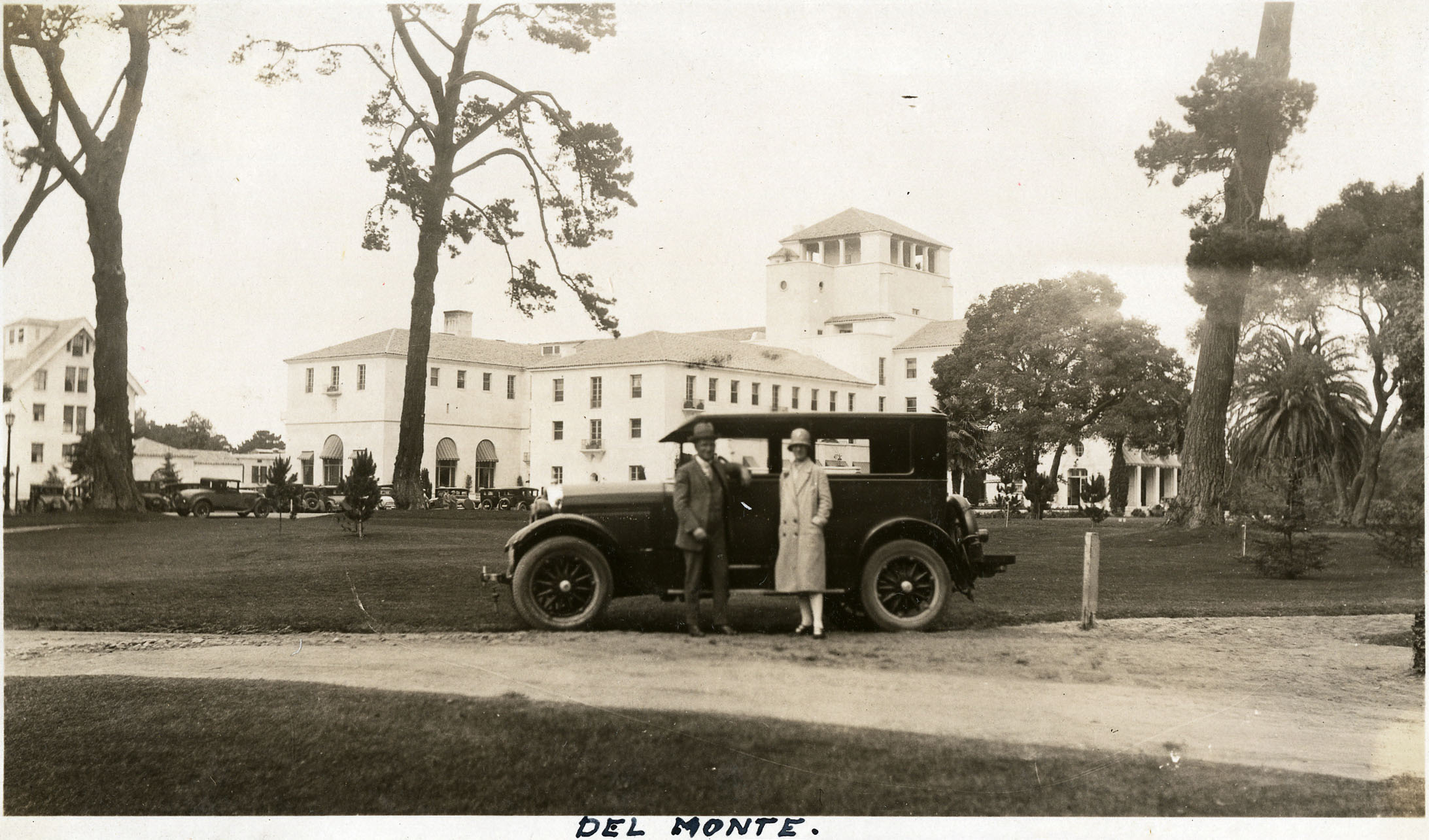
Before Pebble Beach became internationally famous, before 17-Mile Drive became one of California's best-known scenic roads, and before the Monterey Peninsula developed its extraordinary concentration of golf courses, there was the Hotel Del Monte.
Opened in Monterey in 1880, the Del Monte was far more than a luxury hotel.
It was the centerpiece of an ambitious resort development created by railroad interests that understood a powerful new idea:
If transportation could bring affluent travelers to the Monterey Peninsula, the landscape itself could become the attraction.
Guests came for gardens, horseback riding, carriage excursions, golf, polo, tennis, swimming, fishing and the extraordinary coastline of the Monterey Peninsula.
Out of that resort culture came the original 17-Mile Drive, Del Monte Golf Course and, eventually, the development of Pebble Beach.
The hotel itself survived two devastating fires, changed from Victorian grandeur to Spanish Revival architecture, became a Navy training facility during World War II and ultimately became the heart of the Naval Postgraduate School.
Few properties on the Monterey Peninsula have influenced the region as profoundly.
Part of our Monterey History Series: Hotel Del Monte connects nineteenth-century railroad tourism with the rise of golf, Pebble Beach and modern Monterey. Explore the broader chronology in our Complete History of Monterey, California.
The residential neighborhood surrounding historic Del Monte Golf Course is explored separately in our guide to Old Del Monte real estate and homes for sale.
California's Railroad Era Reaches Monterey
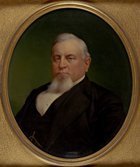
The Hotel Del Monte grew from the enormous influence railroads had on nineteenth-century California.
After completion of the transcontinental railroad, railroad companies were no longer simply transportation businesses.
They also controlled substantial landholdings and understood that destinations could generate passengers.
The Pacific Improvement Company, associated with the owners of the Southern Pacific Railroad, accumulated extensive property on the Monterey Peninsula.
Among the most important figures behind its Monterey ambitions was railroad magnate Charles Crocker, one of the famous "Big Four" associated with the Central Pacific Railroad.
Crocker saw the Monterey Peninsula as more than undeveloped land.
He saw the possibility of creating one of America's great resort destinations.
1880: Hotel Del Monte Opens
The original Hotel Del Monte opened in June 1880.
Designed in an elaborate Victorian-era style, the enormous wooden hotel stood within approximately 125 acres of landscaped gardens.
It immediately attracted national attention.
The resort offered travelers something unusual for the American West: luxury accommodations integrated with gardens, recreation, transportation and a spectacular natural setting.
Guests did not simply arrive at Monterey and find a hotel.
The hotel helped define what they were supposed to experience once they arrived.
A Resort Built Around the Landscape
The Del Monte's grounds were an attraction in their own right.
Visitors wandered through elaborate gardens, lawns and landscaped areas filled with trees and flowers.
But the resort's influence extended far beyond the hotel grounds.
The Pacific Improvement Company controlled thousands of acres around the Monterey Peninsula, including much of the forest and coastline that would later become closely associated with Pebble Beach.
The hotel therefore had an extraordinary opportunity:
It could turn the surrounding landscape into part of the resort experience.
President Rutherford B. Hayes Visits in 1880
The Del Monte's national significance became evident almost immediately.
In September 1880, President Rutherford B. Hayes arrived at Hotel Del Monte during a historic trip to California.
Hayes became the first sitting U.S. president to visit California.
The presidential visit, only months after the hotel's opening, helped demonstrate the extraordinary stature the new Monterey resort had achieved.
1881: The Original 17-Mile Drive
One of Hotel Del Monte's most enduring innovations appeared almost immediately afterward.
In 1881, the Pacific Improvement Company opened a scenic excursion route through its forest and coastal property.
The route eventually became known as 17-Mile Drive.
It was originally designed primarily for Hotel Del Monte guests.
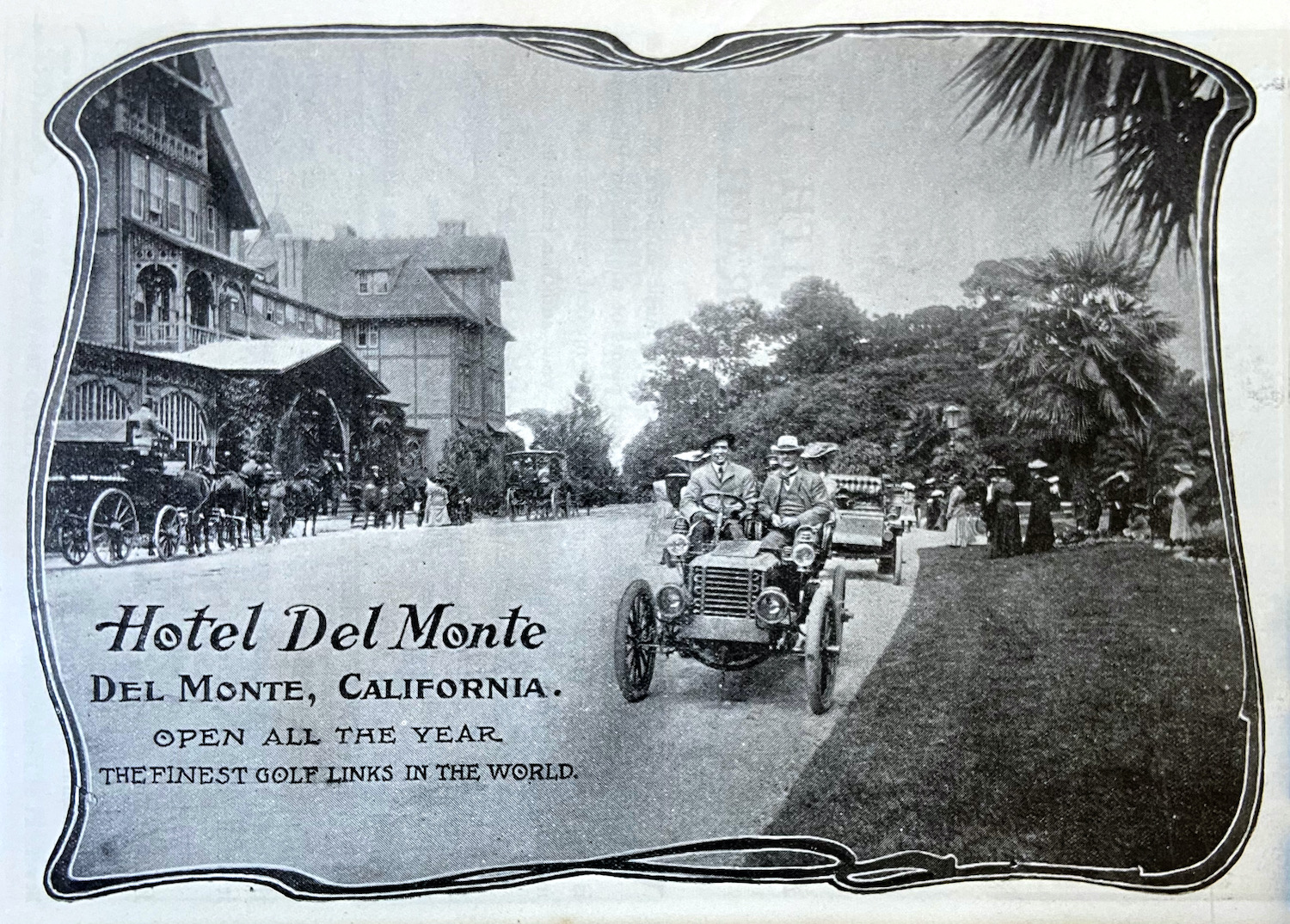
Visitors left the hotel in horse-drawn carriages and traveled through forest, dunes and coastline before eventually returning to the resort.
In other words, 17-Mile Drive was not originally an independent tourist attraction.
It was part of the Hotel Del Monte experience.
Explore the route's evolution in our History of 17-Mile Drive.
The Drive Helped Introduce Pebble Beach to the World
The importance of those carriage excursions is difficult to overstate.
Visitors from San Francisco, the East Coast and abroad encountered stretches of coastline and forest that were still largely undeveloped.
The drive introduced them to places that would eventually become internationally recognized as Pebble Beach and Del Monte Forest.
Long before buyers purchased Pebble Beach homes or golfers stood on Pebble Beach Golf Links, Hotel Del Monte guests were already being shown the extraordinary landscape.
The resort effectively created an audience for future development.
1887: The First Hotel Burns
The original Hotel Del Monte lasted less than seven years.
On April 1, 1887, fire destroyed the massive wooden hotel.
The loss was devastating, but the Pacific Improvement Company had already established Del Monte as a successful destination.
Rather than abandon the resort, the company rebuilt.
A second Victorian Hotel Del Monte rose on essentially the same site.
The replacement began receiving guests later in 1887 and was fully operating by 1888.
An Important Correction About the 1906 Earthquake
Some retellings of Hotel Del Monte history mistakenly associate the destruction of the hotel with the 1906 San Francisco earthquake.
The major destructive events in the hotel's architectural history were actually the 1887 fire and the 1924 fire.
The second Hotel Del Monte remained in operation after 1906 and continued serving guests for nearly two more decades.
Keeping these events separate is important because each fire produced a different architectural generation of the resort.
The Second Hotel Del Monte
The rebuilt Del Monte expanded on the success of the original.
Long guest wings extended from the central structure, increasing capacity while preserving the elaborate Victorian resort character.
By the late nineteenth and early twentieth centuries, the Del Monte was firmly established as one of the premier resort hotels in the American West.
Its clientele included political leaders, wealthy industrialists, artists, entertainers and travelers from around the world.
1897: Del Monte Golf Course Opens
Hotel Del Monte's influence on Monterey Peninsula golf began decades before Pebble Beach Golf Links.
On May 1, 1897, Del Monte Golf Course opened as a nine-hole course.
It was expanded to 18 holes in 1903.
Today, Pebble Beach Resorts identifies Del Monte as the oldest golf course west of the Mississippi still operating on its original site.
The course demonstrated that golf could become an important part of the Monterey resort experience.
That lesson would have enormous consequences for the Peninsula.
Hotel Guests Help Build Monterey's Golf Culture
For Del Monte guests, golf joined a growing menu of recreation.
Depending on the era, visitors might enjoy:
- golf
- polo
- tennis
- horseback riding
- swimming
- yachting
- fishing
- carriage excursions
- later automobile touring
This combination of scenery and recreation became a defining characteristic of the Monterey Peninsula.
The concept remains recognizable today.
The Automobile Changes the Resort Experience
The transition from carriage travel to automobiles expanded how visitors could explore the Peninsula.
17-Mile Drive became an increasingly important motor route.
By 1901, the Pacific Improvement Company was collecting tolls for commercial access to the drive.
The hotel also embraced automobile culture in other ways.
During the early twentieth century, automobile races were held on the resort's horse track.
The Monterey Peninsula's association with motoring therefore predates the later Pebble Beach Road Races and Monterey Car Week by decades.
Samuel F.B. Morse Arrives
By the mid-1910s, the Pacific Improvement Company's Monterey holdings faced financial pressure.
In 1915, the company hired a young executive named Samuel Finley Brown Morse to help dispose of its extensive property holdings.
Morse reached a very different conclusion.
Rather than simply liquidate the property, he believed the Del Monte holdings could be made more valuable through recreation and carefully planned development.
Morse Sees Golf as a Development Tool
Morse understood something Charles Crocker had already demonstrated:
recreation could create demand for land.
He pushed the Pacific Improvement Company to build a major golf course along the Pebble Beach coastline.
Pebble Beach Golf Links opened on February 22, 1919.
At the same time, a new Del Monte Lodge opened at Pebble Beach.
Hotel Del Monte, 17-Mile Drive, Del Monte Golf Course and the new Pebble Beach golf development now formed parts of an increasingly sophisticated resort system.
1919: Del Monte Properties Company
Only days after Pebble Beach Golf Links opened, Morse formed the Del Monte Properties Company.
With financial backing from San Francisco investors, he acquired approximately 18,000 acres from the Pacific Improvement Company.
The acquisition included:
- Hotel Del Monte
- Del Monte Forest
- 17-Mile Drive
- The Lodge at Pebble Beach
- golf properties
- substantial Monterey Peninsula land
- water-company interests
The modern development history of Pebble Beach can be traced directly to this transaction.
Hotel Del Monte and Pebble Beach Were Once One Resort System
Today, people often think of Monterey's Hotel Del Monte and Pebble Beach as unrelated places separated by several miles.
Historically, they were deeply interconnected.
Hotel Del Monte was the original resort anchor.
17-Mile Drive introduced hotel guests to Del Monte Forest.
Del Monte Golf Course established golf as a Peninsula attraction.
Pebble Beach Golf Links and The Lodge expanded the recreational resort westward.
Samuel Morse then acquired the entire system and began developing it as a larger sports and real-estate enterprise.
The history of Pebble Beach is therefore impossible to separate completely from Hotel Del Monte.
Morse Builds a "Sports Empire"
Morse envisioned Del Monte not simply as a hotel but as what historical accounts describe as a "sports empire."
Golf was central, but it was not the only attraction.
The resort promoted polo, tennis, swimming, yachting, deep-sea fishing, equestrian activities and other outdoor recreation.
Morse recognized that affluent guests might travel great distances for a destination offering multiple activities in an extraordinary landscape.
This philosophy reinforced an identity that still characterizes the Monterey Peninsula.
1924: Fire Strikes Again
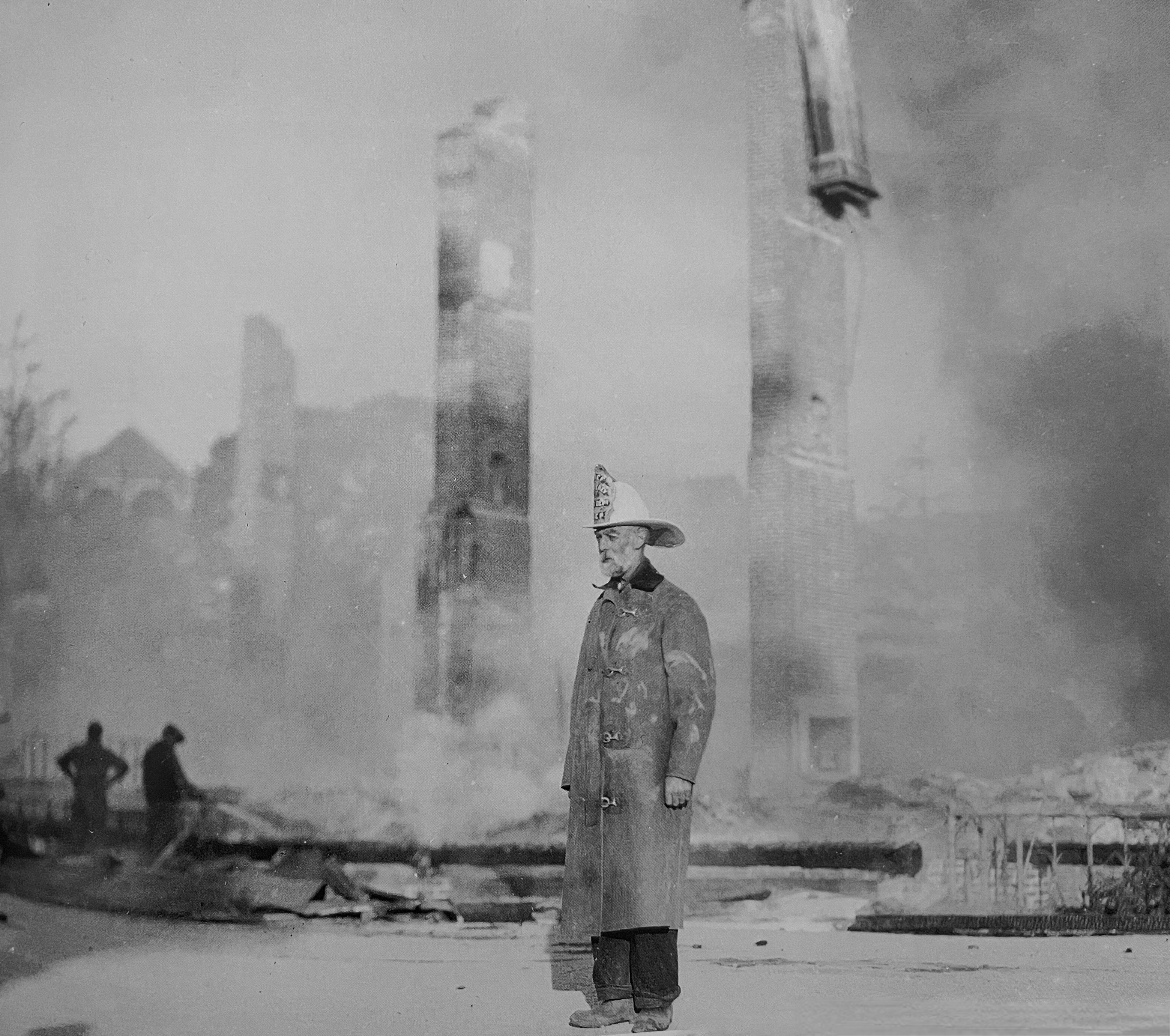
On the morning of September 27, 1924, fire again devastated Hotel Del Monte.
The central wooden portion of the second Victorian hotel was destroyed.
The long wings survived.
Once again, the property's owners faced a decision:
rebuild the old hotel or reinvent it?
Morse chose reinvention.
The Third Hotel Del Monte
Architects Lewis P. Hobart and Clarence A. Tantau designed the new central hotel.
Instead of recreating the Victorian architecture of the earlier Del Montes, they chose a Spanish Revival design constructed largely of reinforced concrete.
The surviving Victorian wings were modified with stucco and tile roofs so they would visually integrate with the new structure.
This third Hotel Del Monte is essentially the historic building recognizable today.
1926: The Hotel Reopens
The new Spanish Revival Hotel Del Monte was formally celebrated on May 8, 1926.
More than 3,000 guests reportedly attended the dedication festivities.
The timing could hardly have been more appropriate.
California was booming during the Roaring Twenties.
Automobile ownership was expanding.
Hollywood was creating a new celebrity culture.
Golf and resort travel were becoming increasingly fashionable.
The new Del Monte entered its next era positioned to take advantage of all of them.
The Del Monte of the Roaring Twenties
The hotel again became a destination for prominent guests.
Over its long resort history, Del Monte hosted presidents, international leaders, business figures, entertainers, athletes, artists and writers.
The guest lists eventually included names associated with politics, Hollywood, music and aviation.
The Del Monte was not simply Monterey's largest hotel.
It was one of the places through which the broader world encountered the Monterey Peninsula.
The Hotel's Influence on Old Del Monte
The resort also shaped the residential landscape surrounding it.
Del Monte Golf Course, Manor Road, nearby residential tracts and later subdivisions developed within a part of Monterey whose identity remained closely associated with the hotel and golf course.
Today this broader residential area is commonly known in local real-estate usage as Old Del Monte.
The neighborhood's golf-oriented character therefore predates the modern concept of a golf-course community.
Del Monte and the Wider Development of Monterey
Hotel Del Monte's influence also extended beyond the immediate golf course.
The Pacific Improvement Company and later Del Monte Properties controlled extensive lands across the Peninsula.
Transportation, water systems, recreational facilities and real-estate development became intertwined.
The hotel helped create demand that encouraged residential and commercial growth throughout Monterey and neighboring communities.
World War II Ends the Resort Era
The Del Monte's long career as a conventional luxury resort came to an end during World War II.
The United States Navy needed facilities to train the enormous number of personnel required for the war effort.
The hotel complex was ideally suited to rapid conversion.
It already contained lodging, dining facilities, recreation spaces and extensive grounds.
1943: The Del Monte Pre-Flight School
In February 1943, the Navy commissioned the Del Monte Pre-Flight School.
Young aviation cadets came to Monterey for physical conditioning, military instruction and academic preparation before continuing to flight training.
Nearly 5,000 aviation cadets passed through the program during its short existence.
The school operated for approximately 11 months before being decommissioned in January 1944.
The property's transformation from luxury resort to military training center had begun.
Naval Technical Training Follows
After the pre-flight program ended, other Navy training activities used the property.
The wartime experience demonstrated that the former resort could function effectively as a military educational campus.
This would become crucial after the war.
The Naval Postgraduate School Needed a New Home
The Naval Postgraduate School had originated at the U.S. Naval Academy in Annapolis.
By the end of World War II, the Navy recognized that advanced technical education would become increasingly important in an era of radar, aviation, electronics, missiles, nuclear technology and other rapidly evolving systems.
The existing facilities at Annapolis were too limited for the school's anticipated growth.
The former Hotel Del Monte provided something difficult to find elsewhere:
a large, established campus in an attractive setting with room for expansion.
1947–1948: The Navy Acquires Del Monte
In 1947, Congress authorized acquisition of the Hotel Del Monte property for an independent postgraduate-school campus.
The Navy formally purchased the hotel and approximately 627 acres of surrounding land in 1948.
The purchase completed one of the most dramatic transformations in Monterey real-estate history.
A property developed by railroad entrepreneurs for luxury tourism was now permanently owned by the United States Navy.
1951: The Naval Postgraduate School Moves to Monterey
In December 1951, the Naval Postgraduate School completed its move from Annapolis to Monterey.
Approximately 500 students and around 100 faculty and staff moved west along with books, laboratory equipment and other academic resources.
The school's arrival gave Monterey another enduring connection with the U.S. military, complementing the Army presence at the Presidio of Monterey.
Hotel Del Monte Becomes Herrmann Hall
The historic Spanish Revival hotel became the centerpiece of the new Naval Postgraduate School campus.
The principal building is now known as Herrmann Hall, honoring Rear Admiral Ernest E. Herrmann, who helped oversee the school's relocation to Monterey.
The former resort spaces were adapted to military and academic use while significant historic architecture was retained.
The building still serves the NPS community today.
The Hotel Did Not Completely Stop Being a Hotel
One delightful continuation of the old resort tradition survives inside the military campus.
Portions of historic Hotel Del Monte continue functioning as Navy lodging.
Today the Hotel Del Monte provides rooms and suites for authorized military and government guests.
So while the property ceased operating as a public luxury resort generations ago, hospitality never completely disappeared from the building.
The Gardens Survived the Transition
The historic Del Monte landscape also remains an important part of the Naval Postgraduate School campus.
Mature trees, lawns, courtyards and landscaped grounds preserve some of the atmosphere created during the resort era.
The result is unusual for a military graduate campus.
NPS students and faculty work inside a landscape originally designed to impress nineteenth-century resort guests.
The Resort and the Military Share a Surprising Connection
At first, a luxury hotel and a military graduate school may appear to have almost nothing in common.
But both were institutions built around attracting people from far beyond Monterey.
The Hotel Del Monte brought presidents, industrialists, artists and travelers from across the country and world.
The Naval Postgraduate School brings military officers, civilian professionals, researchers and international students to Monterey.
In both eras, the property connected Monterey with a much wider world.
Hotel Del Monte and Del Monte Beach
The former resort estate also sits immediately beside another important Monterey coastal landscape.
Nearby Del Monte Beach developed during the twentieth century as cottages and condominiums were built among the dunes along Monterey Bay.
In later decades, Navy property adjoining the shoreline became involved in dune restoration and habitat protection.
That changing relationship with the coastline is explored in From Sand Dunes to Beach Neighborhood: The History of Del Monte Beach.
The Del Monte Name Spread Far Beyond the Hotel
The influence of the resort can still be seen in place names across Monterey.
Del Monte Avenue.
Del Monte Beach.
Del Monte Golf Course.
Del Monte Forest.
Del Monte Center.
Old Del Monte.
The name became so strongly associated with quality and the resort that in 1891 Hotel Del Monte licensed the use of "Del Monte" for a line of canned food products.
That brand eventually became internationally recognized in its own right.
Few hotel names have left such a broad geographic and commercial legacy.
Hotel Del Monte Helped Create the Modern Monterey Peninsula
The most important way to understand Hotel Del Monte is not simply as an old building.
It was a development engine.
The resort demonstrated that people would travel great distances to experience the Monterey Peninsula.
That demand encouraged:
- transportation improvements
- scenic road development
- golf courses
- recreational facilities
- land development
- water infrastructure
- additional hotels
- residential communities
Hotel Del Monte helped convert natural scenery into a destination economy.
Without Hotel Del Monte, Pebble Beach Might Look Very Different
Pebble Beach did not emerge from an isolated decision to build a golf course on the coast.
Its roots extended back through decades of Hotel Del Monte resort development.
The hotel created the customer base.
17-Mile Drive introduced visitors to the land.
Del Monte Golf Course established golf.
Samuel Morse then used golf and resort amenities to increase the value of the larger property.
Pebble Beach Golf Links and The Lodge represented the next stage of an idea that had begun with Hotel Del Monte nearly 40 years earlier.
A Building That Represents Three Different Eras
The current Hotel Del Monte building is especially interesting because its architecture contains evidence of several generations.
The central Spanish Revival structure reflects the 1924–1926 rebuilding.
Portions of the earlier Victorian wings survived the fire and were visually transformed to complement the new design.
Military renovations later adapted the building for twentieth- and twenty-first-century needs while preserving significant historic features.
The result is neither a frozen resort museum nor an ordinary modern institutional building.
It is a historic property that continues to be actively used.
Can the Public Visit Hotel Del Monte?
The former Hotel Del Monte is located within the active Naval Postgraduate School campus.
That means access differs fundamentally from an ordinary historic hotel or public museum.
Security requirements can change, and visitors should never assume unrestricted public access.
Anyone interested in visiting should check current Naval Postgraduate School or Naval Support Activity Monterey access policies before making plans.
Why Hotel Del Monte Still Matters
The Hotel Del Monte connects several stories that might otherwise appear unrelated.
It connects the railroad with tourism.
It connects tourism with 17-Mile Drive.
It connects 17-Mile Drive with Pebble Beach.
It connects golf at Del Monte with the later courses of Del Monte Forest.
It connects nineteenth-century resort development with twentieth-century military education.
And it connects modern Monterey with an era when entrepreneurs first recognized that the landscape of the Monterey Peninsula could itself become one of California's great attractions.
That is why Hotel Del Monte deserves a central place in the history of Monterey.
Frequently Asked Questions About Hotel Del Monte
When did Hotel Del Monte open?
The original Hotel Del Monte opened in June 1880. Railroad magnate Charles Crocker and the Pacific Improvement Company developed the resort as a major destination on the Monterey Peninsula.
How many Hotel Del Monte buildings have there been?
There have been three principal generations. The original Victorian hotel opened in 1880 and burned in 1887. A second Victorian hotel replaced it and suffered a major fire in 1924. The current Spanish Revival hotel was constructed after that fire and formally reopened in 1926.
Was Hotel Del Monte destroyed in the 1906 earthquake?
No. Authoritative Naval Postgraduate School histories identify the hotel's major destructive fires as occurring in 1887 and 1924. The second Hotel Del Monte continued operating after the 1906 earthquake until the 1924 fire destroyed its central wooden structure.
How is Hotel Del Monte connected with 17-Mile Drive?
The original scenic drive was developed by the Pacific Improvement Company as an excursion for Hotel Del Monte guests. Horse-drawn carriages departed the hotel and traveled through the forest and coastline that later became closely identified with Pebble Beach.
When did Del Monte Golf Course open?
Del Monte Golf Course opened as a nine-hole course on May 1, 1897 and expanded to 18 holes in 1903. Pebble Beach Resorts identifies it as the oldest golf course west of the Mississippi still operating on its original site.
Who was Samuel F.B. Morse?
Samuel Finley Brown Morse was the businessman who formed Del Monte Properties Company in 1919 and acquired Hotel Del Monte, Del Monte Forest, The Lodge at Pebble Beach, golf properties and thousands of acres across the Monterey Peninsula. He played a central role in developing Pebble Beach as a golf and resort destination.
When was the current Hotel Del Monte built?
The current Spanish Revival central building was designed after the 1924 fire by architects Lewis P. Hobart and Clarence A. Tantau and was formally dedicated in May 1926.
What happened to Hotel Del Monte during World War II?
The U.S. Navy converted the property to wartime training use. The Del Monte Pre-Flight School was commissioned in February 1943 and trained nearly 5,000 aviation cadets during its approximately 11 months of operation.
When did the Navy buy Hotel Del Monte?
Congress authorized acquisition in 1947, and the Navy formally purchased the hotel and approximately 627 acres in 1948 for military educational use.
When did the Naval Postgraduate School move to Monterey?
The Naval Postgraduate School completed its move from Annapolis to the former Hotel Del Monte campus in December 1951.
What is Hotel Del Monte called today?
The principal historic building on the Naval Postgraduate School campus is known as Herrmann Hall. Portions of the building also continue to operate as authorized military lodging under the Hotel Del Monte name.
Continue the Monterey History Series
- Complete History of Monterey, California
- Monterey as the Capital of Alta California
- The Presidio of Monterey: 250+ Years of Military History
- The Sardine Boom and Cannery Row
- Ed Ricketts, Pacific Biological Laboratories & the Real "Doc" of Cannery Row
- From Industry to Destination: Modern Monterey History
Explore the Places Shaped by Hotel Del Monte
- Old Del Monte Real Estate & Golf Homes
- The History of 17-Mile Drive
- Del Monte Beach Real Estate & Oceanfront Homes
- The History of Del Monte Beach
- Monterey Real Estate & Homes for Sale
Considering a home in Monterey, Pebble Beach or elsewhere on the Monterey Peninsula?
Call Mark Bruno and the Monterey Peninsula Home Team at (831) 917-8190.