Carmel Cottages for Sale & Storybook Homes
Few types of real estate are as closely associated with a place as the Carmel cottage. Small-scale homes tucked behind garden gates, irregular rooflines, Carmel stone fireplaces, wood-beamed ceilings, arched doors, courtyards and mature trees have helped define the residential character of Carmel-by-the-Sea for more than a century.
But not every home described as a "Carmel cottage" is the same. Some are historically significant early residences. A small number are original Hugh Comstock storybook cottages. Others are traditional early-20th-century homes, substantially remodeled cottages, or newer residences deliberately designed to capture Carmel's architectural character.
This guide explains the history and architecture behind Carmel cottages, where buyers are most likely to find them, what makes them valuable, and what should be investigated before purchasing or remodeling an older Carmel home. Current Carmel cottages for sale are displayed below using live MLS data.
View Current Carmel Cottages for Sale ↓
Explore Carmel Neighborhoods & Communities
Related Carmel Searches
Why Carmel Is Famous for Its Cottages
Carmel-by-the-Sea developed very differently from a conventional planned suburb. Its early residents included artists, writers, builders and independent-minded homeowners who created houses that reflected individual personalities rather than a single standardized style.
The resulting village became known for small-scale homes surrounded by trees, gardens, stone walls, informal pathways and narrow residential streets.
That architectural tradition remains one of the qualities that distinguishes Carmel real estate from other luxury coastal markets.
A Carmel home does not need to be large to be highly desirable. For many buyers, architectural character, location, walkability and emotional appeal are more important than maximizing square footage.
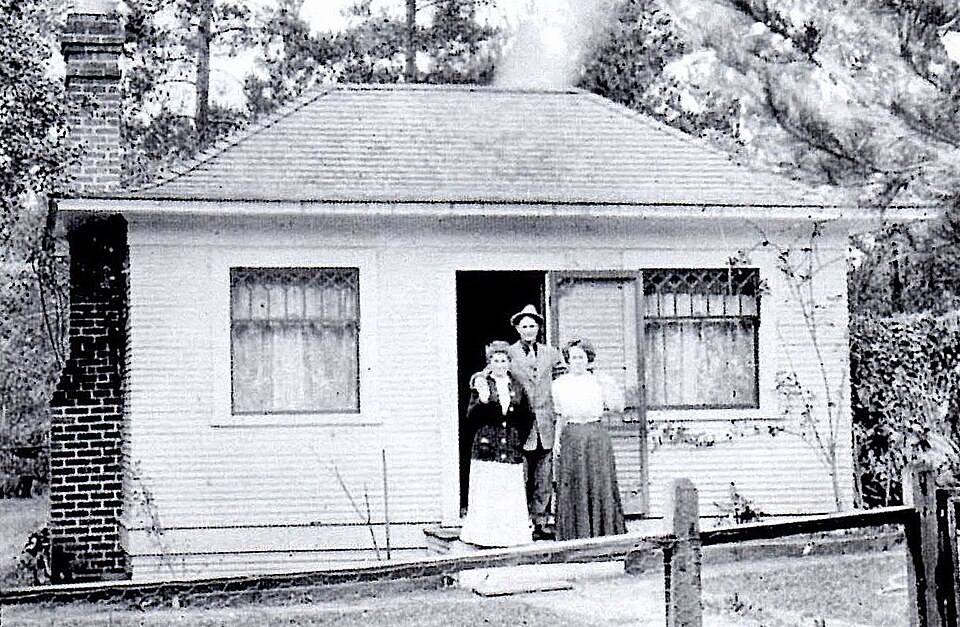
Harrison Memorial Library, Public domain, via Wikimedia Commons
Michael J. Murphy and Carmel's Early Cottages
Michael J. Murphy was one of the most influential builders in early Carmel. In 1902, when he was only 17 years old, Murphy built what is now known as the First Murphy House for his mother and sisters.
That modest cottage was the beginning of a remarkably productive career. Murphy ultimately built hundreds of residences and important community buildings throughout Carmel and the Monterey Peninsula.
The First Murphy House survives today as the home of the Carmel Heritage Society. It represents an earlier and more restrained architectural tradition than the storybook cottages that would later make Carmel internationally recognizable.
For a deeper look at the people and design traditions that shaped the village, visit our guide to Carmel-by-the-Sea architecture, cottages and storybook homes.
.jpg)
Gregory Ford Henderson, CC BY-SA 4.0, via Wikimedia Commons
Hugh Comstock and Carmel's Fairytale Cottages
The architecturally distinctive homes most people associate with the phrase "Carmel storybook cottage" are closely connected with Hugh Comstock.
Beginning in the 1920s, Comstock created whimsical cottages inspired by English and European vernacular architecture. His designs emphasized imagination rather than formal symmetry.
Characteristic details can include:
- Steep or irregular rooflines
- Rolled or curved eaves
- Rounded or arched doorways
- Small-paned windows
- Asymmetrical stone chimneys
- Textured plaster
- Heavy wood doors
- Handcrafted details
- Intentionally irregular forms
- Intimate garden settings
According to Carmel's official historical material, 21 original Comstock cottages remain in Carmel today.
Their influence extends far beyond those surviving buildings. The storybook aesthetic became part of Carmel's architectural identity and continues to influence new homes and renovations today.
Not Every Carmel Cottage Is a Comstock
This distinction is important for buyers.
"Carmel cottage" is a broad real estate description. It should not be interpreted as meaning that a home was designed by Hugh Comstock, Michael J. Murphy or another historically significant architect or builder.
A property marketed as a Carmel cottage may be:
- An original historic cottage
- An authentic Hugh Comstock design
- An early Craftsman or Arts and Crafts residence
- A Spanish or Mediterranean cottage
- A traditional wood-frame village home
- A substantially remodeled older residence
- A newer home inspired by Carmel's historic architecture
- A larger residence marketed as a cottage because of its scale, materials or character
Architectural attribution and historical significance should be independently verified rather than assumed from listing terminology.
What Makes a Home Feel Like a Carmel Cottage?
The defining quality is often less about architectural classification than the relationship among the house, landscape and village.
Common features include:
- Human-scale architecture
- Wood-beamed ceilings
- Stone or brick fireplaces
- Wood windows and doors
- Plaster walls
- Built-in cabinetry
- Window seats
- Courtyards and patios
- Garden gates
- Stone pathways
- Mature trees and landscaping
- Indoor-outdoor living spaces
- Architectural details unique to the individual home
Many successful Carmel cottages reveal themselves gradually: through a gate, along a path, around mature landscaping and finally into an intimate interior space.
That sense of discovery is part of the appeal.
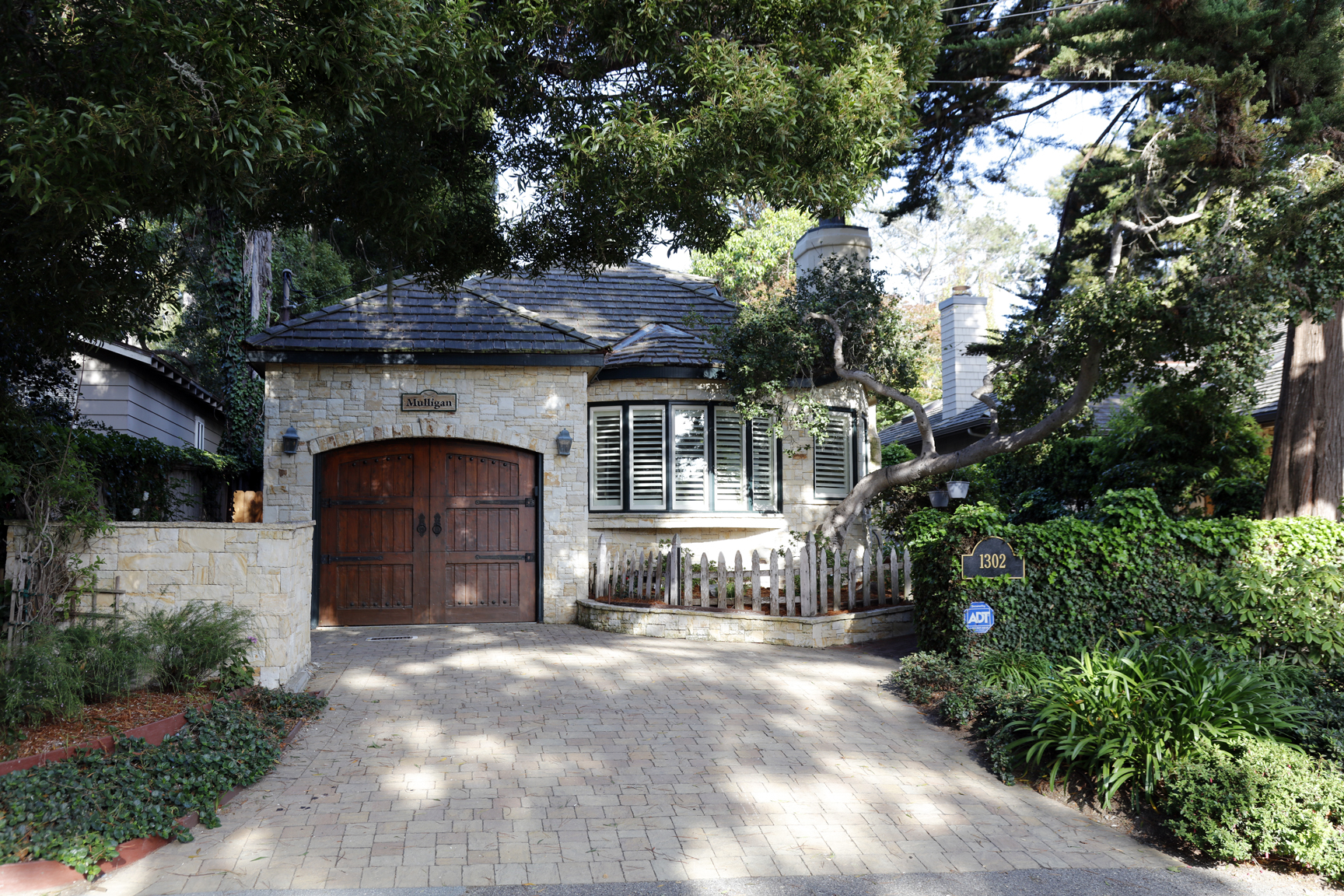
Original Cottage vs. Newer Cottage-Style Home
Carmel buyers frequently face an interesting choice: purchase an older cottage with authentic character or a newer residence designed to recreate that character.
Original and Historic Cottages
An older cottage may offer details that are difficult to reproduce: original stonework, old-growth wood, handcrafted windows, historic fireplaces, unusual floor plans and a genuine connection to Carmel's past.
Potential tradeoffs may include:
- Older electrical and plumbing systems
- Smaller kitchens and bathrooms
- Limited closet space
- Lower ceiling heights
- Single-pane or older windows
- Foundation issues
- Deferred maintenance
- Limited parking
- Historic-preservation considerations
Renovated or Newer Cottage-Style Homes
A thoughtfully renovated or newer cottage-style residence can preserve the visual character buyers associate with Carmel while providing modern conveniences.
Depending on the property, that might include:
- Modern foundations and structural systems
- Updated electrical and plumbing
- Modern kitchens
- Larger primary suites
- Improved insulation
- Modern windows
- Radiant heat or updated HVAC
- Smart-home systems
- EV charging
- More functional garages
The strongest examples retain Carmel's scale, texture and craftsmanship rather than simply applying decorative "storybook" features to an oversized modern house.
Where Can You Find Carmel Cottages?
Classic cottage architecture is most strongly associated with Carmel-by-the-Sea, but cottage-style homes can also be found in surrounding Carmel neighborhoods.
Golden Rectangle and Southwest Carmel
The Golden Rectangle and Southwest Carmel are natural places to search for the classic Carmel cottage lifestyle.
Here, small-scale architecture can be combined with two of Carmel's strongest location attributes: walking access to downtown and Carmel Beach.
A cottage does not need extensive square footage to command substantial buyer interest when the location, architecture and setting are difficult to duplicate.
Northwest Carmel
Northwest Carmel contains a varied mix of older cottages, remodeled homes and larger residences.
Selected locations combine village access, mature trees, residential character and convenient access toward Carmel Beach.
Northeast Carmel
Northeast Carmel provides another mix of older village-scale homes and later residences.
Properties closer to downtown can maintain strong walkability, while locations farther east become increasingly wooded.
Southeast Carmel
Southeast Carmel can offer traditional cottages in a wooded residential setting near Mission Trail Nature Preserve and downtown Carmel.
This part of town can appeal to buyers seeking classic Carmel character without making beach proximity their only priority.
Carmel Point
Outside incorporated Carmel-by-the-Sea, Carmel Point contains many homes described as cottages.
These can combine cottage architecture with larger lots, more conventional garages and proximity to Carmel River State Beach and Carmel Beach.
Carmel Point is under Monterey County jurisdiction, so planning and remodeling requirements differ from those inside Carmel-by-the-Sea.
Carmel Woods
Carmel Woods also contains cottage-style homes, often in wooded hillside settings with larger footprints than the smallest village cottages.
The neighborhood provides convenient access to Carmel while offering a distinctly different physical setting from the compact village core.
Carmel Cottages and Walkability
For many buyers, the ideal Carmel cottage is not defined by the house alone. The surrounding lifestyle matters just as much.
A modest cottage within walking distance of Ocean Avenue and Carmel Beach can offer something a substantially larger home outside the village cannot: the ability to leave the car at home and walk to dinner, coffee, shopping, galleries and the ocean.
Explore our Carmel walk-to-town homes for a detailed guide to how walkability varies throughout the village.
Carmel Cottages Near the Beach
Carmel's cottage character and coastal setting frequently overlap.
Selected cottages in Southwest Carmel, the Golden Rectangle, Northwest Carmel and Carmel Point may be only a short walk from the beach. Some may also have Carmel Bay, Point Lobos or Pacific Ocean views.
For properties where the view itself is a major priority, explore:
Small Lots Are Part of the Carmel Cottage Experience
Buyers coming from suburban or estate markets are sometimes surprised by the scale of residential parcels inside Carmel-by-the-Sea.
Compact lots are part of the village's physical character. They can create an intimate relationship among the house, garden and street while still providing privacy through landscaping, fences, gates and courtyards.
A thoughtfully designed small Carmel property can include:
- Front and rear gardens
- Multiple patios
- Outdoor dining areas
- Fire pits
- Stone pathways
- Private courtyards
- Guest cottages
- Detached studios
Usable outdoor space can therefore matter as much as raw lot size.
Parking and Garages
Parking deserves more attention when evaluating an older Carmel cottage than it might in many markets.
Some early homes were built when automobile storage was not a major design consideration. A property may have:
- No garage
- A small one-car garage
- A detached garage
- Limited off-street parking
- A later garage addition
For buyers who own multiple vehicles, an EV, sports equipment or a collector car, garage configuration can materially affect how well a charming cottage actually functions.
Conversely, a well-located cottage with a usable garage and off-street parking can offer a combination that is relatively difficult to reproduce.
Guest Cottages, Studios and Secondary Structures
Some Carmel properties include detached guest cottages, studios, converted garages or other secondary structures.
These spaces can add substantial flexibility, particularly for second-home owners, guests, home offices or creative uses.
However, buyers should not assume that every existing secondary structure was legally constructed or approved for its current use.
Permit history, square footage and authorized use should be independently verified.
Historic Status Matters Before You Remodel
This is one of the most important due-diligence issues when purchasing an older Carmel-by-the-Sea cottage.
The City maintains an Inventory of Historic Resources and evaluates historic status when projects involving exterior alterations are proposed.
If a structure is determined to be a historic resource, alterations are subject to additional historic-preservation review. The City states that a designated historic structure cannot simply be demolished, and additions and alterations must be consistent with applicable preservation standards.
Buyers should therefore determine historic status before purchasing an older property based on plans for a major renovation, addition or replacement home.
Even Non-Historic Carmel Homes Are Subject to Design Review
A home does not need to be officially historic for exterior remodeling to receive substantial City review.
Carmel-by-the-Sea's Residential Design Guidelines are intended to maintain human-scale architecture, neighborhood compatibility, open space and the forest character of the community.
Most exterior alterations require some level of review, and more substantial projects may require Planning Commission consideration.
That means buyers should avoid assuming that the maximum theoretical floor area automatically represents what should or will be approved on a specific site.
Remodeling Without Losing the Cottage
One of the most interesting valuation questions in Carmel is how much modernization is too much.
Buyers often want:
- Updated kitchens
- Modern bathrooms
- Improved windows
- Better insulation
- Updated electrical systems
- More storage
- Larger primary suites
- Better indoor-outdoor flow
But removing every original or character-defining feature can also remove the very quality that attracted buyers to the home.
The most compelling renovations often improve comfort and functionality while preserving important elements such as scale, stonework, wood detailing, fireplaces, gardens and architectural personality.
What Makes a Carmel Cottage Valuable?
Price per square foot alone rarely explains cottage values particularly well.
Important value drivers can include:
- Exact location
- Walking distance to Ocean Avenue
- Walking distance to Carmel Beach
- Architectural character
- Historic significance
- Architect or builder attribution
- Quality of renovation
- Ocean or Point Lobos views
- Lot usability
- Gardens and outdoor living
- Garage and parking
- Guest cottage or studio
- Privacy
- Condition of major systems
This is why two cottages with similar square footage may sell at dramatically different prices.
For current sales activity and broader Carmel market conditions, visit our Carmel Real Estate Market Report.
Carmel Cottages as Second Homes
Cottages can be particularly well suited to Carmel's second-home market.
Some buyers intentionally prefer a smaller residence because they value location, character and ease of ownership more than a large floor plan.
A well-located cottage can provide a highly concentrated version of the Carmel lifestyle: park the car, walk to town, walk to the beach, enjoy a private garden and maintain substantially less house than a large estate requires.
For those buyers, smaller size can be a feature rather than a compromise.
Carmel Cottage vs. Carmel Luxury Estate
Carmel is unusual because cottage architecture and luxury real estate frequently overlap.
A buyer may spend several million dollars on a relatively modest-size cottage because the property combines architectural character, a scarce village location, beach proximity and walkability.
Luxury in Carmel is therefore not defined by square footage alone.
For a broader discussion of how Carmel's luxury market works, visit our Carmel Luxury Real Estate guide.
Buying a Carmel Cottage
When evaluating an older cottage, buyers should look beyond cosmetic charm.
Depending on the property, due diligence may include:
- Historic-resource status
- Permit history
- Foundation condition
- Roof condition
- Electrical system
- Plumbing
- Heating system
- Windows and doors
- Moisture and drainage
- Termite and wood-destroying organisms
- Chimney and fireplace condition
- Tree condition
- Garage usability
- Legal status of guest cottages or studios
- Potential for additions or remodeling
The inspection strategy should reflect the age, construction and history of the individual home rather than relying on assumptions based on appearance.
For additional information about purchasing property, visit our Monterey Peninsula home buyer resources.
Selling a Carmel Cottage
A Carmel cottage should be marketed around the qualities that make it difficult to replace.
Effective marketing may emphasize:
- Architectural character
- Builder or architect where documented
- Historic provenance where documented
- Original stonework and fireplaces
- Gardens and outdoor spaces
- Walkability
- Beach proximity
- Views
- Guest accommodations
- Garage and parking
- Quality improvements
The goal is not simply to describe an older, smaller house. It is to explain why this particular home provides an authentic Carmel experience that may be extremely difficult for a buyer to recreate elsewhere.
If you are considering selling a Carmel cottage, visit our Monterey Peninsula home selling resources or contact us for a property-specific market analysis.
Learn More About Carmel Architecture & History
Carmel Cottages FAQ
What is a Carmel cottage?
"Carmel cottage" is a broad term used for smaller-scale homes that reflect the architectural character associated with Carmel. Some are historic residences or authentic storybook cottages, while others are remodeled or newer homes designed in a traditional Carmel style. The term does not by itself indicate historic significance or architectural attribution.
What is a Hugh Comstock cottage?
Hugh Comstock created a distinctive group of whimsical storybook cottages in Carmel beginning in the 1920s. His architecture became known for features such as rolled eaves, arched doors, irregular forms and expressive stone chimneys. Carmel's official historical material states that 21 original Comstock cottages remain.
What is the First Murphy House?
The First Murphy House was built in 1902 by Michael J. Murphy when he was 17 years old. It was Murphy's first Carmel building project and is now home to the Carmel Heritage Society. Murphy subsequently became one of the most prolific builders in Carmel's early history.
Where can I find cottages in Carmel?
Cottage-style homes can be found throughout Carmel-by-the-Sea, including Southwest, Northwest, Northeast and Southeast Carmel, as well as in surrounding areas such as Carmel Point and Carmel Woods. Architecture and lot characteristics vary substantially by location.
Are all Carmel cottages historic?
No. Some are historically significant while others are older non-historic residences, substantially remodeled homes or newer houses constructed in a cottage-inspired style. Historic status should be independently verified.
Can I remodel a historic Carmel cottage?
Potentially, but historic properties are subject to additional review. Carmel-by-the-Sea requires evaluation of historic status for projects involving exterior alterations, and work on designated historic resources must comply with applicable preservation standards. Buyers should investigate feasibility before purchasing based on major remodeling plans.
Can I tear down an old Carmel cottage and build a larger home?
Not automatically. Historic status, zoning, floor-area limitations, site coverage, trees, design review and other planning requirements can affect redevelopment. A designated historic structure cannot simply be assumed to be demolishable. Property-specific feasibility should be confirmed with the appropriate jurisdiction.
Why are small Carmel cottages so expensive?
Carmel cottage values can reflect scarce location, walkability, beach proximity, architectural character, historic significance, gardens, views and limited supply rather than square footage alone. A small cottage in an exceptional location can therefore command a substantial price.
Are newer cottage-style homes available in Carmel?
Yes. Carmel contains substantially renovated and newer residences designed to capture traditional cottage character while providing modern systems, larger kitchens, updated bathrooms and other contemporary amenities.
Where can I see Carmel cottages currently for sale?
Current Carmel cottages for sale are displayed below using live MLS data. Because "cottage" is not a precise architectural classification, buyers should evaluate the history, architecture, condition and location of each property individually.
Questions about buying or selling a Carmel cottage?
Call the Monterey Peninsula Home Team at (831) 917-8190 or contact us online.


.jpg)