


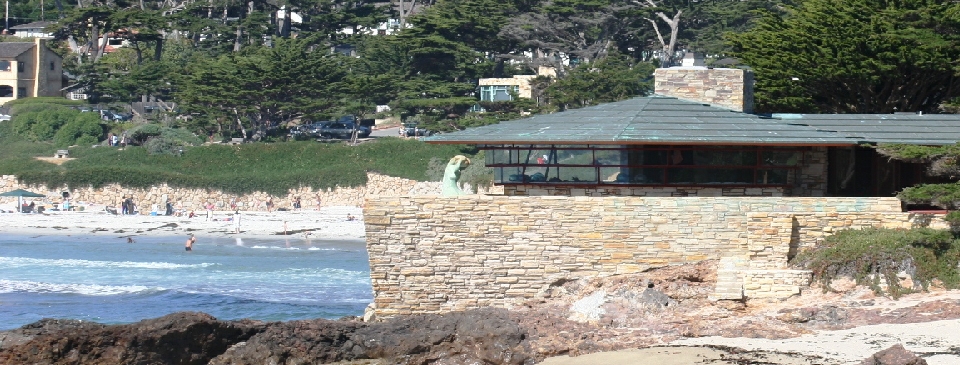
Mrs. Clinton Walker House by Frank Lloyd Wright on Carmel Point
The Architecture of Carmel-by-the-Sea: Cottages, Storybook Homes, and Village Character
Carmel-by-the-Sea is one of the few places in California where architecture feels inseparable from the identity of the town itself. The village is not defined by high-rise hotels, broad commercial boulevards, or standardized subdivisions. It is defined by cottages, courtyards, stone chimneys, irregular rooflines, hidden gardens, winding lanes, mature trees, and homes that often feel as if they grew naturally out of the coastal landscape.
That architectural character is one of the reasons Carmel has become one of the most desirable real estate markets on the California coast. Buyers are not simply shopping for bedrooms, bathrooms, and square footage. They are often searching for charm, authenticity, history, walkability, craftsmanship, and the feeling of living in a village that still has a soul.
This is the sixth article in our Carmel-by-the-Sea history series. The first article explored Carmel Mission and the Spanish colonial roots of Carmel-by-the-Sea. The second article looked at the First People of Carmel and the Indigenous history of the Monterey Peninsula. The third article traced Carmel’s transformation from rancho land to coastal village before incorporation. The fourth article explored Carmel’s artist colony and how writers, painters, and bohemians shaped the village. The fifth article focused on Robinson Jeffers, Tor House, and Carmel’s literary legacy. This article explores how Carmel’s architecture became one of the village’s most powerful and enduring forms of identity. Explore the complete history of Carmel-by-the-Sea, from Indigenous roots and Carmel Mission to the artist colony, storybook cottages, Carmel Beach, preservation, and luxury real estate.
Why Carmel Architecture Feels Different
Many coastal towns are beautiful, but Carmel-by-the-Sea feels different because its architecture is part of a larger village experience. The homes are not isolated objects. They work together with narrow streets, trees, gardens, stone walls, courtyards, paths, and beach proximity to create a highly distinctive sense of place.
Carmel’s best architecture tends to feel intimate rather than imposing. Even valuable homes often rely on restraint, texture, scale, and charm instead of size alone. This is one reason smaller Carmel cottages can create such strong buyer demand. In Carmel, a home does not need to be large to feel special.
That is one of the defining differences between Carmel real estate and many other luxury markets. In Carmel, character can be as important as square footage.
 First Murphy House, Carmel-by-the-Sea
Michael J. Murphy and Carmel’s Early Building Tradition
Michael J. Murphy was one of the most important builders in early Carmel-by-the-Sea. His work helped establish the village’s early architectural language before Carmel became widely known for fairytale cottages and storybook design.
The First Murphy House, built in 1902, remains one of Carmel’s important early architectural landmarks. It reflects the modest scale and handcrafted quality that would become central to the village’s identity. Murphy’s work was practical, local, and deeply tied to Carmel’s early growth.
Murphy’s influence matters because he helped create the physical framework of the young village. Long before Carmel became a luxury destination, it needed homes, commercial buildings, community spaces, and structures that fit the landscape. Murphy’s work helped give Carmel a built environment that felt personal rather than generic.
 Hugh Comstock Hansel Cottage in Carmel-by-the-Sea
Hugh Comstock and Carmel’s Fairytale Cottages
No discussion of Carmel architecture would be complete without Hugh Comstock. Comstock arrived in Carmel in the 1920s and became famous for whimsical, storybook-style cottages that seemed to belong to another world.
His first cottage, commonly associated with the names Hansel and Gretel, was built for his wife and helped launch one of the most recognizable architectural traditions in Carmel. The style featured steeply pitched roofs, irregular lines, rustic materials, hand-shaped details, arched openings, expressive chimneys, and an intentionally imperfect charm.
Comstock’s cottages were not formal mansions. They were imaginative, human-scaled, and deeply romantic. They reflected Carmel’s artistic culture and the village’s comfort with individuality. In many ways, Comstock’s architecture translated Carmel’s bohemian spirit into physical form.
What Makes a Carmel Storybook Home?
Carmel’s storybook homes are beloved because they feel handmade and emotionally engaging. They often include features such as steep roofs, rolled or irregular roof edges, asymmetrical forms, arched doors, small-paned windows, Carmel stone chimneys, textured plaster, heavy wood doors, and lush garden settings.
The effect is not simply architectural novelty. A well-executed storybook cottage creates a sense of intimacy and imagination. It feels like a home with a personality.
That emotional response is one of the reasons storybook architecture remains so valuable in Carmel. Buyers are not just reacting to design details. They are reacting to the way those details make the home feel.
Carmel Stone, Wood, Plaster, and Garden Walls
Materials are central to Carmel’s architectural identity. Stone, wood, plaster, brick, and mature landscaping all contribute to the feeling that homes belong to the landscape.
Carmel stone is especially important. Stone chimneys, walls, fireplaces, steps, and garden features create a sense of permanence and local character. Wood details add warmth. Plaster walls and arched openings soften the architecture. Gardens, hedges, and trees complete the sense of enclosure and privacy.
In Carmel, the relationship between house and garden is often just as important as the house itself. Many homes are designed to reveal themselves slowly through gates, paths, courtyards, and layered plantings. This creates privacy, charm, and a sense of discovery.
Architecture and the Artist Colony Mindset
Carmel’s architecture cannot be separated from its early artist colony. Writers, painters, performers, and independent-minded residents helped create a culture where originality was valued. Homes did not need to follow a rigid pattern. They could be expressive, personal, and connected to the landscape.
This creative freedom helped Carmel avoid the look and feel of a standardized subdivision. Instead of uniformity, the village developed texture. Instead of large formal estates dominating the streetscape, Carmel became known for cottages, studios, small homes, and unique architectural expressions tucked among trees and gardens.
That artistic foundation still affects buyer demand today. Many people come to Carmel because they want something that feels authentic, not something that could be found in any luxury market.
Village Scale and the Power of Small Homes
One of the most important features of Carmel architecture is scale. Carmel’s village core is built around a smaller, more intimate pattern than many modern communities. Lots are often compact, homes are frequently modest in size by luxury-market standards, and the streets are designed for walking rather than speed.
This scale is a major part of Carmel’s charm. Homes feel connected to the village. Residents can often walk to shops, restaurants, galleries, courtyards, and the beach. The built environment encourages a slower, more personal way of experiencing the town.
For buyers, this can be extremely powerful. A small cottage near the village or beach may offer less square footage than a larger home inland, but it can provide a lifestyle that is much harder to duplicate.
The Golden Rectangle and Architectural Demand
The Golden Rectangle is one of Carmel’s most sought-after residential areas because it combines village proximity, beach access, charm, and architectural character. Many buyers looking at Carmel Golden Rectangle homes for sale are specifically drawn to the area because it captures the classic Carmel experience.
In the Golden Rectangle, architecture and location work together. A charming cottage on a quiet lane within walking distance of Carmel Beach and downtown Carmel can create enormous emotional appeal. That appeal often translates into strong buyer demand and premium pricing.
This is where Carmel’s architectural history becomes directly relevant to real estate value. Homes that feel authentically Carmel often command attention because they offer more than shelter. They offer identity.
Carmel Point, Scenic Road, and Coastal Architecture
Carmel Point and the Scenic Road area offer another expression of Carmel architecture. Here, the relationship between homes and coastline becomes especially important. Ocean views, beach access, stonework, low-profile design, and sensitivity to the landscape all shape the character of the area.
This part of Carmel includes some of the most visually powerful residential settings in the village. It is also home to landmarks such as Tor House and Hawk Tower, which demonstrate how architecture can become inseparable from the coastal environment.
For buyers seeking Carmel oceanfront real estate, architecture is often evaluated in relationship to views, privacy, exposure, and how gracefully the home responds to the coastal setting.
Historic Preservation and Carmel’s Design Ethic
Carmel’s architectural appeal has been protected in part by a strong preservation mindset. The village has long resisted the kind of overdevelopment that could have weakened its character. Historic resources, design review, tree preservation, scale, and neighborhood compatibility all matter in Carmel.
This does not mean Carmel is frozen in time. Homes are remodeled, expanded, restored, and reimagined. But the best projects tend to respect the village’s architectural language and avoid overwhelming the qualities that make Carmel special.
For sellers, this creates both opportunity and responsibility. A carefully restored or thoughtfully updated Carmel home can be highly compelling. But improvements that erase character or feel out of scale can miss what buyers are really seeking.
Why Carmel Buyers Pay for Character
In many markets, buyers are trained to think in terms of measurable features: square footage, lot size, bedroom count, garage spaces, and age of construction. Those factors matter in Carmel, but they do not fully explain value.
Carmel buyers often pay for emotional connection. They respond to the way a home feels when they walk through a garden gate, see a stone fireplace, step into a sunny courtyard, hear the ocean nearby, or realize they can walk to dinner and the beach without getting in a car.
That emotional connection is difficult to quantify, but it is central to Carmel’s market. Architecture is one of the main ways that emotional value is created.
Restoration, Remodels, and the Risk of Losing Carmel Character
Because Carmel homes are so valuable, many older properties are remodeled or expanded over time. The best remodels preserve the qualities that made the home special while improving function, comfort, and livability.
That balance is important. Over-modernizing a Carmel cottage can sometimes reduce its emotional appeal if the project removes too much character. Buyers often want updated kitchens, baths, systems, and finishes, but they also want the home to still feel like Carmel.
For owners considering improvements, the goal should usually be thoughtful modernization rather than total erasure. Charm, scale, materials, gardens, and architectural personality are not obstacles to value. In many cases, they are the value.
Architecture as Part of Carmel’s Brand
Carmel’s architecture has become part of the village’s brand. Visitors come to see the cottages. Buyers dream about owning them. Photographers, artists, and travel writers use them to define the village visually.
This is one of the reasons Carmel remains so recognizable. Many communities have expensive homes. Far fewer have a built environment with such a clear and memorable personality.
That personality supports the entire Carmel real estate market. Even homes that are not historic cottages benefit from being located within a village known for architectural charm, preservation, walkability, and beauty.
Why Carmel Architecture Matters in the context of Carmel History
The architecture chapter is essential to the Carmel-by-the-Sea history because it connects the village’s past directly to its present real estate appeal. The Indigenous landscape, mission history, rancho period, artist colony, and literary legacy all helped shape Carmel’s sense of place. Architecture made that sense of place visible.
Carmel’s cottages, storybook homes, stone houses, garden walls, and village-scale streets are not just pretty details. They are physical expressions of the values that shaped the community: creativity, restraint, beauty, individuality, and respect for the landscape.
In the next article in this series, we will explore one of Carmel’s most famous quirks: why Carmel-by-the-Sea has no traditional street addresses and how that unusual custom became part of the village’s identity.
Experience Carmel-by-the-Sea Architecture in Person
Carmel-by-the-Sea fairytale cottages walking tour
Thinking About Buying or Selling in Carmel?
If you are considering buying or selling a home in Carmel-by-the-Sea, understanding the village’s architecture can help you better understand why certain properties create such powerful emotional appeal. Carmel’s most desirable homes are often valuable not only because of location, but because they reflect the character, craftsmanship, and sense of place that define the village.
The Monterey Peninsula Home Team helps buyers and sellers navigate the Carmel real estate market with local knowledge, neighborhood insight, and a deep appreciation for what makes this community so special.
Explore current Carmel homes for sale, learn more about Carmel Golden Rectangle homes for sale, or browse Carmel oceanfront real estate to see how Carmel’s architecture, history, and coastal lifestyle continue to shape one of California’s most distinctive housing markets.