


Carmel Valley Village History: From Airway Village to Wine Country Community
Carmel Valley Village is one of the most distinctive communities on the Monterey Peninsula. Set beneath oak-covered hills in the warmer inland reaches of Carmel Valley, the Village is known today for wine tasting rooms, locally owned restaurants, galleries, small businesses, community events, and a relaxed country atmosphere that feels far removed from the busier California coast.
Yet the Village did not begin as a wine destination or a traditional rural crossroads. Its modern story grew from an ambitious aviation experiment known as Airway Village, developed alongside an early residential airpark where pilots were intended to land their airplanes and taxi directly to their homes.
The evolution from experimental airpark to wine-country community is one of the most unusual chapters in the complete history of Carmel Valley, California. It also helps explain why Carmel Valley Village retains such an independent personality today.
This is the third article in our Carmel Valley history series. The previous article explored Rancho Los Laureles and the Mexican land grant that helped shape Carmel Valley. This article follows that landscape into the 20th century, when aviation, commercial development, tourism, wine, and country living began reshaping the Village.
 Before Carmel Valley Village
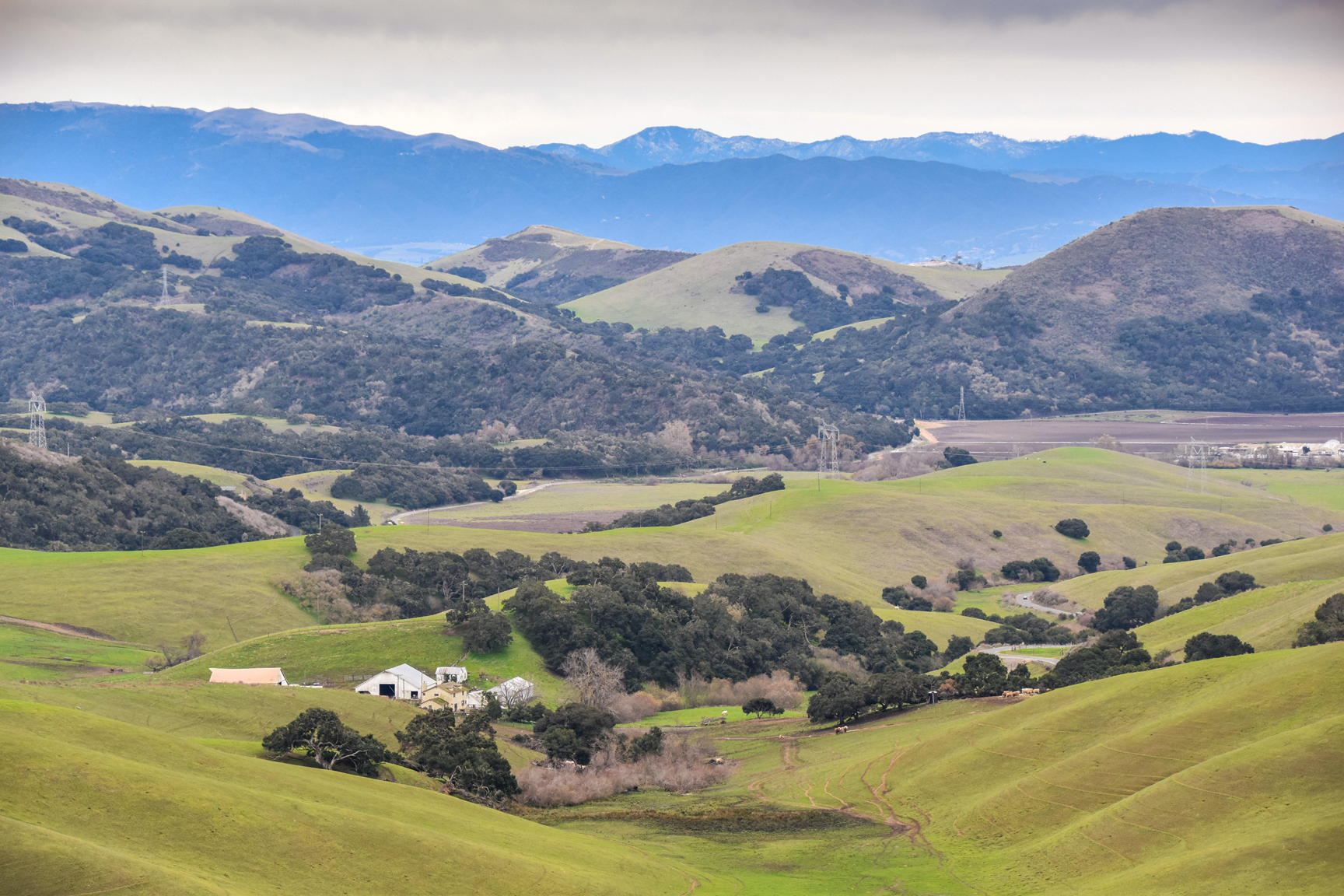
Long before there was a Carmel Valley Village, this part of the valley was a landscape of river corridors, oak woodland, grassland, seasonal creeks, and Native homelands. Indigenous communities understood and cared for this landscape for generations before European colonization changed the region’s population, land ownership, and patterns of settlement.
During the Mexican period, much of the surrounding area became part of Rancho Los Laureles, a large land grant extending along the Carmel River. Ranching, cattle, horses, agriculture, family ownership, and regional travel established the valley’s rural identity.
That earlier history remains relevant because Carmel Valley Village did not develop in isolation. It emerged within a landscape that had already been shaped by water, ranching, open land, and movement between the inland valley, Monterey, Salinas, and the coast.
Even today, the Village feels closely connected to the surrounding land. Unlike a conventional downtown surrounded by dense urban development, Carmel Valley Village remains framed by hillsides, ranch properties, trails, vineyards, large residential parcels, and the Carmel River watershed.
Rancho Land Gives Way to a New Carmel Valley
As California’s original ranchos were divided and transferred into new ownership, Carmel Valley gradually entered a different phase of development. Roads improved, residential parcels were created, businesses appeared, and more people began viewing the valley as a place to live rather than primarily as working ranch land.
Its relationship with the coastal Monterey Peninsula also began to change. Carmel-by-the-Sea was developing its identity as an arts-oriented coastal village. Monterey was growing beyond its early role as California’s political and military center. Pebble Beach was becoming internationally known for scenery, resort living, and golf.
Carmel Valley offered something different. The inland valley had more sun, more space, larger parcels, and a rural environment that appealed to people who wanted to remain close to the coast without living directly in the marine climate.
Those qualities attracted a visionary developer named Byington Ford, whose plans would give Carmel Valley Village one of the most unusual origin stories of any community in Monterey County.

Byington Ford’s Vision for an Airpark Community
Byington Ford was a real estate developer with strong connections to the Monterey Peninsula. He had worked with Del Monte Properties and was familiar with the development of Pebble Beach and the broader Monterey Peninsula real estate market.
Ford believed that small private aircraft would become increasingly common after the Great Depression. He imagined a future in which owning an airplane might become almost as practical as owning a car.
His idea was to create a residential airpark where pilots could land, taxi from the runway, and be home within minutes. Properties could include what became known as hangar homes: residences designed to provide direct access between the homeowner’s aircraft and the airfield.
In approximately 1940, Ford acquired land in Carmel Valley and began developing what he called Airway Ranch. Local historical accounts and airfield preservation advocates have described it as the first residential airpark of its kind.
It was an extraordinarily forward-looking concept. Residential aviation communities later appeared in other parts of the United States, but Ford was attempting to create one before private air travel became widely accessible.
A Grand Opening on December 7, 1941
The grand opening for Ford’s Carmel Valley airpark was scheduled for December 7, 1941.
That same morning, Japan attacked Pearl Harbor.
The United States entered World War II, and civilian aviation along the West Coast was sharply restricted. An opening that was supposed to introduce a new kind of residential community instead coincided with one of the most consequential days in American history.
Ford’s vision for a flourishing community of private pilots was delayed almost immediately. The timing was so unfortunate that some people reportedly referred to the project as “Ford’s Folly.”
Nevertheless, the basic idea survived. The runway and airfield remained, and the postwar years created new opportunities for Ford and his family to develop the surrounding area.
The Creation of Airway Village
In 1946, Byington Ford and his brother, Tirey Ford Jr., developed a small commercial district near the airpark. The community was initially known as Airway Village.
The commercial area was intended to provide convenient services for pilots, nearby residents, travelers, and people purchasing homes in the developing community. Early businesses included a general store, barbershop, drugstore with a soda fountain, beauty shop, bar, and liquor store.
These were practical businesses, but their design gave Airway Village an identity beyond simple convenience. Buildings were arranged within walking distance of the airpark and decorated to suggest an early California or Mexican village.
Artist Bruce Ariss, who was closely connected with the Monterey Peninsula’s artistic community, painted murals on Village storefronts. The visual treatment helped transform a small collection of businesses into a place with atmosphere and personality.
This combination of function, creativity, and informality became part of the Village’s enduring character. Carmel Valley Village was never intended to feel like a conventional shopping center or heavily planned suburban downtown. It grew as a collection of small businesses, gathering places, and locally distinctive buildings surrounded by the rural valley.
From Airway Village to Carmel Valley Village
Airway Village was eventually renamed Carmel Valley Village. The new name connected the community more directly to the surrounding valley and reflected its growing role as the principal commercial and social center of upper Carmel Valley.
The airfield continued to operate for decades. California licensed it in 1949, and it became known over time as the Carmel Valley Airport or Carmel Valley Vintage Airfield.
Although Ford’s larger vision of a fully developed residential flying community was never realized on the scale he imagined, the airport became an important local landmark. Pilots, residents, emergency responders, and community organizations all used the property during its long history.
The airfield formally closed in 2002 after more than 60 years. Even after its closure, the open land continued to hold cultural and community importance. Residents used the former runway area for walking and horseback riding, and the property served as a staging area during emergencies and wildfires.
The airfield’s history gives Carmel Valley Village a compelling connection to the optimism and experimentation of mid-20th-century California. What began as a bold aviation concept ultimately helped create the commercial center that survives today.
The Village Becomes Carmel Valley’s Community Center
As the surrounding population grew, Carmel Valley Village became much more than an extension of the airfield. It developed into the social, commercial, and civic center of the upper valley.
Residents came to the Village for food, household supplies, services, conversation, and community news. Restaurants, shops, galleries, offices, gathering places, and locally owned businesses gradually filled out the commercial district.
The scale remained intimate. Rather than growing into a large incorporated town, Carmel Valley Village retained the atmosphere of an unincorporated rural community. Its businesses were dispersed among small commercial centers, courtyards, older buildings, gardens, and tree-shaded streets.
This lack of rigid uniformity is part of the Village’s charm. Buildings do not all follow the same architectural formula, and the commercial areas do not feel like a modern regional mall. Visitors encounter a combination of rustic structures, adobe-inspired design, outdoor patios, cottage-like spaces, art, landscaping, and informal gathering areas.
That character gives the Village a strong sense of place. It feels like a community that evolved over time rather than one created all at once from a standardized development plan.
Preserving Carmel Valley History
The Carmel Valley Historical Society plays an important role in preserving and interpreting the community’s history. Its Carmel Valley History Center is located at 77 West Carmel Valley Road, near the Village’s community park.
The History Center presents the valley’s story through photographs, artifacts, memorabilia, maps, and exhibits addressing local geology, Indigenous peoples, early settlers, Spanish and Mexican land grants, ranching, transportation, and community development.
The presence of the History Center in Carmel Valley Village is appropriate. The Village is where many chapters of the valley’s history intersect: Indigenous land, the rancho era, rural settlement, aviation, commercial growth, wine, tourism, and modern residential life.
For residents and visitors, the Center provides context that is difficult to gain simply by driving through the valley. It helps show that Carmel Valley is not merely an inland alternative to Carmel-by-the-Sea. It is a community with its own independent history and cultural identity.
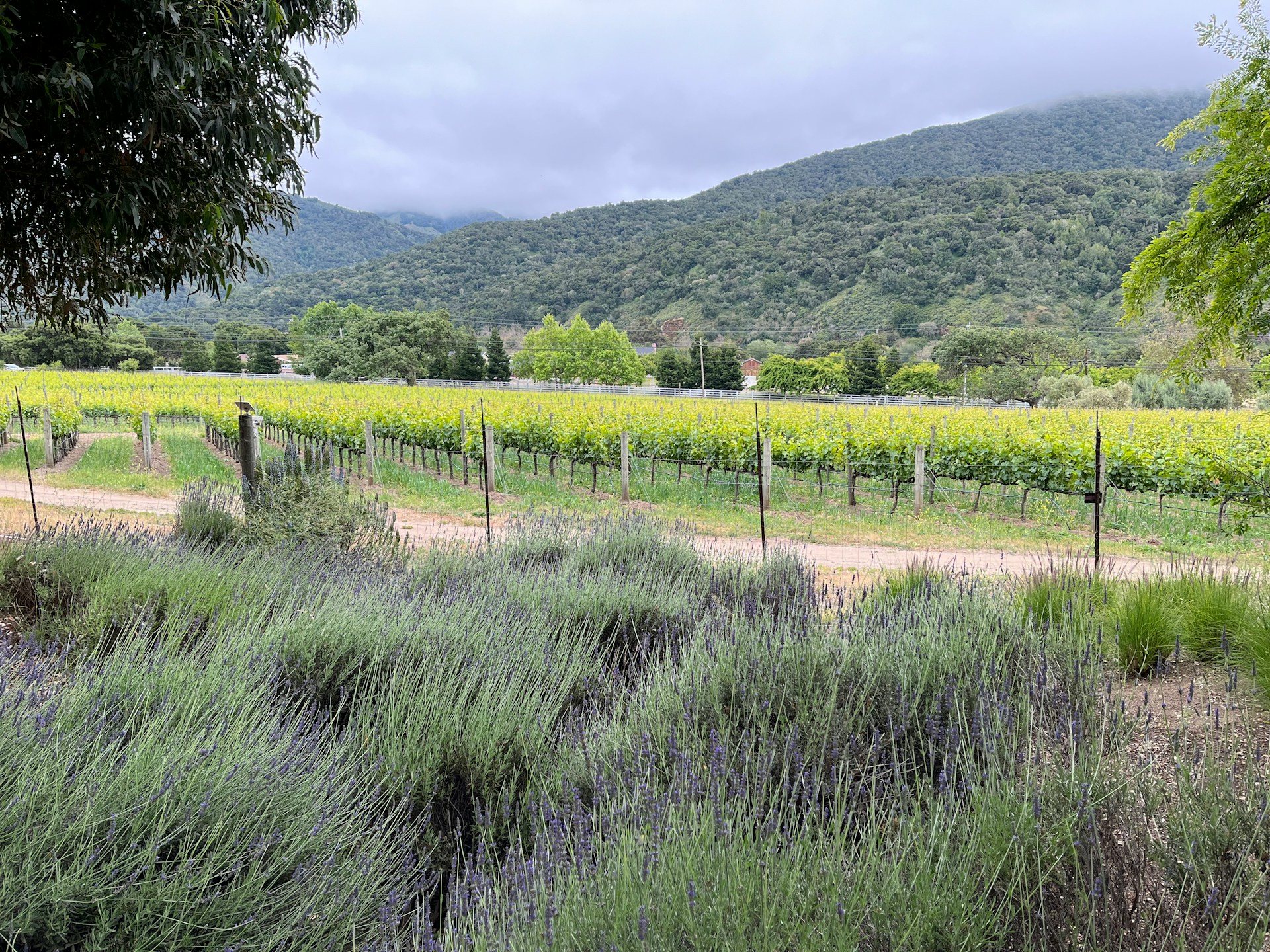
Photo by Gene Giromini on Unsplash
The Growth of Carmel Valley Wine Country
The next major transformation in Carmel Valley Village came through wine.
Wine grapes had been grown in the broader Carmel Valley area before the Village became a wine-tasting destination. The valley’s climate, elevation changes, varied soils, sunny days, and cooler nighttime temperatures created favorable conditions for viticulture.
In 1982, Carmel Valley received formal recognition as an American Viticultural Area. The Carmel Valley AVA established the area as a federally recognized wine-growing region with a distinct geographical identity.
Over time, vineyards and wineries throughout the deeper valley and Cachagua area produced wines that could be introduced to visitors closer to the population centers of the Monterey Peninsula. Carmel Valley Village became a natural place for tasting rooms.
The Village offered several advantages. It was close enough to Carmel-by-the-Sea, Pebble Beach, Monterey, and Pacific Grove to attract visitors, but far enough inland to provide warmer weather and an authentic country atmosphere. Its small commercial spaces, courtyards, gardens, patios, and locally owned businesses were well suited to intimate wine-tasting experiences.
The result was not a large, heavily commercialized wine district. Carmel Valley Village developed a more relaxed model: visitors could move among small tasting rooms, meet winery representatives, dine outdoors, browse local shops, and enjoy the sunshine without losing the Village’s rural personality.
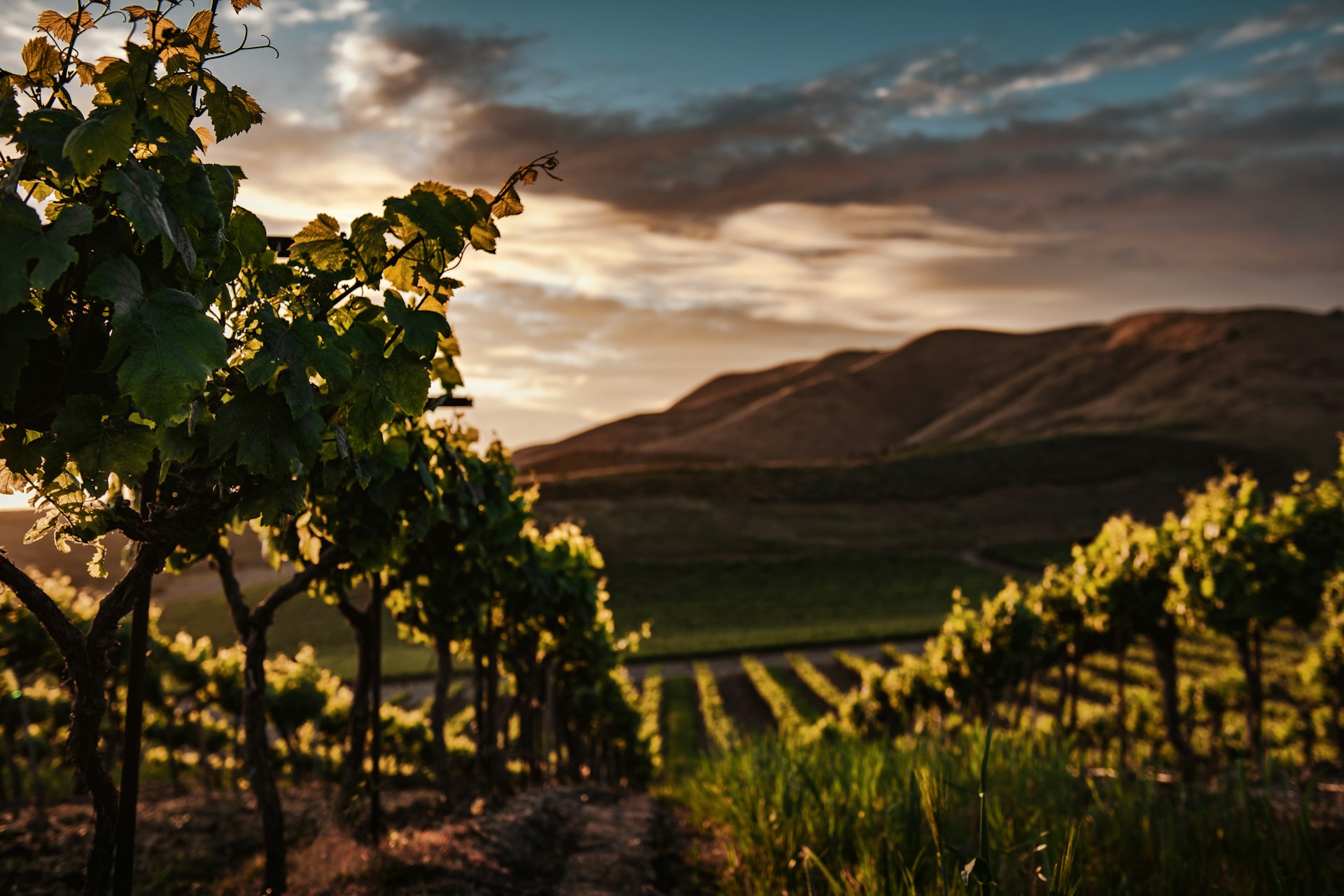
Photo by Tim Mossholder on Unsplash
How Wine Changed the Village
The growth of wine tasting strengthened the Village’s economy and introduced Carmel Valley to a much wider audience. Visitors who might once have stayed entirely on the coast began traveling inland for warmer weather, tasting rooms, restaurants, and scenery.
This created opportunities for chefs, winemakers, artists, retailers, hospitality businesses, and property owners. Older commercial spaces gained new uses, outdoor patios became valuable amenities, and the Village developed a reputation as a destination rather than merely a service center for local residents.
Wine did not erase Carmel Valley Village’s earlier identity. Instead, it layered a new lifestyle economy over the Village’s rural and aviation-era foundations.
That layering is one reason the Village feels authentic. Its tasting rooms and restaurants are not located in a newly constructed entertainment complex. They occupy a community shaped by ranching, aviation, local commerce, art, and decades of informal development.

Photo by Kelsey Chance on Unsplash
Carmel Valley Village Today
Today, Carmel Valley Village combines several identities at once. It is a residential community, a commercial center, a wine-tasting destination, a gathering place, and a gateway to the deeper reaches of Carmel Valley.
Residents can enjoy restaurants, tasting rooms, small businesses, galleries, local events, and community services without leaving the valley. Visitors appreciate the ability to spend an afternoon tasting wine or dining outdoors in a setting that is generally warmer and more relaxed than the immediate coast.
The Village also provides access to the broader Carmel Valley lifestyle. Garland Ranch Regional Park is nearby, and the surrounding area offers hiking, horseback riding, cycling, vineyards, golf, country clubs, ranches, and scenic drives.
Farther east, Carmel Valley Road leads toward Cachagua, vineyard properties, mountain landscapes, and some of the most private rural real estate in Monterey County. To the west, the road connects residents with Carmel-by-the-Sea, Highway 1, Pebble Beach, Monterey, Pacific Grove, and the rest of the Monterey Peninsula.
Learn more about the community and view current properties on our Carmel Valley Village real estate page.
Living Near Carmel Valley Village
Living near Carmel Valley Village offers a distinctive combination of country atmosphere and day-to-day convenience. Properties can feel rural and private while remaining close to restaurants, wine tasting, schools, community services, and outdoor recreation.
The housing stock is diverse. Buyers may encounter older cottages, mid-century ranch homes, remodeled residences, hillside properties, equestrian homes, luxury estates, homes with vineyard potential, and properties with significant acreage.
Some neighborhoods are close enough to make the Village part of everyday life. Other properties sit on surrounding hillsides where residents enjoy greater privacy, views, and separation while remaining only minutes from the commercial center.
Buyers interested in living close to the community center can search homes for sale near Carmel Valley Village. Those looking for elevated properties and broader valley views may also want to explore Village Views real estate.
Mid Valley and the Western Approach to the Village
Mid Valley occupies the area between the coastal end of Carmel Valley and Carmel Valley Village. It offers convenient access to both the Village and the services of the Monterey Peninsula.
Many buyers choose Mid Valley because it provides a balance of warmer weather, larger properties, and a rural atmosphere without requiring a longer drive into the upper valley. Depending on the specific location, residents may be within easy reach of Carmel-by-the-Sea, Highway 1, Carmel Valley Village, golf, shopping, and outdoor recreation.
Mid Valley includes an eclectic mix of residences, from traditional ranch homes to substantial custom estates. As with the Village, value can vary significantly based on lot size, privacy, views, condition, road influence, usable land, and proximity to amenities.
Explore current listings on our Mid Valley Carmel Valley real estate page.

Photo by Guillermo Mota on Unsplash
The Village and Carmel Valley’s Equestrian Heritage
Although Carmel Valley Village has developed into a wine and dining destination, the surrounding valley remains deeply connected to horses and ranching.
Equestrian properties can be found throughout Carmel Valley, including homes with barns, paddocks, pastures, riding areas, workshops, and larger parcels. The availability of land and the valley’s rural character make it one of the Monterey Peninsula’s strongest markets for buyers seeking horse property.
This is another way the past remains visible in the modern community. Horses were essential to the rancho period, ranching, transportation, and early settlement. Today, equestrian living is often a lifestyle choice rather than an economic necessity, but it continues the valley’s relationship with land and open space.
Buyers seeking acreage, barns, or riding facilities can explore current Carmel Valley horse properties for sale.
How Carmel Valley Village Differs From Carmel-by-the-Sea
Carmel Valley Village and Carmel-by-the-Sea are sometimes confused by visitors, but they offer very different settings and lifestyles.
Carmel-by-the-Sea is a compact coastal city known for white-sand beaches, storybook cottages, art galleries, restaurants, walkability, hidden courtyards, and a preserved village atmosphere.
Carmel Valley Village is an unincorporated inland community shaped by ranching, aviation, rural commerce, wine, and larger residential properties. It is warmer, less dense, more automobile-oriented, and more closely connected to acreage, hillsides, horses, vineyards, and country living.
Both communities offer charm, restaurants, wine tasting, and access to the broader Monterey Peninsula, but the experiences are distinct. Buyers who prioritize beach proximity and walkability may prefer Carmel-by-the-Sea. Those who want more sun, land, privacy, outdoor living, or equestrian potential may find Carmel Valley more appealing.
For a deeper look at the coastal village, read The Complete History of Carmel-by-the-Sea, California.
Why Carmel Valley Village History Matters to Real Estate
History provides context for Carmel Valley Village real estate because the community did not develop according to a single modern subdivision plan. Properties reflect different eras, land divisions, architectural styles, and intended uses.
Acreage, access, views, topography, sunlight, privacy, water considerations, improvements, outbuildings, road exposure, and proximity to the Village can all affect value. Two homes with similar interior square footage may appeal to different buyers and sell at substantially different prices because of their setting.
The Village’s history also adds emotional value. Buyers are not simply purchasing a house near a commercial district. They are becoming part of a community with roots in ranching, early aviation, local art, independent businesses, wine, and rural Monterey County life.
To follow current activity, visit our Carmel Valley real estate market report, which features active, pending, and recently sold properties.
The Enduring Appeal of Carmel Valley Village
Carmel Valley Village has changed dramatically since Byington Ford imagined pilots landing beside their homes. The airfield is no longer active, and the original Airway Village has evolved into a destination known for wine, food, sunshine, and country living.
Yet something of Ford’s original spirit remains. Carmel Valley Village still attracts people who want a different way of living. It is informal rather than polished, independent rather than standardized, and closely connected to the surrounding landscape.
The Village’s greatest strength may be its ability to evolve without entirely losing its past. Rancho history, aviation, murals, older commercial buildings, equestrian culture, vineyards, and modern hospitality all coexist within the same community.
That combination gives Carmel Valley Village a sense of authenticity that is increasingly difficult to find in desirable California communities.
Thinking About Buying or Selling Near Carmel Valley Village?
Whether you are looking for a cottage close to the Village, a remodeled ranch home, a hillside residence with views, a horse property, a vineyard-style estate, or a private acreage retreat, Carmel Valley offers a broad range of possibilities.
Understanding the differences among Carmel Valley Village, Village Views, Mid Valley, Cachagua, Robles del Rio, Miramonte, and the valley’s other neighborhoods is important. Each area offers a different combination of access, climate, privacy, land, amenities, and buyer demand.
The Monterey Peninsula Home Team can help you evaluate those differences, understand current market conditions, and identify the properties that best match your lifestyle and long-term goals.
Begin your search with the latest Carmel Valley homes for sale, or explore our complete Carmel Valley real estate guide.
Explore More of Carmel Valley
- Carmel Valley Village homes for sale
- Village Views homes for sale
- Mid Valley Carmel Valley real estate
- Carmel Valley horse properties
- Cachagua homes and land for sale
- Carmel Valley real estate market report
- Carmel Valley real estate market trends
- The Complete History of Carmel-by-the-Sea
Carmel Valley Village History FAQ
When was Carmel Valley Village founded?
The modern community was developed in 1946 by Byington Ford and his brother, Tirey Ford Jr. It was initially known as Airway Village and was connected to Ford’s nearby residential airpark concept.
Why was it originally called Airway Village?
Airway Village was developed beside an airfield intended to serve private pilots and residents of an aviation-oriented community. Early shops and services were within walking distance of the runway and proposed hangar homes.
Who was Byington Ford?
Byington Ford was a Monterey Peninsula real estate developer who envisioned an early residential airpark in Carmel Valley. He later helped develop the commercial community that became Carmel Valley Village.
What happened to the Carmel Valley airfield?
The Carmel Valley airfield operated for more than 60 years and was licensed by California in 1949. It formally closed in 2002, although the property continued to serve community, recreational, and emergency-response purposes.
When did Carmel Valley become an official wine region?
The Carmel Valley American Viticultural Area was formally established in 1982. Vineyards, wineries, and tasting rooms have since become an important part of the valley’s identity and economy.
Is Carmel Valley Village walkable?
Parts of the commercial Village are walkable, particularly the clusters of tasting rooms, restaurants, galleries, and shops. However, Carmel Valley is a rural area, and a vehicle is generally necessary for reaching surrounding neighborhoods and other Monterey Peninsula communities.
What is Carmel Valley Village known for today?
Carmel Valley Village is known for warm weather, wine tasting, locally owned restaurants, small businesses, galleries, rural scenery, community events, and access to hiking, horseback riding, vineyards, and the deeper Carmel Valley.
How is Carmel Valley Village different from Carmel-by-the-Sea?
Carmel Valley Village is an inland, rural community associated with sunshine, wine, larger properties, horses, and country living. Carmel-by-the-Sea is a compact coastal city known for its beach, walkability, cottages, galleries, restaurants, and preserved village character.
Where can I find homes for sale near Carmel Valley Village?
Current listings can be viewed on the Carmel Valley Village homes-for-sale page.