


Photograph courtesy of the Harrison Memorial Library Collection., Public domain, via Wikimedia Commons
From Bohemian Village to Luxury Real Estate Market
Carmel-by-the-Sea is one of the most desirable luxury real estate markets on the California coast, but its value was not built in the usual way. Carmel did not become famous because it tried to look like every other high-end beach town. It became valuable because it stayed unusual.
The village began as something far more intimate and unconventional: a coastal settlement shaped by Indigenous history, Carmel Mission, rancho lands, artists, writers, poets, builders, cottages, gardens, beach walks, and a deep respect for natural beauty. Over time, that bohemian village evolved into a world-class luxury market, but the best parts of Carmel’s value still come from the qualities that made it different in the first place.
Today, buyers are drawn to Carmel for many reasons: white sand beaches, walkability, architecture, limited supply, privacy, restaurants, art galleries, and proximity to Pebble Beach, Big Sur, Monterey, and the broader Monterey Peninsula. But the emotional appeal runs deeper. People fall in love with Carmel because it feels like a place with a soul.
This is the tenth article in our Carmel-by-the-Sea history series. The earlier articles explored Carmel Mission, the First People of Carmel, Carmel before incorporation, Carmel’s artist colony, Robinson Jeffers and Tor House, Carmel’s architecture and storybook homes, Carmel’s famous street-address tradition, Carmel Beach and Scenic Road, and Carmel’s preservation ethic. This chapter brings those threads together and explains how Carmel became one of California’s most distinctive luxury real estate markets. Explore the complete history of Carmel-by-the-Sea, from Indigenous roots to luxury real estate.
Carmel’s Luxury Story Begins With Difference
Many luxury markets are built around scale: larger homes, larger lots, larger amenities, and larger statements. Carmel’s luxury story is different. The village became desirable because of intimacy, character, walkability, architecture, history, restraint, and atmosphere.
That distinction is essential. Carmel is not simply an expensive coastal location. It is a village with a highly specific identity. Its value comes from the way all of its parts work together: cottages, beach, trees, courtyards, galleries, restaurants, stone walls, gardens, winding lanes, and a long tradition of protecting character.
For many buyers, Carmel real estate is not about acquiring the biggest possible home. It is about acquiring a lifestyle that is hard to find anywhere else.
.jpg)
Oriana Weatherbee Day, Public domain, via Wikimedia Commons
From Indigenous Homeland to Carmel Mission
The story of Carmel’s value begins long before the modern real estate market. The Carmel River, Carmel Bay, coastal terraces, oak woodlands, and nearby hills were part of an Indigenous cultural landscape long before European settlement.
Later, Carmel Mission became one of the most important historical landmarks in Alta California. Mission San Carlos Borromeo de Río Carmelo connected Carmel to Spanish colonial history, religious architecture, and the early development of the Monterey Peninsula.
These early layers matter because they give Carmel historical depth. The village is not a manufactured resort community. It is part of a landscape shaped by centuries of human history, cultural change, architecture, and memory.
The Rancho and Early Village Period
After the mission period, the Carmel area passed through Mexican-era land grants, ranching, early settlement, and eventually early village development. Before Carmel-by-the-Sea incorporated in 1916, the land was already being imagined as something more than a conventional subdivision.
Developers such as J. Frank Devendorf and Frank H. Powers helped promote Carmel as a village-by-the-sea rather than a typical resort town. Their vision attracted people who wanted beauty, simplicity, creative life, and connection to nature.
That early development philosophy still matters. Carmel’s modern luxury value is rooted in the fact that the village was never designed around generic expansion. It was designed around atmosphere.
The Artist Colony Created Carmel’s Soul
Carmel’s artist colony is one of the most important reasons the village still feels different. Writers, painters, performers, photographers, poets, and independent thinkers came to Carmel because it offered natural beauty, informality, and freedom from conventional city life.
Carmel’s official artist-colony history still describes the village as a bohemian enclave and a haven for artists, writers, and intellectuals. That identity was not decorative. It shaped the culture of the community.
The artists and writers helped create the values that buyers still respond to today: individuality, authenticity, beauty, craft, and a preference for character over standardization.
Why Bohemian Carmel Became Luxury Carmel
At first, Carmel’s artistic identity was not a luxury brand. Early Carmel was often rustic, modest, informal, and experimental. Many residents came because the village offered creative freedom and natural beauty, not because it offered polished luxury.
Over time, however, the qualities that attracted artists became the same qualities that attracted luxury buyers. The village was beautiful, walkable, architecturally distinctive, culturally rich, and physically limited. It had a world-class beach, charming streets, and a strong sense of identity.
As California grew, the Bay Area expanded, Silicon Valley created new wealth, and coastal communities became more scarce, Carmel’s old bohemian character became increasingly valuable. What had once been informal and eccentric became rare and irreplaceable.
Architecture Turned Identity Into Real Estate Value
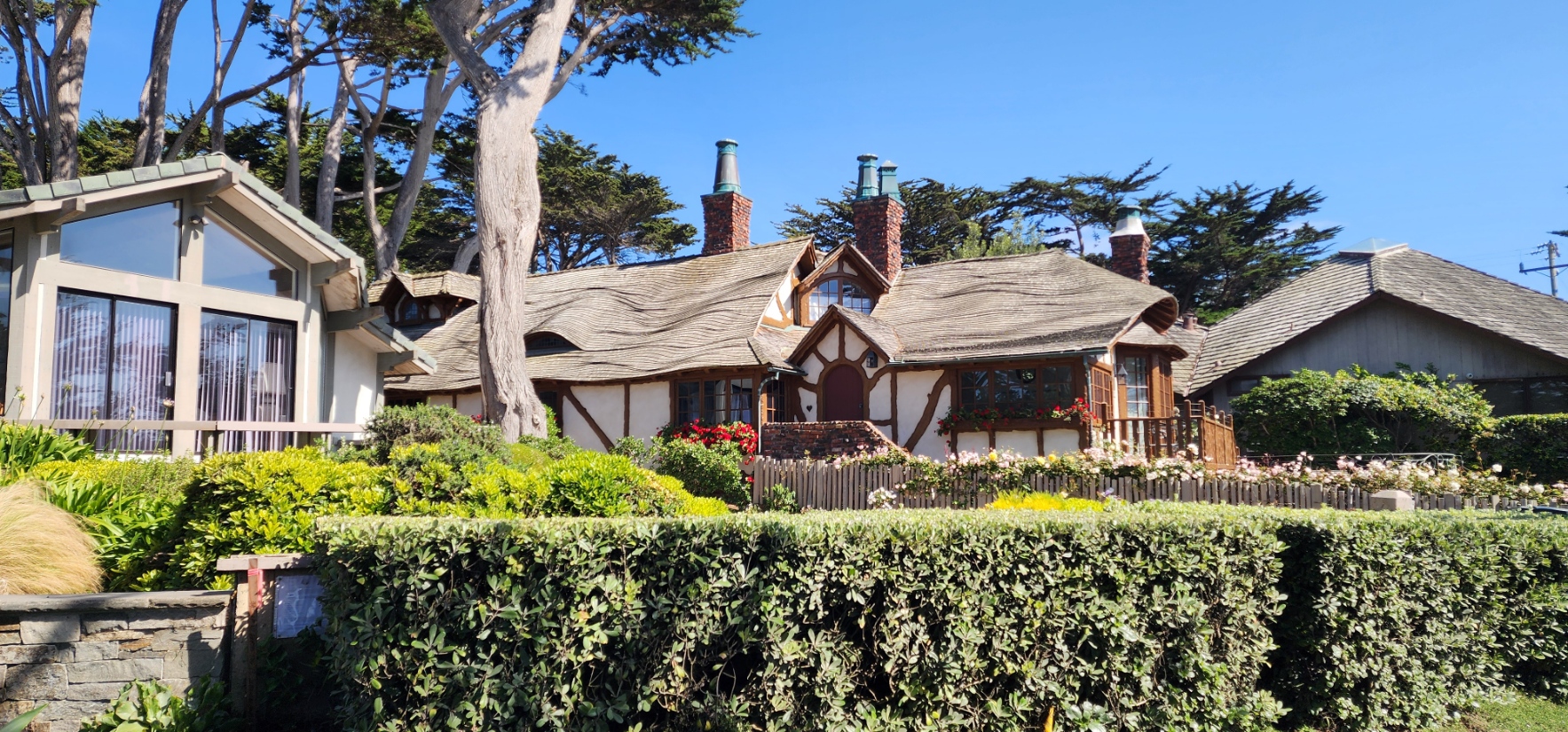
Carmel’s architecture is one of the clearest examples of how cultural identity became real estate value. Storybook cottages, stone chimneys, hidden gardens, arched doors, handcrafted details, and village-scale homes all turned Carmel’s artistic spirit into physical form.
Architectural figures such as Michael J. Murphy and Hugh Comstock helped create a built environment that felt personal, imaginative, and deeply connected to place. Carmel’s cottages were not standardized luxury products. They were part of a village tradition.
That tradition still affects pricing and demand. A smaller home with authentic Carmel character may attract more emotional interest than a larger home that feels generic. In Carmel, charm can be a major value driver.
 The Golden Rectangle and the Classic Carmel Lifestyle
The Golden Rectangle is one of the clearest examples of how Carmel’s history, architecture, and beach lifestyle combine to create premium real estate demand. Buyers looking at Carmel Golden Rectangle homes for sale are often seeking the classic Carmel experience: walkability to town, proximity to Carmel Beach, cottage architecture, and quiet residential charm.
The appeal is both practical and emotional. A Golden Rectangle home can offer easy access to restaurants, shops, galleries, wine tasting, the post office, and the beach. At the same time, it can offer the feeling of living inside the village story that has made Carmel famous.
That combination is rare. In many markets, buyers must choose between lifestyle, architecture, and location. In Carmel’s best pockets, those elements can come together in a powerful way.
Carmel Beach as a Value Engine
Carmel Beach is one of the great value engines of the Carmel real estate market. Its white sand, sunsets, dog-friendly culture, scenic walks, and direct connection to Ocean Avenue help define the village’s lifestyle.
Beach proximity matters in obvious ways: views, access, sound, and daily use. But it also matters emotionally. Buyers often imagine the rhythm of life: morning walks on the sand, evenings at sunset, dinner in town, and the ability to experience the best of Carmel without needing a car.
For many second-home and luxury buyers, that walkable beach lifestyle is the dream. It is one reason homes near Carmel Beach, Scenic Road, Carmel Point, and the Golden Rectangle can attract intense interest.
Scenic Road and Oceanfront Scarcity
Scenic Road represents one of Carmel’s most coveted coastal settings. It offers a direct relationship with Carmel Beach, Carmel Bay, the bluff pathway, and some of the most memorable views in the village.
For buyers seeking Carmel oceanfront real estate, Scenic Road and nearby coastal locations represent a very limited supply of opportunities. There are only so many homes that can offer a front-row relationship with Carmel’s coastline.
Scarcity is a major factor in luxury real estate, and Carmel’s coastline is finite. That scarcity is made more valuable by the village’s preservation ethic, which has helped prevent the beach from becoming overbuilt or overly commercialized.
Preservation Created Long-Term Value
Carmel’s preservation ethic is one of the main reasons the village’s real estate market has remained so distinctive. The city has protected historic resources, design character, architectural scale, tree canopy, beach character, and the village’s small-scale identity.
Preservation can sometimes be misunderstood as a restriction. In Carmel, it is also a value protector. It helps ensure that the qualities buyers love are not easily erased. Historic cottages, mature trees, garden walls, village walkability, and coastal restraint all contribute to long-term demand.
Without preservation, Carmel could have become a very different kind of place. The village might have gained more density or commercial intensity, but it could have lost the intimacy and charm that make its real estate so valuable.
Limited Supply and High Emotional Demand
Carmel-by-the-Sea is small, geographically constrained, and largely built out. Its most desirable areas are limited by beach proximity, village boundaries, historic development patterns, and preservation expectations.
At the same time, demand comes from a wide range of buyers: local residents, Bay Area and Silicon Valley buyers, Central Valley families, second-home purchasers, retirees, legacy buyers, and people drawn to the Monterey Peninsula lifestyle.
This combination of limited supply and high emotional demand is powerful. Buyers are not simply comparing Carmel homes on a spreadsheet. They are often pursuing a feeling, a lifestyle, and a place they may have dreamed about for years.
Why Carmel Is Different From Other Luxury Markets
Carmel competes with other luxury coastal markets, but it does not feel like most of them. Its charm is not based on uniform perfection. It is based on texture, history, and individuality.
In Carmel, a winding lane may matter. A courtyard may matter. A stone fireplace may matter. A house name may matter. A mature cypress or oak may matter. A short walk to the sand may matter. The emotional details are often what make a property memorable.
This is why Carmel can outperform conventional expectations. A home that might seem small on paper can feel extraordinary in person if it captures the village’s character.
The Role of Restaurants, Galleries, and Village Life
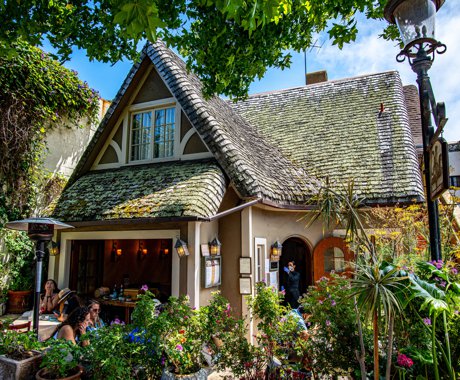
Carmel’s luxury market is also supported by the strength of its village life. Restaurants, wine tasting, boutique shopping, art galleries, courtyards, theaters, and inns create a daily experience that feels both refined and personal.
Importantly, this village life is walkable. The official Carmel visitor site emphasizes that the village offers restaurants, wine tasting, boutique shops, art galleries, a white-sand beach, and scenery within walking distance. That walkability is a key part of Carmel’s luxury proposition.
Luxury in Carmel is not only about privacy. It is also about ease. The ability to leave a cottage, walk to coffee, browse galleries, meet friends for dinner, and continue down to the beach is part of what buyers are paying for.
Modern Luxury Without Losing the Village
Carmel’s market now includes beautifully remodeled cottages, architect-designed homes, ocean-view residences, historic properties, and modernized retreats. Buyers often want updated kitchens, improved baths, better systems, outdoor living, privacy, and comfort.
But the most successful properties usually balance modern luxury with Carmel character. They do not erase the village’s identity. They enhance it.
This is an important point for sellers. In Carmel, the goal is not always to make a home feel brand new. The better goal is often to make it feel beautifully cared for, highly livable, and authentically Carmel.
The Risk of Over-Modernizing
Because Carmel homes are valuable, many owners consider major renovations. Thoughtful modernization can add significant appeal, but over-modernizing can sometimes weaken what buyers love most.
A remodel that removes old-world texture, garden privacy, cottage scale, stonework, wood details, or architectural personality may make a home feel more generic. In another market, that might not matter. In Carmel, it can.
Buyers often want comfort, but they also want magic. The best Carmel properties deliver both.
Carmel’s Real Estate Value Is Built on Story
More than many markets, Carmel real estate is story-driven. The story may be architectural, historical, coastal, artistic, or lifestyle-based. A home may be compelling because it is a storybook cottage, a beach retreat, a Carmel Point hideaway, a Golden Rectangle classic, or a restored historic property.
That story matters in marketing. Carmel homes should not be presented only as bedrooms, baths, square footage, and lot size. Those details are necessary, but they rarely capture the full value.
The strongest Carmel marketing explains what the property means within the village: how it lives, how it connects to the beach, how it reflects Carmel’s architecture, and why it feels emotionally right.
What Buyers Should Understand About Carmel
Buyers should understand that Carmel is not a typical luxury market. The best property may not always be the largest or newest home. It may be the home that best captures location, charm, history, walkability, privacy, and character.
Buyers should also understand the importance of micro-location. A few blocks can make a meaningful difference in walkability, beach access, traffic patterns, views, sun exposure, and overall feel.
In Carmel, local knowledge matters. The difference between two properties may not be obvious from an online listing, but it can be very clear on the ground.
What Sellers Should Understand About Carmel
Sellers should understand that Carmel buyers are often buying emotionally first and analytically second. They still care about condition, pricing, inspections, and value, but the initial attraction is often emotional.
That means presentation matters. Gardens should feel inviting. Character details should be highlighted. The home’s relationship to the village and beach should be clearly explained. Photography, copywriting, staging, and storytelling are especially important.
The right strategy is not just to market a property. It is to market a Carmel lifestyle.
From Bohemian Roots to Global Appeal
The remarkable thing about Carmel is that its global appeal came from local authenticity. The village became famous not because it abandoned its roots, but because it protected them.
The same qualities that drew artists and writers more than a century ago still draw buyers today: beauty, individuality, architecture, landscape, creativity, and escape from the ordinary.
Carmel’s price points may have changed dramatically, but the emotional promise remains surprisingly consistent. People come to Carmel because they want to feel connected to a place that is beautiful, intimate, and different.
Why This Chapter Matters in the Carmel History Cluster
This chapter is the culmination of the Carmel-by-the-Sea history series because it explains how history became value. Carmel’s Indigenous landscape, mission heritage, rancho period, artist colony, literary legacy, architecture, beach setting, village quirks, and preservation ethic are not separate from the real estate market. They are the foundation of it.
Carmel’s modern luxury market exists because those layers survived. The village protected enough of its character that buyers still recognize something rare when they arrive.
In the final pillar page of this cluster, we will bring the entire story together in one comprehensive guide to the history of Carmel-by-the-Sea, with internal links to each supporting article in the series.
Want more information about Carmel-by-the-Sea?
One-square-mile, fairytale village, Discover Carmel-by-the-Sea
Carmel-by-the-Sea became a city in 1916
Thinking About Buying or Selling in Carmel?
If you are considering buying or selling a home in Carmel-by-the-Sea, understanding the village’s history can help you better understand why certain properties command such strong emotional and financial appeal. In Carmel, value is shaped by location, architecture, beach proximity, walkability, preservation, scarcity, and story.
The Monterey Peninsula Home Team helps buyers and sellers navigate the Carmel real estate market with local knowledge, neighborhood insight, and a deep appreciation for what makes this community so special.
Explore current Carmel homes for sale, learn more about Carmel Golden Rectangle homes for sale, or browse Carmel oceanfront real estate to see how Carmel’s history, architecture, beach lifestyle, and preservation ethic continue to shape one of California’s most desirable luxury real estate markets.