Monterey Peninsula Real Estate Blog

Information about Monterey Peninsula Real Estate including new MLS Real Estate Listings by the Monterey Peninsula Home Team. You will see posts about Monterey Peninsula cities including Monterey, Pacific Grove, Pebble Beach, Carmel, Carmel Valley, Seaside, Marina and the HWY 68 Corridor.  These posts will have stories and information about local issues including real estate, news, and other helpful information, plus anything else we want to write about ;-).


May 21, 2026

Carmel’s Artist Colony: How Writers, Painters & Bohemians Shaped the Village

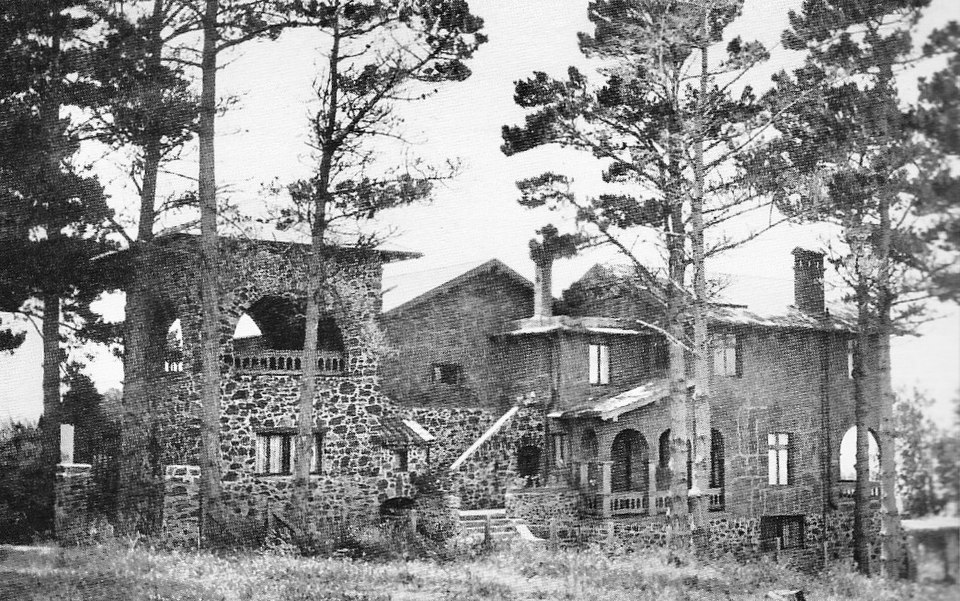
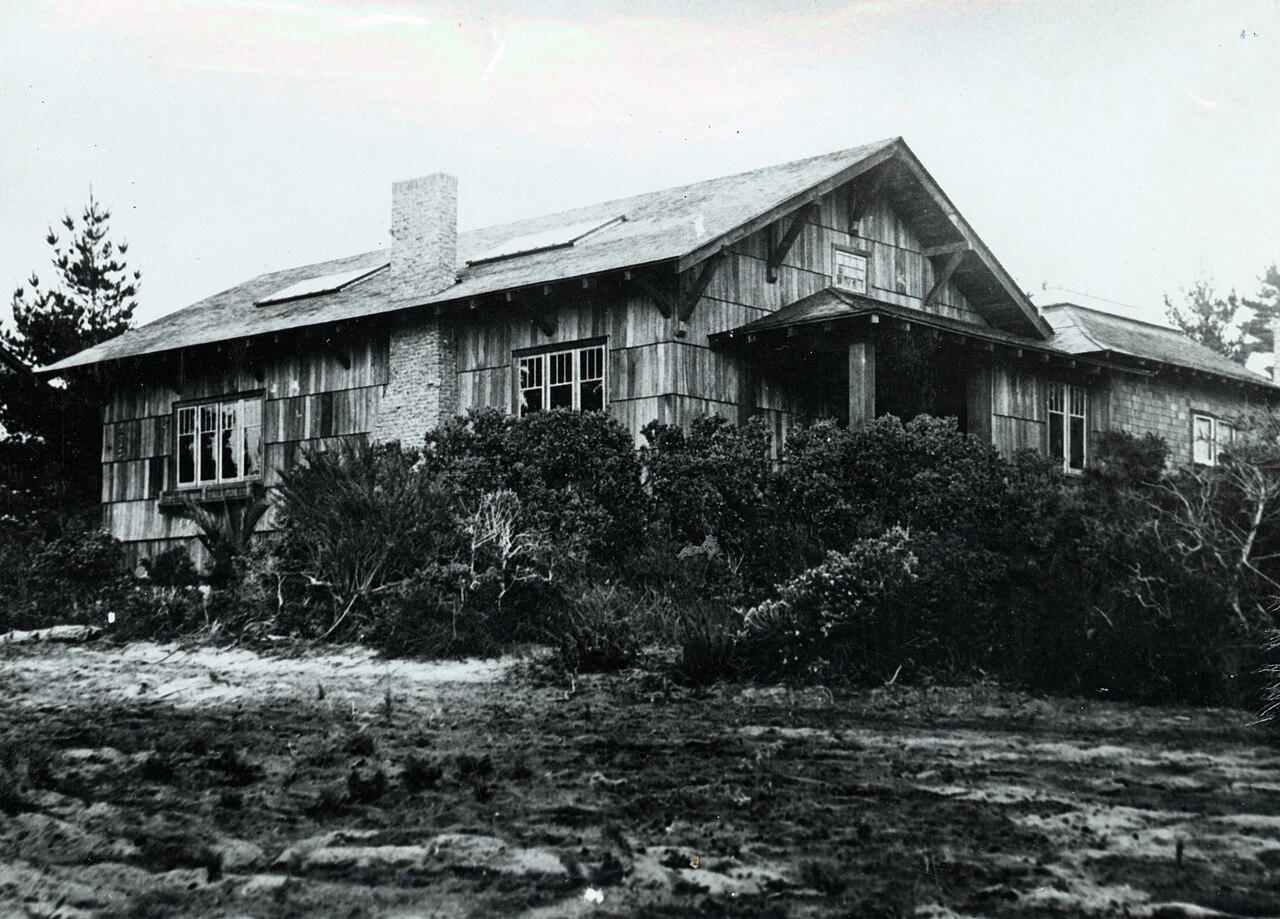
Carmel Arts and Crafts Hall 1907

Exterior of the historic Carmel Arts & Crafts Clubhouse, in Carmel-by-the-Sea, California, circa 1907. Historic Files, Public domain, via Wikimedia Commons

Carmel’s Artist Colony: How Writers, Painters, and Bohemians Shaped the Village

Carmel-by-the-Sea is famous today for its storybook cottages, white sand beach, hidden courtyards, art galleries, village shops, and some of the most desirable real estate on the California coast. But to really understand Carmel, you have to understand the artists, writers, poets, performers, and independent thinkers who helped shape the village from the beginning.

Carmel was not built as a typical beach town. It was not defined by a boardwalk, amusement pier, large resort strip, or conventional commercial grid. Instead, Carmel grew into a village where creativity, nature, architecture, theater, literature, and personal expression were central to its identity.

This is the fourth article in our Carmel-by-the-Sea history series. The first article explored Carmel Mission and the Spanish colonial roots of Carmel-by-the-Sea. The second article looked at the First People of Carmel and the Indigenous history of the Monterey Peninsula. The third article traced Carmel’s transformation from rancho land to coastal village before incorporation. This article explores the creative movement that gave Carmel much of its cultural soul. Explore the complete history of Carmel-by-the-Sea, from Indigenous roots and Carmel Mission to the artist colony, storybook cottages, Carmel Beach, preservation, and luxury real estate.

Carmel Was Imagined as More Than a Real Estate Development

In the early 1900s, Carmel was still a young coastal settlement surrounded by pine forest, sand, beach, and open land. The Carmel Development Company, led by J. Frank Devendorf and Frank H. Powers, played a major role in shaping the early village. Their vision was not simply to sell lots, but to create a community rooted in natural beauty, artistic life, and a quieter relationship with the landscape.

That vision mattered. Carmel could have become a conventional seaside subdivision. Instead, it attracted people who were looking for something more personal, more creative, and less rigid than city life. Writers, painters, teachers, actors, musicians, photographers, and free-spirited residents began to see Carmel as a place where they could live simply, work creatively, and be close to the coast.

That early identity still shapes the way people respond to Carmel real estate today. Buyers are often drawn not only to the beach and location, but to the feeling that Carmel is a village with a story, a personality, and an artistic spirit that cannot be easily duplicated.

The 1906 San Francisco Earthquake Changed Carmel’s Future

Carmel’s artist colony gained momentum after the 1906 San Francisco earthquake and fire. San Francisco’s devastation displaced many people, including artists and writers who were searching for an affordable, beautiful, and welcoming place to rebuild their lives.

Carmel offered exactly that. It had natural beauty, inexpensive land by modern standards, a growing creative community, and a development vision that appealed to people who valued art and independence. Many early residents lived in tents, cabins, and modest cottages while building the beginnings of a village culture.

Historical accounts often describe this period as a turning point. The earthquake did not create Carmel’s creative identity from nothing, but it accelerated it. Artists and writers who might have remained in San Francisco or the Bay Area came south, bringing energy, talent, social connections, and a bohemian spirit that helped define Carmel-by-the-Sea.

George Sterling and Carmel’s Literary Reputation

Poet George Sterling is one of the most important figures in Carmel’s early literary history. Sterling was already well connected in Bay Area literary circles, and his presence helped attract other writers, poets, and intellectuals to the village.

Sterling’s circle included some of the most recognizable literary names associated with early Carmel, including Jack London, Mary Austin, and others who found inspiration in Carmel’s landscape, informality, and distance from conventional city life.

For Carmel, this literary reputation mattered. The village was not only a place where people built homes. It was a place where people wrote, debated ideas, performed, painted, walked the beach, gathered in cottages, and imagined a different way of living.

Mary Austin, Jack London, Robinson Jeffers, and the Writers of Carmel

Carmel’s early writing community included an extraordinary group of literary figures. Mary Austin, Jack London, Robinson Jeffers, Upton Sinclair, George Sterling, and Sinclair Lewis are among the writers connected to Carmel’s literary legacy. The City of Carmel-by-the-Sea continues to recognize this history through local history programming focused on these trailblazing writers.

Each writer had a different relationship with Carmel, but together they helped build the village’s reputation as a haven for independent literary voices. Carmel offered a setting where writers could live near the sea, step outside rigid social expectations, and participate in a community that valued ideas as much as commerce.

Robinson Jeffers would later become one of the most important literary figures associated with Carmel. His Tor House and Hawk Tower, built from stone gathered from nearby Carmel Beach, deserve their own dedicated article in this history series because they connect Carmel’s literary legacy directly to architecture, landscape, and place.

Painters and Visual Artists Found a Natural Studio

Carmel was not only a writers’ colony. It also became a powerful draw for painters and visual artists. The coastline, cypress trees, changing light, beach, fog, rocks, forests, and nearby Point Lobos gave artists an extraordinary natural studio.

Artists were drawn to the same qualities that continue to attract residents and visitors today: dramatic scenery, intimate scale, soft coastal light, and the feeling that the village belonged to the landscape rather than overpowering it.

Over time, Carmel developed an art infrastructure that reinforced its creative identity. Galleries, art associations, studios, classes, exhibitions, and patrons helped transform Carmel from a loose creative settlement into a recognized art community. The Carmel Art Association, founded in 1927, remains an important part of this legacy and is one of the oldest artist cooperatives in the country.

Carmel Arts and Crafts Club exhibition of paintings by Francis Hopkinson Smith (1915).

Carmel Arts and Crafts Club exhibition of paintings by Francis Hopkinson Smith (1915). Carmel Arts and Crafts Club, Public domain, via Wikimedia Commons

The Carmel Arts and Crafts Club

The Carmel Arts and Crafts Club was one of the most important early cultural organizations in the village. Founded in the early 1900s, it became a gathering place for artistic activity, performances, lectures, exhibitions, and community life.

The Arts and Crafts movement fit Carmel beautifully. It valued handcraft, natural materials, individuality, and resistance to industrial sameness. Those values can still be felt in Carmel’s architecture, gardens, courtyards, and cottage culture.

In a community where many homes were modest, handmade, and personal, art was not limited to canvases or theaters. It became part of daily life. The way people built, landscaped, furnished, entertained, and gathered all reflected the village’s creative ethos.

Theater, Performance, and the Forest Theater Tradition

Theater also played an important role in Carmel’s artistic identity. Carmel’s early residents did not simply consume culture; they produced it. Plays, pageants, readings, performances, and outdoor theater became part of the village’s social fabric.

The Forest Theater is one of Carmel’s most distinctive cultural landmarks. Built into a natural outdoor setting, it reflected Carmel’s unusual combination of performance, landscape, and community participation. Rather than separating art from nature, Carmel often placed the two together.

This helped reinforce one of the village’s defining ideas: Carmel was not meant to be a passive resort. It was a participatory community where residents created the culture around them.

Bohemian Carmel: Simple Living, Big Ideas, and Coastal Freedom

The word “bohemian” is often used loosely, but in early Carmel it had real meaning. Many residents were drawn to a way of life that was informal, creative, and somewhat resistant to the conventions of larger cities. Early Carmel was known for tents, cabins, smoky fires, beach gatherings, handmade cottages, and a social world organized around conversation, art, literature, and performance.

This was not luxury in the modern sense. Early Carmel was often rustic, experimental, and financially modest. But it offered something rare: freedom. Residents could build small homes, pursue creative work, gather with other artists, and live close to a magnificent coastline.

That bohemian foundation is one of the reasons Carmel’s later luxury identity feels different from many affluent communities. Carmel luxury is not only about scale or display. At its best, it is about character, restraint, beauty, privacy, craftsmanship, and emotional connection to place.

William M Chase and his Summer School of Art

William M Chase and his Summer School of Art. Carmel Arts and Crafts Club, Public domain, via Wikimedia Commons

How the Artist Colony Shaped Carmel’s Architecture

Carmel’s artist colony had a direct influence on the village’s built environment. Creative residents were often less interested in formal urban design and more interested in homes that felt personal, organic, and connected to the land.

That mindset helped create the foundation for Carmel’s later cottage architecture. Small-scale homes, irregular streets, hidden gardens, wood details, stonework, hand-built elements, and imaginative design all fit the creative identity of the village.

Later architectural figures such as Michael J. Murphy and Hugh Comstock would become central to Carmel’s storybook and cottage identity. But the cultural foundation for that architecture was already present in the artist colony. Carmel residents valued individuality over uniformity, charm over spectacle, and village atmosphere over conventional resort development.

Why Carmel’s Art Colony Still Matters to Real Estate

Carmel’s artist colony is not just an interesting chapter in local history. It still affects how people value homes in Carmel today.

In many luxury markets, buyers focus heavily on size, amenities, views, and new construction. Those things matter in Carmel, but they are not the whole story. Carmel buyers often place extraordinary value on charm, character, history, walkability, architecture, privacy, gardens, and the feeling that a home belongs to the village.

That is why a smaller Carmel cottage in the right location can create intense buyer interest. It may not compete on square footage with larger homes elsewhere, but it can offer something harder to replicate: authenticity.

Explore current Carmel homes for sale to see how the village’s artistic heritage, architecture, and coastal setting continue to influence today’s real estate market.

The Village Still Feels Like an Artist Colony

Even though Carmel is now one of California’s most desirable luxury communities, the artist colony legacy is still visible. The village remains filled with galleries, courtyards, studios, theaters, historic buildings, informal pathways, and homes that feel personal rather than standardized.

Visitors can still walk through town and feel that Carmel is not just a shopping district or beach destination. It is a cultural landscape. The architecture, art galleries, performance spaces, gardens, and village scale all continue to reflect the values established by early creative residents.

That continuity is part of Carmel’s power. The village has changed dramatically in value and prestige, but it has not completely lost the artistic identity that made it special in the first place.

From Bohemian Village to Luxury Coastal Market

One of the most fascinating things about Carmel is the way it evolved from an informal bohemian settlement into a world-class luxury real estate market while still retaining much of its original character.

This transformation did not happen by accident. Carmel’s preservation ethic, design review, small scale, resistance to overdevelopment, and pride in local history all helped protect the qualities that buyers now value. The same village character that once attracted artists and writers now attracts second-home buyers, legacy buyers, Silicon Valley clients, international visitors, and people seeking an unusually beautiful coastal lifestyle.

In that sense, Carmel’s artist colony was not separate from its real estate story. It helped create the very identity that makes Carmel real estate so desirable today.

Why This Chapter Matters in the Carmel History Cluster

The artist colony chapter is essential because it explains Carmel’s personality. The mission era explains Carmel’s early historical gravity. The rancho and development era explains how the village began to take shape. But the artist colony explains why Carmel became emotionally different.

Carmel’s writers, painters, performers, and bohemians gave the village its soul. They helped establish a culture where beauty, creativity, nature, individuality, and architecture mattered deeply. That culture still informs the way people experience Carmel today.

In the next article in this series, we will explore Robinson Jeffers, Tor House, and Carmel’s literary legacy in greater depth. That article will connect one of Carmel’s most important writers to the stone, coastline, and architecture that make the village so memorable.

Key Carmel Artist Colony Landmarks

  • Forest Theater
  • Carmel Arts and Crafts Club
  • Carmel Art Association
  • Tor House

Carmel-by-the-Sea Links of interest:


Thinking About Buying or Selling in Carmel?

If you are considering buying or selling a home in Carmel-by-the-Sea, understanding the village’s artistic history can help you better understand why certain homes create such powerful emotional appeal. Carmel’s most desirable properties are often valuable not only because of location, but because they reflect the character, creativity, and sense of place that define the village.

The Monterey Peninsula Home Team helps buyers and sellers navigate the Carmel real estate market with local knowledge, neighborhood insight, and a deep appreciation for what makes this community so special.

Explore current Carmel homes for sale, learn more about Carmel Golden Rectangle homes for sale, or browse Carmel oceanfront real estate to see how Carmel’s artistic heritage, architecture, and coastal lifestyle continue to shape one of California’s most distinctive housing markets.

May 20, 2026

From Rancho Land to Coastal Village: Carmel Before Incorporation

From Rancho Land to Coastal Village: Carmel Before Incorporation

Carmel-by-the-Sea may be famous today for storybook cottages, white sand beaches, art galleries, courtyards, cypress trees, and some of the most desirable real estate on the California coast, but the village did not appear overnight. Before Carmel became an incorporated city in 1916, the land passed through several important historical chapters: Indigenous homeland, Spanish mission influence, Mexican-era land grants, ranching, early land speculation, and finally the dream of a coastal village shaped by nature, art, and architecture.

This is the third article in our Carmel-by-the-Sea history series. The first article explored Carmel Mission and the Spanish colonial roots of Carmel-by-the-Sea. The second article looked at the First People of Carmel and the Indigenous history of the Monterey Peninsula. This article moves forward into the period between the mission era and Carmel’s official incorporation as a city. Explore the complete history of Carmel-by-the-Sea, from Indigenous roots and Carmel Mission to the artist colony, storybook cottages, Carmel Beach, preservation, and luxury real estate.

It is during this in-between period that the future village began to take shape. Carmel’s later identity as a quiet, artistic, architecturally distinctive seaside community can be traced to decisions made before incorporation, when early developers and residents imagined something very different from a conventional resort town.

Mission San Carlos Borromeo de Carmelo

Oriana Weatherbee Day, Public domain, via Wikimedia Commons

Carmel After the Mission Era

The Spanish mission period gave Carmel one of its most important landmarks, Mission San Carlos Borromeo de Río Carmelo, commonly known as Carmel Mission. But the later story of Carmel-by-the-Sea required a new set of forces: land ownership, ranching, settlement patterns, transportation access, and the growing appeal of the California coast.

After Mexican independence from Spain, mission lands throughout California were secularized, and large land grants became a defining feature of the Mexican rancho period. Across the Monterey Peninsula and Big Sur coast, these ranchos shaped patterns of ownership, agriculture, grazing, and later subdivision.

The Carmel area was not yet a village in the modern sense. It was a landscape of river, beach, pine forest, coastal scrub, mission lands, ranching activity, and scattered settlement. What would eventually become Carmel-by-the-Sea still had to be imagined, mapped, promoted, built, and protected.

The Rancho Landscape Around Carmel

To understand Carmel before incorporation, it helps to understand the rancho landscape that surrounded it. Mexican land grants in the greater Carmel and Big Sur region helped define ownership patterns that would influence later development.

One of the important Mexican land grants south of the Carmel River was Rancho San José y Sur Chiquito, which included Point Lobos and extended south along the coast. Historical accounts describe the grant as covering land south of the Carmel River, including coastal and mountain areas connected with San Jose Creek, Malpaso Creek, Soberanes Creek, Garrapata Creek, and the Point Lobos region.

These rancho lands were used for a mixture of ranching, dairy, farming, quarrying, whaling, fishing, and later land speculation. This matters because Carmel’s later development did not happen in isolation. It emerged from a broader landscape where large landholdings, coastal resources, and changing ownership patterns were already shaping the future of the Monterey Peninsula.


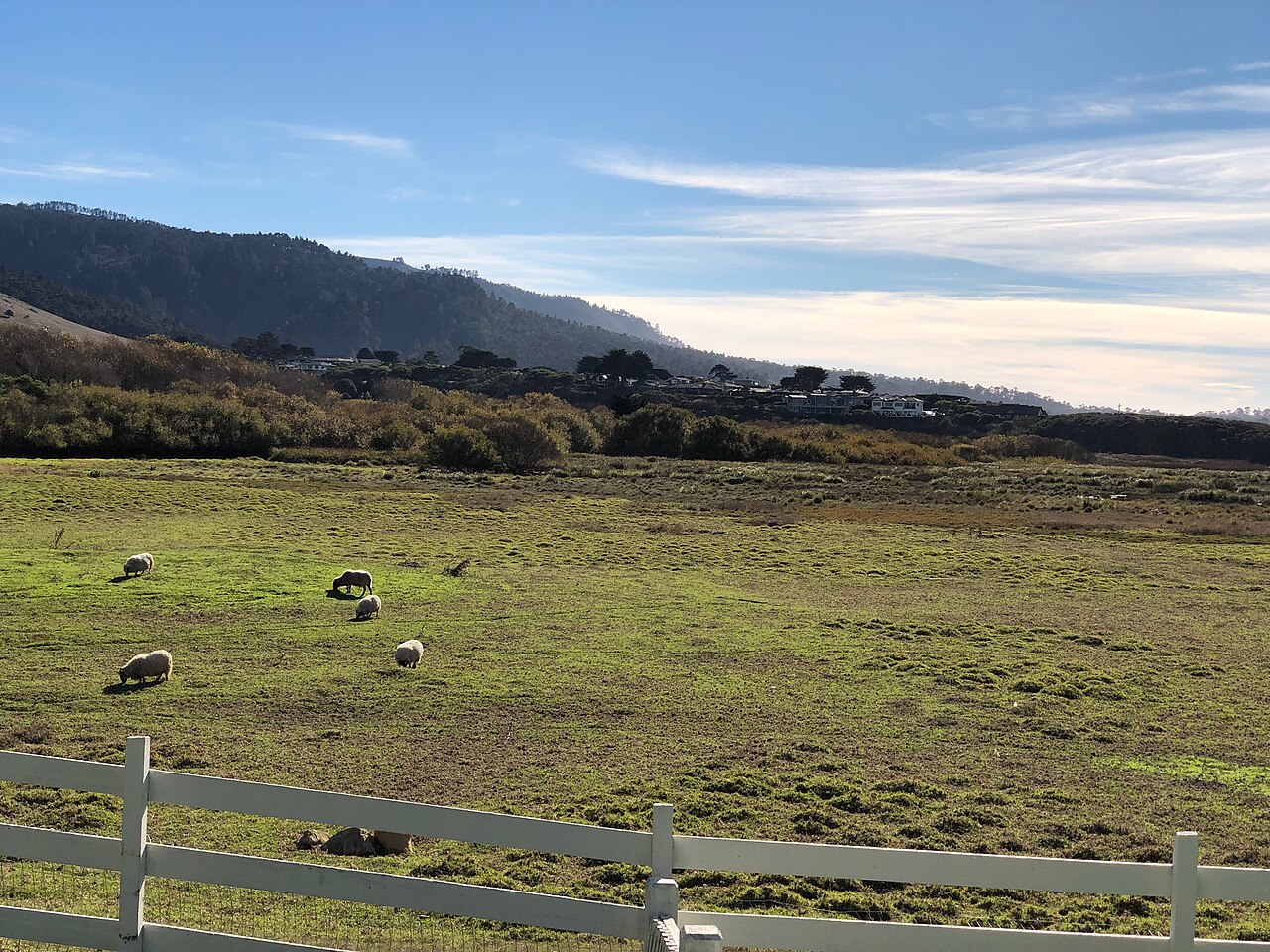
Carmel Rancho Mission Ranch Meadows Land

Greghenderson2006, CC BY-SA 4.0 <https://creativecommons.org/licenses/by-sa/4.0>, via Wikimedia Commons

Mission Ranch and the Carmel River Setting

One of the most visible reminders of Carmel’s ranching past is Mission Ranch, located near the Carmel River and Carmel Mission. Long before Carmel-by-the-Sea became known as a refined coastal village, portions of the surrounding area were used for grazing and agricultural purposes.

The Carmel River area was especially important because it connected the mission, the valley, the coast, and the future village. The same natural qualities that made the area significant to Indigenous people and attractive to Spanish missionaries also made it valuable in the rancho and early settlement periods: water, fertile land, access to the coast, and a dramatic natural setting.

Today, this landscape remains part of Carmel’s appeal. Buyers looking at Carmel real estate are often responding to more than a home. They are responding to the way the village sits between ocean, river, valley, forest, and historic landmarks.


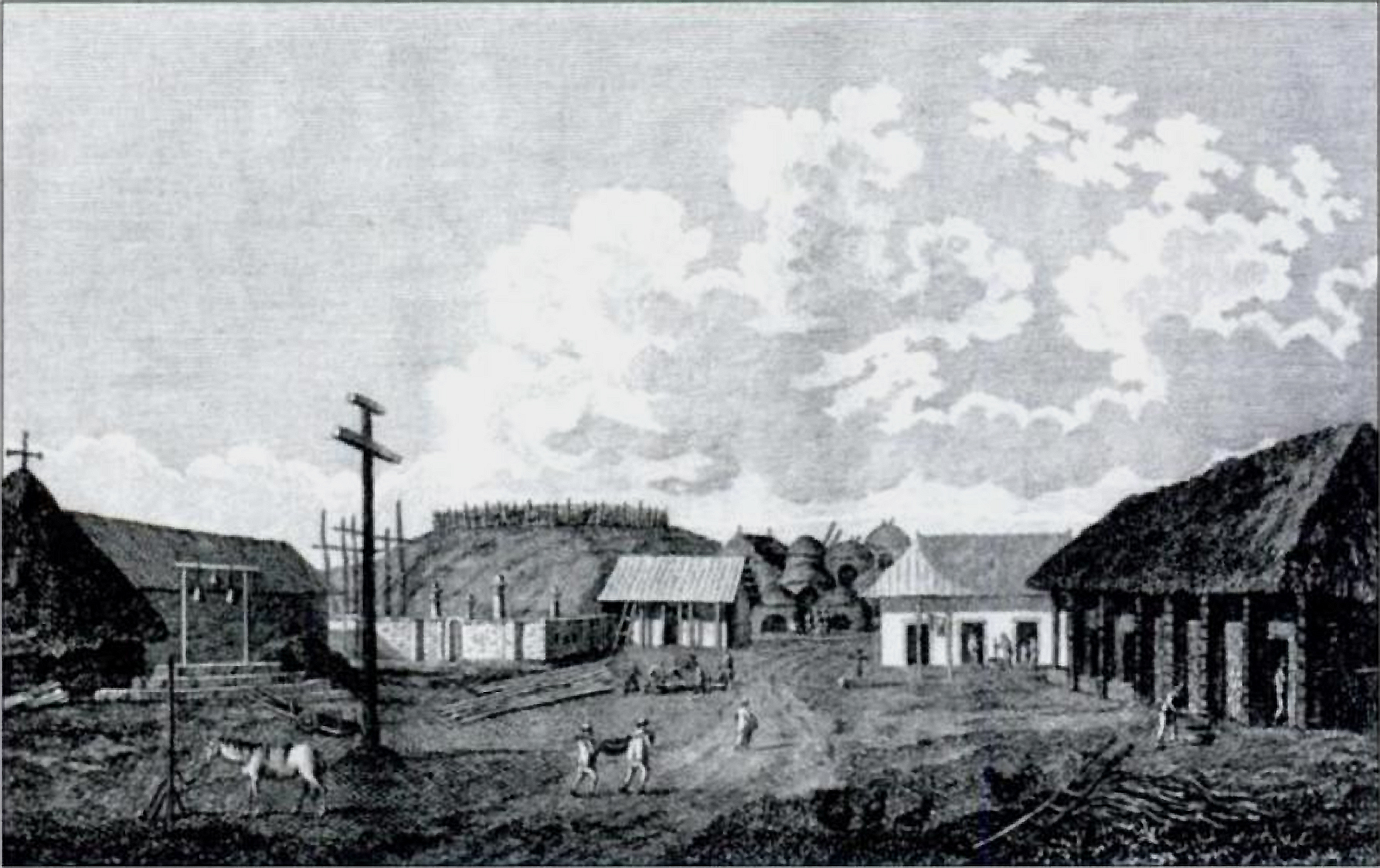
Early Carmel artwork from around1794

Artwork created by John Sykes, Public domain, via Wikimedia Commons

Early Settlement and the Idea of a Village

By the late 19th century, Carmel was still not the polished village we recognize today. The area had natural beauty, but it lacked the developed streets, cottages, commercial core, and civic identity that would later define Carmel-by-the-Sea.

Small-scale settlement began to appear, and the idea of Carmel as a village gradually became more realistic. Early homes, boarding houses, paths, and land sales helped create the beginnings of a community. But the transformation from coastal land to village required a more deliberate vision.

That vision would arrive in the early 20th century with the Carmel Development Company.

The Carmel Development Company and the Birth of a Village Vision

In 1902, J. Frank Devendorf and Frank H. Powers founded the Carmel Development Company, a real estate development firm that played a central role in shaping Carmel-by-the-Sea. Their approach was not simply to sell lots. They promoted Carmel as a place for people who valued natural beauty, artistic life, simplicity, and a close relationship with the landscape.

This was a crucial distinction. Carmel could have developed into a more conventional seaside subdivision. Instead, its early identity leaned toward a village in the forest by the sea, with irregular paths, modest cottages, artistic residents, and a strong appreciation for the natural environment.

Carmel’s official historical timeline describes the dream of Carmel as a “village-by-the-sea” as something that developed slowly at the beginning of the 20th century. That dream became one of the most important turning points in Carmel’s history.

J. Frank Devendorf and Carmel’s Early Identity

J. Frank Devendorf is one of the key figures in Carmel’s pre-incorporation story. He helped shape both the physical and cultural direction of the village. Rather than marketing Carmel only as a land investment, Devendorf and his associates helped position it as a place for writers, painters, musicians, thinkers, and people seeking a more natural and creative way of life.

That early positioning is one reason Carmel became associated with artists and writers so quickly. The village was not built around heavy industry, a port, or a large commercial district. It was marketed and experienced as a retreat into beauty, nature, and creative life.

This identity still influences Carmel today. Many buyers who fall in love with Carmel are not simply looking for square footage or conventional luxury. They are looking for charm, privacy, texture, walkability, architecture, and emotional connection. Those qualities were embedded in Carmel’s early development story before the city was ever incorporated.

The Role of Artists, Writers, and Early Residents

Even before incorporation, Carmel was becoming known as a place that attracted creative people. Artists, writers, poets, and independent-minded residents were drawn to the village’s natural beauty, affordability at the time, and unusual freedom from the rigid structure of larger towns.

This early creative population helped establish the atmosphere that later made Carmel famous. The village became known for theatrical performances, literary culture, painting, music, handmade homes, informal lanes, and a strong sense of local identity.

The artist colony deserves its own article in this series, but it is important to understand that its roots were already present before incorporation. Carmel’s creative identity did not arrive after the city became official. It helped create the need for a civic structure in the first place.

Why Carmel Did Not Become a Typical Beach Town

Many California coastal communities developed around boardwalks, amusement districts, large hotels, commercial piers, rail depots, or resort infrastructure. Carmel took a different path.

Its earliest village identity was smaller, quieter, and more intimate. The natural setting was not treated merely as a backdrop for commercial development. It became part of the village’s defining character. Trees, beach, courtyards, cottage scale, and walkability became more important than grand boulevards or high-density resort construction.

This distinction is central to Carmel’s modern real estate value. Carmel’s charm is not accidental. It comes from a long pattern of choices that favored village character over conventional growth.

Carmel’s Early Built Environment

Before incorporation, Carmel’s early built environment was modest but important. Small cottages, simple commercial buildings, artist studios, gathering places, and early civic structures began to give the village shape. Many of these buildings reflected practical needs, limited budgets, and a desire to live close to nature.

The result was not polished uniformity. It was texture. Carmel’s architecture developed through variety, individuality, and adaptation to the landscape. That is one of the reasons the village still feels so different from more formulaic coastal communities.

Later, builders and designers such as Michael J. Murphy and Hugh Comstock would help define Carmel’s cottage and storybook architecture. But the foundation was laid before incorporation, when the village first embraced the idea that homes could be personal, artistic, and deeply connected to place.

La Playa Hotel Circa 1906

La Playa Hotel Circa 1906 -Photograph courtesy of the Harrison Memorial Library Collection, Public domain, via Wikimedia Commons

The Road Toward Incorporation

By the early 1900s, Carmel had grown from an idea into a functioning community. The population was still small, but the village had residents, businesses, cultural life, homes, and a distinct identity. With growth came the need for more formal civic organization.

Carmel-by-the-Sea was incorporated as a city in 1916. Incorporation gave the village a local government structure, but the essential identity of Carmel had already been formed. By then, Carmel was already known as a seaside village shaped by nature, art, individuality, and resistance to conventional urban development.

That is why the pre-incorporation period is so important. It explains how Carmel became Carmel before it became an official city.

How the Pre-Incorporation Era Still Shapes Carmel Real Estate

For modern buyers and sellers, Carmel’s pre-incorporation history is more than background information. It helps explain why Carmel real estate behaves differently from many other luxury markets.

In Carmel, value is often tied to character. A home’s setting, architectural charm, proximity to the village, relationship to the beach, and sense of history can matter as much as size or modern amenities. Buyers often pay premiums for homes that feel authentically Carmel rather than simply large or new.

That is especially true in areas close to the village core, Carmel Beach, the Golden Rectangle, and historic residential pockets where the original village character is most strongly felt. The limited supply of homes, the small-lot pattern, and the long-standing preservation ethic all trace back to Carmel’s early development choices.

Explore current Carmel homes for sale to see how the village’s history, architecture, and coastal setting continue to shape buyer demand.

From Land to Lifestyle

The transformation of Carmel from rancho land to coastal village was not just a real estate development story. It was a lifestyle story.

Early Carmel attracted people who valued beauty, quiet, creativity, nature, and community. Those values shaped the physical village and created the foundation for Carmel’s modern reputation. The storybook cottages, hidden courtyards, walkable lanes, and unusually strong sense of place all grew from the same roots.

That is why Carmel remains so difficult to replicate. You cannot simply build another Carmel by creating expensive homes near a beach. Carmel’s value comes from accumulated history, cultural identity, architectural individuality, and decades of restraint.

Why This Chapter Matters in the Carmel History Cluster

This chapter connects the mission era to the village era. Without the rancho and early development period, the story would jump too abruptly from Carmel Mission to the artist colony. But the land ownership patterns, ranching history, early settlement, and Carmel Development Company vision are what made the later artist colony possible.

In the next article in this series, we will explore one of the most defining chapters in Carmel’s identity: the rise of Carmel’s artist colony and how writers, painters, performers, and independent thinkers helped shape the village’s cultural soul.

Carmel’s official history timeline

Learn more about the vision of J. Frank Devendorf

Thinking About Buying or Selling in Carmel?

If you are considering buying or selling a home in Carmel-by-the-Sea, understanding the village’s history can help you better understand why certain properties command such strong emotional and financial appeal. Carmel’s most desirable homes are often valuable not only because of location, but because they reflect the character, architecture, and sense of place that make the village unique.

The Monterey Peninsula Home Team helps buyers and sellers navigate the Carmel real estate market with local knowledge, neighborhood insight, and a deep appreciation for what makes this community so special.

Explore current Carmel homes for sale, learn more about Carmel Golden Rectangle homes for sale, or browse Carmel oceanfront real estate to see how Carmel’s history, village setting, and coastal lifestyle continue to shape one of California’s most distinctive housing markets.

May 12, 2026

Robinson Jeffers, Tor House & Carmel’s Literary Legacy

Robinson Jeffers, Tor House, and Carmel’s Literary Legacy

Robinson Jeffers CarmelCarmel-by-the-Sea has always attracted people who see more than scenery in the coastline. For artists, writers, architects, and dreamers, Carmel has offered something deeper: a dramatic meeting of sea, stone, wind, cypress, fog, and human imagination. Few people captured that relationship more powerfully than poet Robinson Jeffers.
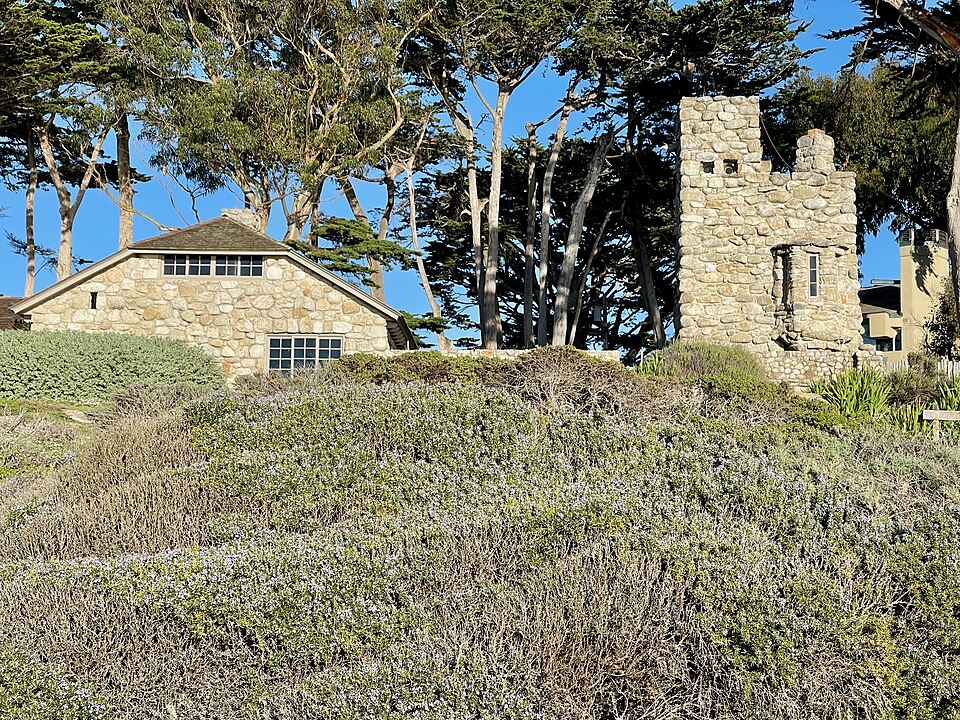
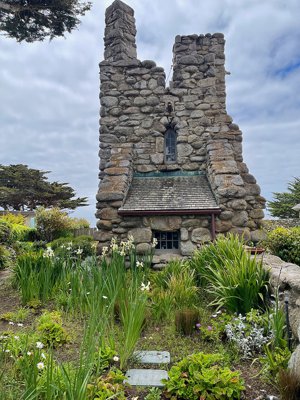
Jeffers is one of the most important literary figures associated with Carmel. His home, Tor House, and the nearby Hawk Tower, stand near Carmel Point as physical reminders of Carmel’s early creative identity. Built from stone gathered from the rocky shore of Carmel Bay, Tor House is more than a historic residence. It is one of the clearest expressions of Carmel’s relationship between architecture, landscape, poetry, and place.

This is the fifth article in our Carmel-by-the-Sea history series. The first article explored Carmel Mission and the Spanish colonial roots of Carmel-by-the-Sea. The second article looked at the First People of Carmel and the Indigenous history of the Monterey Peninsula. The third article traced Carmel’s transformation from rancho land to coastal village before incorporation. The fourth article explored Carmel’s artist colony and how writers, painters, and bohemians shaped the village. This article focuses on Robinson Jeffers, Tor House, Hawk Tower, and Carmel’s enduring literary legacy.  Explore the complete history of Carmel-by-the-Sea, from Indigenous roots and Carmel Mission to the artist colony, storybook cottages, Carmel Beach, preservation, and luxury real estate.

Photo Credit: The original uploader was Gamaliel at English Wikipedia., Public domain, via Wikimedia Commons

Who Was Robinson Jeffers?

Robinson Jeffers was an American poet whose work became closely tied to the rugged California coast. Born in 1887, Jeffers eventually settled in Carmel with his wife, Una, and their family. In Carmel, he found the landscape that would define much of his life’s work: the Pacific Ocean, rocky shoreline, cypress trees, hawks, granite, and the dramatic meeting of land and sea.

Jeffers was not simply a writer who happened to live in Carmel. Carmel became part of his artistic identity. His poetry is often associated with the wildness of the Central Coast, the power of nature, the limits of human ambition, and the beauty of what he saw as the nonhuman world.

That perspective made Jeffers a distinctive literary voice. His work was often austere, intense, and deeply connected to the physical world around him. While other writers may have used landscape as background, Jeffers made the coast itself central to his vision.

Why Jeffers Came to Carmel

By the time Jeffers arrived, Carmel was already emerging as a place for artists, writers, performers, and independent thinkers. The village’s early creative culture made it a natural fit for someone seeking distance from conventional urban life.

Carmel offered Jeffers what many early creative residents were seeking: natural beauty, relative quiet, proximity to the sea, and room to live in a more personal way. The village was small, informal, and still connected to its natural setting. For Jeffers, that setting became essential.

At Carmel Point, Jeffers and Una found a place where stone, ocean, and sky seemed to meet with unusual force. That site would become Tor House.

Tor House and Hawk Tower - Gregory Ford Henderson

Tor House and Hawk Tower - Gregory Ford Henderson, CC BY-SA 4.0 <https://creativecommons.org/licenses/by-sa/4.0>, 
via Wikimedia Commons

The Building of Tor House

Tor House began as a family home, but it became one of the most famous literary houses in California. The word “tor” refers to a rocky outcrop or hill, and the name reflected the granite and coastal landscape that surrounded the home.

Jeffers worked directly on the house and later the tower, learning masonry and participating in the physical labor of construction. Granite boulders were gathered from the rocky shore of Carmel Bay and incorporated into the walls. This was not merely decorative. It was symbolic. Jeffers was building a home out of the same landscape that inspired his poetry.

The result was a structure that feels inseparable from its setting. Tor House does not impose itself on Carmel Point in the way a grand mansion might. Instead, it feels rooted, almost geologic, as though it belongs to the shore.

Hawk Tower: A Stone Tower Above the Sea

Hawk Tower is one of the most memorable features of the Tor House property. Built by Jeffers as a gift for Una, the tower reflects both romance and rugged practicality. It also captures Carmel’s distinctive blend of imagination, craftsmanship, and landscape.

The tower’s stonework, ocean views, and vertical form make it one of Carmel’s most recognizable historic structures. It is not polished in a formal European sense. It is handmade, symbolic, and deeply personal.

Hawk Tower also represents the creative independence that helped define early Carmel. In many communities, a poet building a stone tower by the sea might seem eccentric. In Carmel, it became part of the village’s soul.

Hawk Tower - Gregory Ford Henderson

Tor House as a Literary Landmark

Tor House is important not only because Robinson Jeffers lived there, but because it is where he wrote much of the work that defined his career. The Robinson Jeffers Tor House Foundation notes that Jeffers wrote all of his major poetical works at Tor House.

That gives the property unusual literary significance. It is not simply a preserved residence. It is the creative setting where Jeffers’ mature voice emerged and where Carmel’s coastline entered American literature in a powerful way.

For readers, scholars, and visitors, Tor House offers something rare: the ability to experience the landscape, architecture, and atmosphere that shaped a major literary figure. The house, tower, gardens, and views all help explain Jeffers’ work in a way that a page alone cannot.  

Jeffers and the Central Coast Landscape

Robinson Jeffers’ poetry is inseparable from the Central Coast. Carmel Bay, Point Lobos, hawks, granite, surf, cliffs, and storms all appear as part of a larger vision of nature’s scale and power.

Jeffers is often associated with the idea that human life should be understood within a much larger natural order. That viewpoint can feel especially understandable in Carmel, where the coastline often seems older, stronger, and more enduring than anything built beside it.

This is part of why Jeffers remains so relevant to Carmel today. Carmel’s appeal has never been only about buildings. It is about the relationship between buildings and landscape. Tor House may be one of the purest examples of that relationship.

Carmel’s Literary Legacy Beyond Jeffers

Robinson Jeffers was not the only writer connected to Carmel. The village’s early literary world included figures such as George Sterling, Mary Austin, Jack London, Upton Sinclair, and Sinclair Lewis, among others. Together, these writers helped establish Carmel as one of California’s most important literary communities.

But Jeffers occupies a special place because his work and his home are so physically tied to Carmel. Tor House and Hawk Tower remain visible, visitable, and closely connected to the landscape that inspired him.

In that sense, Jeffers gives Carmel’s literary history a permanent architectural presence. His poetry lives on in books, but his vision also lives in stone.

The Tor House Foundation and Preservation

The Robinson Jeffers Tor House Foundation was established in 1978 to preserve Tor House, Hawk Tower, and the surrounding gardens. Today, the Foundation provides public access through tours and programs designed to continue Jeffers’ literary and cultural legacy.

This preservation work matters because Tor House is not just important to Jeffers scholars. It is important to Carmel. The property helps maintain a living connection between the village’s early artist colony, its architecture, its literary identity, and its continuing sense of place.

In a community where historic character is central to local identity, Tor House stands as one of Carmel’s most meaningful preservation success stories.

Why Tor House Matters to Carmel Architecture

Tor House is not a storybook cottage in the Hugh Comstock sense, but it belongs to the same broader Carmel tradition of homes shaped by imagination and place. It is handmade, personal, natural, and highly specific to its setting.

The use of local stone, the modest scale of the original house, the connection to ocean views, and the integration of gardens and courtyards all reflect values that run through Carmel’s architectural identity.

Carmel’s best homes often feel as though they belong exactly where they are. Tor House may be one of the strongest examples of that idea. It is not generic architecture placed near a famous coastline. It is architecture born from the coastline itself.

How Literary History Influences Carmel Real Estate

For modern buyers and sellers, Robinson Jeffers and Tor House may seem at first like purely cultural history. But Carmel’s literary and artistic identity has a direct relationship to real estate value.

Carmel buyers often respond to properties with story, character, craftsmanship, and connection to place. A home in Carmel is rarely evaluated only as a structure. Its setting, architectural personality, garden, relationship to the village, proximity to the beach, and sense of history all matter.

That is why Carmel real estate often behaves differently from more conventional luxury markets. In Carmel, authenticity can be a major value driver. Buyers are often looking for homes that feel emotionally connected to the village’s history and landscape.

Explore current Carmel homes for sale to see how the village’s literary heritage, architecture, and coastal setting continue to shape today’s real estate market.

Carmel Point, Place Value, and the Power of Setting

Tor House is located in the Carmel Point area, one of the most historically and visually distinctive parts of Carmel. Carmel Point offers proximity to Carmel Beach, Carmel River State Beach, coastal walking routes, and some of the most beautiful residential settings in the village.

This area helps illustrate a key concept in Carmel real estate: place value. In Carmel, the most compelling locations are not just convenient. They carry atmosphere, history, and emotional power.

Tor House is a perfect example. Its value as a landmark comes from more than the structure itself. It comes from the relationship between the structure, the poet, the coastline, the stone, the views, and the cultural memory of the village.

From Literary Landmark to Living Village Identity

One of the reasons Carmel remains so compelling is that its history is still visible. Tor House is not a forgotten plaque or an abstract reference in a history book. It remains part of the living cultural landscape of Carmel-by-the-Sea.

Visitors can still tour the property, learn about Jeffers, see the stonework, experience the gardens, and understand how deeply the site is tied to Carmel’s literary past.

That continuity helps preserve Carmel’s authenticity. The village has become a world-class luxury market, but places like Tor House remind residents and visitors that Carmel’s identity was built by artists, writers, and people who valued beauty over standardization.

Why This Chapter Matters in the Carmel History Cluster

Robinson Jeffers and Tor House are essential to the Carmel-by-the-Sea history cluster because they connect several of the village’s most important themes: literature, architecture, landscape, preservation, and real estate value.

The mission era gives Carmel historical depth. The rancho and early village period explain how the settlement formed. The artist colony explains Carmel’s creative culture. Robinson Jeffers and Tor House give that culture one of its most enduring symbols.

In the next article in this series, we will explore Carmel’s architecture in greater depth, including cottages, storybook homes, village character, and how Carmel’s built environment became one of the most recognizable and desirable in California.

Additional Information


Thinking About Buying or Selling in Carmel?

If you are considering buying or selling a home in Carmel-by-the-Sea, understanding the village’s literary and architectural history can help you better understand why certain properties create such strong emotional appeal. Carmel’s most desirable homes are often valuable not only because of location, but because they reflect the character, creativity, and sense of place that define the village.

The Monterey Peninsula Home Team helps buyers and sellers navigate the Carmel real estate market with local knowledge, neighborhood insight, and a deep appreciation for what makes this community so special.

Explore current Carmel homes for sale, learn more about Carmel Golden Rectangle homes for sale, or browse Carmel oceanfront real estate to see how Carmel’s literary heritage, historic architecture, and coastal lifestyle continue to shape one of California’s most distinctive housing markets.

May 11, 2026

The First People of Carmel: Indigenous History Before Carmel-by-the-Sea

The First People of Carmel: Indigenous History Before Carmel-by-the-Sea

Monterey NativeBefore Carmel-by-the-Sea became known for fairytale cottages, white sand beaches, art galleries, luxury homes, and one of the most charming village settings on the California coast, this landscape was already home to Indigenous people whose relationship with the land stretched back thousands of years.

The story of Carmel does not begin with the founding of Carmel Mission in 1771. It does not begin with the artist colony, the village, the cottages, or the luxury real estate market that Carmel is known for today. The earliest story of Carmel begins with the Native people who lived throughout the Carmel River area, Carmel Valley, Monterey Bay, and the broader Monterey Peninsula long before European arrival.

This is the second article in our Carmel-by-the-Sea history series. The first article explored Carmel Mission and the Spanish colonial roots of Carmel-by-the-Sea. This article steps further back to recognize the Indigenous history that came before the mission era and remains an essential part of understanding Carmel today. Explore the complete history of Carmel-by-the-Sea, from Indigenous roots and Carmel Mission to the artist colony, storybook cottages, Carmel Beach, preservation, and luxury real estate.

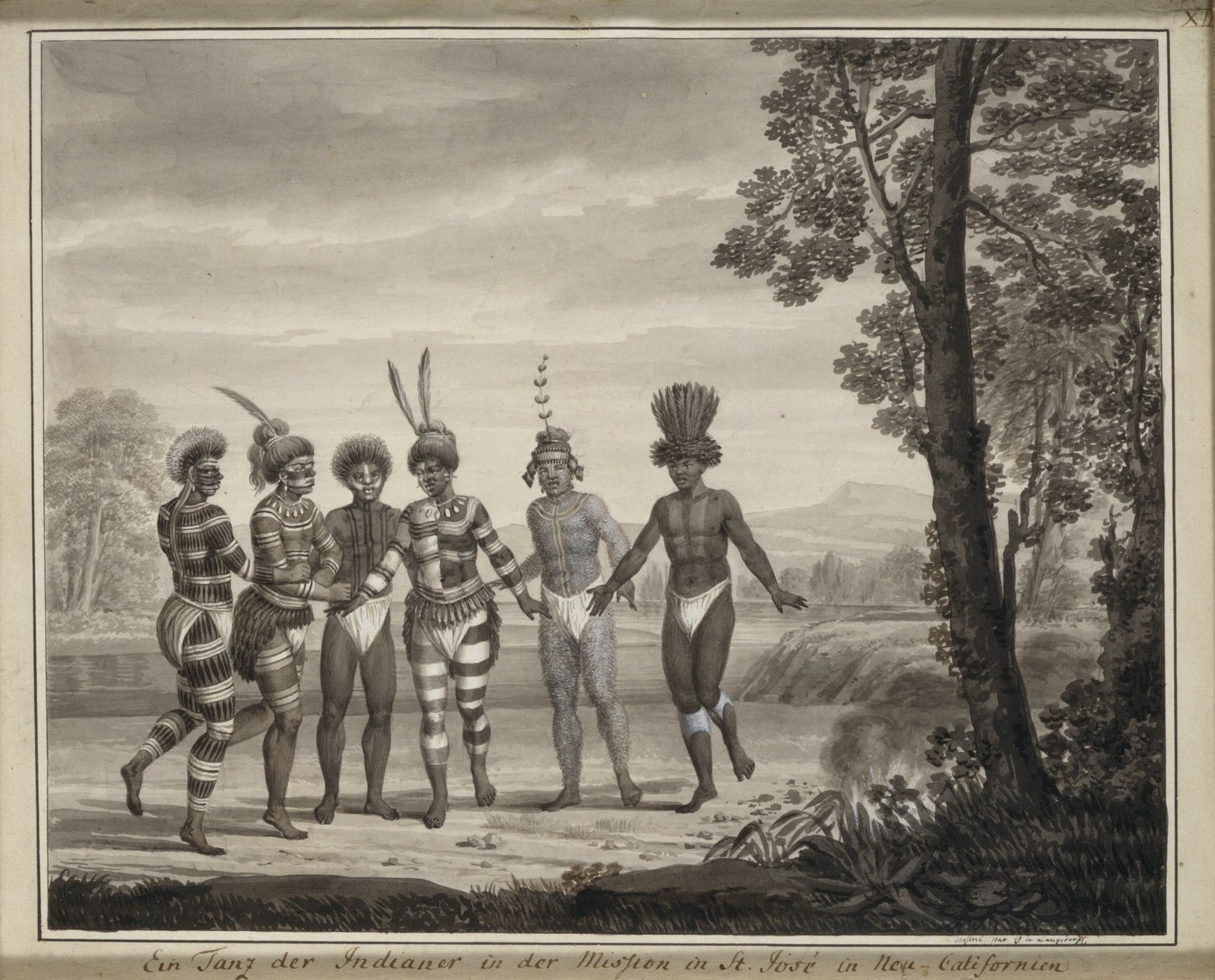
Photo to right attribution: José Cardero, Public domain, via Wikimedia Commons

Carmel Before Carmel-by-the-Sea

It can be easy to think of Carmel as a village defined by its later architecture, beach lifestyle, and artistic identity. But the land itself has a much older human history.

The area now associated with Carmel-by-the-Sea sits within a larger Monterey County landscape historically connected with Indigenous peoples including the Rumsen Ohlone, Esselen, and Salinan. These communities lived throughout coastal, river, valley, and inland environments, adapting to the rhythms of the seasons and maintaining deep cultural relationships with the land and natural resources around them.

For the people who lived here before European contact, Carmel was not a vacation destination or real estate market. It was homeland. The Carmel River, coastal terraces, oak woodlands, grasslands, marine environment, and nearby hills were part of a living landscape that provided food, materials, trade routes, cultural meaning, and community identity.

The Rumsen Ohlone and the Carmel Area

The Rumsen Ohlone are especially important to the Indigenous history of the Carmel and Monterey Peninsula area. Historical and tribal sources identify the Rumsen as one of the Ohlone groups connected to the central California coast, including areas around Monterey and Carmel.

The word “Ohlone” is often used broadly to describe a number of related Indigenous groups of the central California coast. Within that larger designation were distinct local communities with their own territories, relationships, dialects, and cultural identities. The Rumsen were among the people associated with the Monterey and Carmel region.

This matters because broad historical labels can sometimes flatten the story. Carmel’s Indigenous history is not simply a generic “Native California” story. It is tied to specific people, specific landscapes, and specific communities whose descendants and cultural connections continue today.

A Landscape of Water, Food, and Seasonal Abundance

The Carmel region offered a rich natural environment. The Carmel River, nearby wetlands, coastal waters, oak woodlands, grasslands, and upland areas provided a variety of resources. Indigenous people throughout this region relied on a deep understanding of seasonal cycles, plant knowledge, marine resources, wildlife, and land stewardship practices.

Acorns, seeds, berries, roots, fish, shellfish, game, and other resources were part of the broader food landscape. Oak trees were especially important in many California Native foodways because acorns could be gathered, processed, stored, and used as a major food source.

Indigenous land stewardship also included the use of controlled burning in some areas. The California Indian Missions Foundation notes that Ohlone people practiced controlled burns in open spaces surrounding their communities, which helped encourage the growth of grasses and plants used for food, shelter, tools, and clothing.

This is an important point for modern readers. The Carmel landscape was not untouched wilderness waiting to be discovered. It was a place actively known, managed, used, and cared for by Indigenous people long before Spanish settlement.

The Carmel River as a Historic Lifeline

The Carmel River is central to understanding the earliest human history of the area. For Native communities, rivers were not simply scenic features. They were sources of fresh water, food, movement, gathering, and settlement.

The Carmel River connected inland and coastal environments, supporting plant and animal life while helping shape patterns of human activity. Long before Carmel became known for beach walks, scenic drives, and village lanes, the river and surrounding landscape helped support Native life in the region.

This connection between land and water remains one of the defining characteristics of Carmel today. The same natural setting that made the area meaningful to Indigenous communities later influenced Spanish mission settlement, the growth of the village, and ultimately the enduring appeal of Carmel real estate.

Artwork created by John Sykes Carmel California,1794 sketch

Sketch of the early Carmel California settlement (1794) Artwork created by John Sykes, Public domain, via Wikimedia Commons

Spanish Arrival and the Disruption of Native Life

The arrival of Spanish explorers, soldiers, and missionaries dramatically changed life for Indigenous communities throughout Alta California. Carmel Mission was founded in 1771 as part of the Spanish mission system, and Mission San Carlos Borromeo de Río Carmelo became one of the most significant mission sites in California.

While Carmel Mission is a beautiful and important historic landmark, the mission era also brought profound disruption for Native people. The mission system sought to convert Indigenous people to Christianity and integrate them into Spanish colonial society. This process affected Native languages, spiritual practices, family structures, land use, food systems, and community independence.

For many Native people, mission life involved forced labor, disease, displacement, cultural suppression, and loss of autonomy. This is why Carmel Mission should be understood with historical complexity. It is both a major landmark in California history and part of a colonial system that caused deep harm to Indigenous communities.

Mission San Carlos Borromeo de Río Carmelo and Native Communities

Carmel Mission was founded on Ohlone land, and its history is inseparable from the Native people of the region. The mission gathered Indigenous people from surrounding communities and attempted to reorganize their lives around the mission’s religious, agricultural, and labor systems.

Historical accounts of the mission period often focus on the priests, buildings, and Spanish colonial administration. A fuller understanding also includes the Native people whose labor, land, knowledge, and lives were central to the mission’s existence.

That fuller story is essential for anyone trying to understand Carmel honestly. Carmel’s history includes beauty, architecture, faith, art, and preservation. It also includes colonization, Native survival, cultural loss, and continuing Indigenous presence.

The Esselen, Rumsen Ohlone, and Salinan in Monterey County History

The broader Monterey County region includes overlapping histories connected with the Esselen, Rumsen Ohlone, and Salinan peoples. These groups are not interchangeable, and each has its own history and cultural identity. But all are part of the deeper Indigenous story of the Central Coast.

Visit Monterey identifies the Esselen, Rumsen Ohlone, and Salinan as major Indigenous tribes who inhabited and cared for the land now known as Monterey County from ancient times to the present. This is important because it reinforces that Indigenous history is not only ancient history. Native people and descendants remain part of the region’s living cultural landscape.

For Carmel, this means the village’s history should not be told as though Native presence disappeared when the mission era began. The story continued through missionization, Mexican rule, American statehood, displacement, survival, revitalization, and modern cultural preservation.

Why This History Matters Today

Understanding the Indigenous history of Carmel gives modern residents, visitors, and homebuyers a deeper sense of place. Carmel is often described in terms of charm, beauty, architecture, and lifestyle. Those qualities are real, but they sit on top of a much older human story.

When someone walks along Carmel Beach, drives near the Carmel River, visits Carmel Mission, or explores the village, they are moving through a landscape shaped by thousands of years of human presence. That perspective changes the way Carmel is experienced.

It also adds responsibility. Telling Carmel’s story well means recognizing the people who were here first and avoiding the idea that Carmel began only when Europeans arrived or when the village became fashionable in the early 20th century.

How Indigenous History Connects to Carmel’s Sense of Place

One of the reasons Carmel-by-the-Sea feels so distinctive is that the area has always been shaped by landscape. The village is not defined by high-rise development, large commercial corridors, or a generic resort layout. It is defined by trees, coastline, stone, courtyards, cottages, pathways, beach access, and a strong relationship between the built environment and the natural setting.

That relationship did not begin with modern preservation rules. Long before Carmel had design review, historic cottages, or luxury homes, Indigenous people understood this landscape through direct relationship, seasonal knowledge, and stewardship.

For today’s real estate audience, that context matters. Buyers are often drawn to Carmel because it feels meaningful and rooted. The appeal is not simply the price point or prestige. It is the feeling that Carmel has a soul, a story, and a sense of place that cannot be easily replicated.

From Indigenous Homeland to Mission Era to Village Identity

The history of Carmel-by-the-Sea is best understood as a sequence of overlapping chapters. First, there was the Indigenous landscape, connected to the Rumsen Ohlone, Esselen, Salinan, and other Native histories of the region. Then came Spanish exploration and the mission era. Later came Mexican land grants, American settlement, the artist colony, the village’s incorporation, and Carmel’s emergence as one of California’s most recognizable coastal communities.

Each chapter shaped the next. The mission era cannot be understood without Indigenous history. The later village cannot be understood without the mission and rancho periods. Carmel’s modern real estate market cannot be understood without the village’s architecture, preservation ethic, and emotional connection to place.

That is why this article belongs near the beginning of the Carmel history cluster. Before we discuss cottages, artists, beach homes, or the luxury market, we need to recognize the earliest people and the land itself.

Carmel’s History Is Deeper Than Its Postcard Image

Carmel-by-the-Sea is often photographed as a beautiful coastal village, and for good reason. It is one of the most picturesque communities in California. But its history is far deeper than the postcard image.

The first people of Carmel lived with the land long before the village existed. They understood the river, coast, plants, wildlife, seasons, and terrain in ways that shaped the earliest human story of the area. Their descendants, cultural memory, and continuing presence remain essential to a more complete understanding of Carmel and the Monterey Peninsula.

As this Carmel-by-the-Sea history series continues, we will move from the Indigenous landscape into the mission era, the rancho period, the rise of Carmel’s artist colony, the village’s unique architecture, and the evolution of Carmel into one of the most desirable real estate markets on the California coast.

Thinking About Buying or Selling in Carmel?

If you are considering buying or selling a home in Carmel-by-the-Sea, understanding the history of the area can help you better understand why this village is so highly valued. Carmel’s appeal is not only about location. It is about landscape, character, history, architecture, and a sense of place that has been built over centuries.

The Monterey Peninsula Home Team helps buyers and sellers navigate the Carmel real estate market with local knowledge, neighborhood insight, and a deep appreciation for what makes this community so special.

Explore current Carmel homes for sale, learn more about Carmel Golden Rectangle homes for sale, or browse Carmel oceanfront real estate to see how Carmel’s landscape, history, and village character continue to shape one of California’s most distinctive housing markets.

May 1, 2026

History of Pacific Grove, California | Monterey Peninsula Guide

San Francisco blue book and Pacific Coast elite directory (1890) (14759261276)

The History of Pacific Grove, California

Pacific Grove is one of the most distinctive coastal communities in California. Known for its preserved Victorian homes, dramatic coastline, and walkable charm, the town offers a lifestyle that feels both timeless and deeply connected to place.

But what truly sets Pacific Grove apart is its history. From its Indigenous roots to its beginnings as a Methodist retreat, and from its early coastal gathering places to its modern identity as a full-time residential community, Pacific Grove has evolved in a way that continues to shape its character—and its real estate market—today.

This guide brings together the full story of Pacific Grove, with each chapter exploring a different layer of its development.

Ohlone Indians Wilhelm Gottlieb Tilesius von Tilenau, Public domain, via Wikimedia Commons

Indigenous Roots of the Monterey Peninsula

Long before the town existed, the Monterey Peninsula was home to the Rumsen Ohlone people, who lived in balance with the coastal and inland environments for thousands of years. Their seasonal use of the land, reliance on marine resources, and deep understanding of ecological systems helped shape the natural landscape that still defines Pacific Grove today.

Read more about the Indigenous history of Pacific Grove

The Founding of Pacific Grove: A Methodist Seaside Retreat

Pacific Grove officially began in the 1870s as a Methodist retreat—a place designed for reflection, education, and community along the coast. What started as a seasonal encampment of tents gradually evolved into a structured town, laying the foundation for everything that followed.

Explore how Pacific Grove began

Lovers Point Pacific Grove, CA

Lovers Point and Early Coastal Life

As the retreat grew, Lovers Point became one of its central gathering places. With its protected cove and accessible shoreline, it offered opportunities for recreation, social interaction, and connection to the ocean—roles it continues to play today.

Learn more about Lovers Point and early Pacific Grove life

Victorian era home in Pacific Grove's Old Retreat area

Victorian Architecture and Preservation

Over time, tents gave way to cottages, and cottages evolved into the historic homes that now define Pacific Grove’s architectural identity. With more than 1,300 designated historic structures, the town has maintained a strong commitment to preservation—one that continues to influence its real estate market.

Explore Victorian Pacific Grove and its historic homes

From Retreat to Residential Community

Pacific Grove’s transition from a seasonal destination to a full-time residential community was gradual and intentional. Unlike many coastal areas, it grew without overdevelopment—resulting in a town that feels cohesive, balanced, and highly livable.

See how Pacific Grove became a full-time coastal community

Butterfly Town, U.S.A.

One of Pacific Grove’s most unique distinctions is its connection to the annual monarch butterfly migration. Each year, thousands of monarchs arrive to winter in the town’s protected groves, reinforcing Pacific Grove’s identity as a place deeply connected to nature.

Discover why Pacific Grove is called Butterfly Town, U.S.A.

Pacific Grove Today: A Coastal Lifestyle Defined by History

Today, Pacific Grove offers a rare combination of historic charm, environmental preservation, and coastal accessibility. Its neighborhoods remain walkable, its architecture remains protected, and its connection to the ocean continues to define daily life.

Compared to nearby communities like Monterey, Pebble Beach, and Carmel-by-the-Sea, Pacific Grove offers a more grounded, community-oriented experience—one that continues to attract buyers seeking authenticity and long-term value.

For a broader look at the region, visit our guide to living on the Monterey Peninsula.

Explore Pacific Grove Real Estate

Understanding Pacific Grove’s history provides valuable insight into its real estate market. Limited inventory, preserved architecture, and a strong sense of place all contribute to ongoing demand.

Whether you are considering buying, selling, or simply learning more about the area, Pacific Grove offers a unique blend of history, lifestyle, and long-term appeal that is difficult to replicate along the California coast.

April 30, 2026

Carmel Mission History: The Spanish Colonial Roots of Carmel-by-the-Sea

Mission San Carlos Borromeo de Carmelo circa 1877-1884
Oriana Weatherbee Day, Public domain, via Wikimedia Commons

Carmel Mission History: The Spanish Colonial Roots of Carmel-by-the-Sea

Long before Carmel-by-the-Sea became known for storybook cottages, white sand beaches, art galleries, luxury homes, and one of the most charming village settings on the California coast, this part of the Monterey Peninsula was shaped by a much older and more complex history.

At the center of that story is Carmel Mission, officially known as Mission San Carlos Borromeo de Río Carmelo. Founded in 1771 by Father Junípero Serra, Carmel Mission became one of the most important religious, cultural, and historical landmarks in Alta California. Today, it remains one of the defining historic sites of Carmel and one of the most meaningful places to understand how Carmel-by-the-Sea evolved from a coastal landscape into one of California’s most beloved communities.

For anyone interested in Carmel real estate, Carmel’s history is not just a collection of old dates and buildings. It is part of what gives the village its enduring value. The architecture, the preservation mindset, the walkable scale, the reverence for beauty, and the desire to protect Carmel’s character all trace back to a place with a very deep sense of identity.

Explore the complete history of Carmel-by-the-Sea, from Indigenous roots and Carmel Mission to the artist colony, storybook cottages, Carmel Beach, preservation, and luxury real estate.

The Name “Carmel” Begins With Early Spanish Exploration

The story of Carmel’s name begins well before the village itself existed. In 1603, Spanish explorer Sebastián Vizcaíno explored the Monterey Bay area and came upon the river and coastal landscape that would become associated with the name “Carmelo.” The name honored Carmelite friars traveling with the expedition, and over time the Carmel River, Carmel Bay, Carmel Mission, and eventually Carmel-by-the-Sea would all carry that name forward.

By the time Spanish missionaries arrived in Alta California in the 18th century, the region was already home to Indigenous peoples who had lived throughout the Monterey Peninsula, Carmel River area, and surrounding coastal landscape for generations. Their story is essential to understanding Carmel’s earliest history and deserves its own dedicated article within this Carmel-by-the-Sea history series.

The Founding of Carmel Mission

Carmel Mission was founded by Father Junípero Serra in 1771 as the second of the California missions. The mission was originally connected to the Spanish colonial expansion of Alta California, which combined religious, political, military, and agricultural ambitions.

Mission San Carlos Borromeo was first associated with Monterey, but Serra soon sought to relocate the mission away from the immediate influence of the Presidio of Monterey. The Carmel River area offered a more suitable setting, with better access to fresh water, more promising agricultural land, and greater distance from the military environment surrounding the Presidio.

This move helped establish Carmel Mission as a central religious and administrative site in Alta California. Over time, the mission became deeply associated with Father Serra’s legacy, the broader California mission system, and the early Spanish colonial period on the Monterey Peninsula.

Why the Mission Moved From Monterey to Carmel

The relocation from Monterey to Carmel was one of the most important turning points in early Carmel history. Monterey was the political and military center of Alta California, but the mission’s setting near the Presidio created tension. Serra wanted the mission community to have more separation from the military authorities and a better opportunity to support itself agriculturally.

The Carmel River area offered a more favorable location. It provided access to water, land for crops, and a quieter setting that better fit Serra’s vision for the mission. This decision helped shift part of the spiritual and cultural gravity of early Alta California from Monterey toward Carmel.

That historical distinction still matters today. Monterey and Carmel are neighboring communities, but they developed with very different identities. Monterey became known for government, military, maritime activity, fishing, and later tourism. Carmel evolved into something quieter, more intimate, more village-like, and ultimately more connected to art, architecture, landscape, and preservation.

Carmel Mission and the Indigenous Communities of the Region

Any responsible history of Carmel Mission should acknowledge that the mission era was not simply a romantic origin story. The mission system profoundly affected Indigenous communities throughout California, including Native peoples connected to the Carmel and Monterey Peninsula region.

Spanish missions were designed to convert Indigenous peoples to Christianity and integrate them into Spanish colonial society. That process disrupted Native lifeways, languages, family structures, spiritual traditions, land use, and community independence. Carmel Mission is therefore both a beautiful historic landmark and a reminder of a much more complicated colonial history.

For modern residents and visitors, this layered history is important. Carmel’s beauty is undeniable, but its history includes Indigenous presence, Spanish colonization, religious ambition, cultural loss, adaptation, preservation, and reinvention. Understanding those layers gives Carmel-by-the-Sea far more depth than its postcard image alone.

Father Junípero Serra and Carmel’s Place in Alta California

Father Junípero Serra is one of the most consequential figures in California mission history. Carmel Mission became closely associated with his life and work, and he is buried at the mission. His legacy remains historically significant and, at times, the subject of debate because of the broader effects of the mission system on Indigenous communities.

From a historical standpoint, Carmel Mission’s importance comes from its role in the development of the California mission network and its connection to the early colonial structure of Alta California. It was not simply a local chapel. It was one of the central institutions of Spanish colonial California.

That is one reason Carmel Mission continues to attract visitors, historians, architecture enthusiasts, and residents who want to understand the origins of Carmel’s identity.

The Architecture and Setting of Carmel Mission

Part of Carmel Mission’s enduring appeal is visual. Its stone church, courtyard, gardens, arched corridors, and historic setting create one of the most memorable mission environments in California.

The mission sits near the mouth of Carmel Valley, close to the Carmel River and not far from the coastal village that later became Carmel-by-the-Sea. The location is important because it connects several elements that still define the area today: natural beauty, historic architecture, religious heritage, and proximity to one of the most desirable coastal communities in California.

For buyers looking at homes in Carmel, especially those drawn to historic character, village atmosphere, and walkable coastal living, Carmel Mission is part of the larger fabric that makes the area feel different from a typical beach town. Carmel has always been shaped by place, and the mission is one of the earliest visible expressions of that relationship between architecture, land, and identity.

How Carmel Mission Influenced the Village That Came Later

Carmel-by-the-Sea as a formal village came much later than Carmel Mission. The village’s artist colony, fairytale cottages, literary culture, and luxury residential identity would emerge in the late 19th and early 20th centuries. But the mission gave Carmel something older to build around: a sense of historical gravity.

Many coastal towns are built around commerce, harbors, railroads, or resort development. Carmel is different. Its identity is tied to beauty, spirituality, landscape, art, architecture, and preservation. Carmel Mission helped establish that sense of place long before the village became famous for galleries, cottages, and scenic walks to the beach.

That deeper history helps explain why Carmel homes for sale are often evaluated through more than square footage, bedroom count, or lot size. In Carmel, buyers frequently respond to character, setting, walkability, architecture, privacy, and emotional connection. The history of the place still influences the way people value property here.

Carmel Mission's official history

National Parks Service Carmel Mission Page

Official Carmel-by-the-Sea historical overview

Carmel Mission Today

Today, Carmel Mission remains one of the most visited and respected historic landmarks on the Monterey Peninsula. It continues to function as an active Catholic parish while also serving as a museum, cultural landmark, architectural treasure, and destination for visitors exploring Carmel’s roots.

For many people, a visit to Carmel Mission adds context to the rest of the Carmel experience. After seeing the mission, the village’s quiet lanes, cottage architecture, courtyards, gardens, and devotion to preservation feel less accidental. Carmel’s character has been shaped over centuries, and the mission is one of the most important places where that story becomes visible.

Why This History Matters to Carmel Real Estate

Carmel-by-the-Sea real estate is valuable for many obvious reasons: beach proximity, limited supply, architectural charm, walkability, restaurants, galleries, and the broader Monterey Peninsula lifestyle. But history is also part of the value proposition.

Buyers are not just purchasing a home in Carmel. In many cases, they are buying into a village with a story. They are drawn to the fact that Carmel does not feel like a master-planned resort community or a generic luxury subdivision. It feels layered, personal, historic, artistic, and rare.

That is why older cottages, historic homes, and properties near the village core can command such strong emotional interest. The appeal is not only the structure itself. It is the feeling of being connected to a place with genuine identity.

For sellers, this matters because marketing a Carmel home properly requires more than listing features. It requires telling the story of the property within the story of Carmel. A home near the village, near Carmel Beach, near the Golden Rectangle, or within reach of Carmel Mission carries more than location value. It carries place value.

Exploring Carmel-by-the-Sea Through Its History

Carmel Mission is the ideal starting point for understanding Carmel-by-the-Sea. It connects the region’s Spanish colonial history, Indigenous history, religious heritage, architecture, landscape, and long-standing sense of place.

From there, the story continues into the rancho period, the rise of the village, the arrival of artists and writers, the creation of Carmel’s famous cottages, the preservation of its village character, and the evolution of Carmel into one of the most desirable luxury real estate markets on the California coast.

This is the first article in our Carmel-by-the-Sea history series. Future articles will explore the Indigenous history of Carmel, the rise of Carmel’s artist colony, Robinson Jeffers and Tor House, Carmel’s storybook architecture, the history of Carmel Beach, and how this remarkable village became one of the most sought-after places to live on the Monterey Peninsula.

Thinking About Buying or Selling in Carmel?

If you are considering buying or selling a home in Carmel-by-the-Sea, understanding the history of the area can help you better understand why certain locations, architectural styles, and village neighborhoods are so highly valued.

The Monterey Peninsula Home Team helps buyers and sellers navigate the Carmel real estate market with local knowledge, neighborhood insight, and a deep appreciation for what makes this community so special.

Explore current Carmel homes for sale, learn more about Carmel Golden Rectangle homes for sale, or browse Carmel oceanfront real estate to see how Carmel’s history, architecture, and coastal setting continue to shape one of California’s most distinctive housing markets.

April 28, 2026

Why Pacific Grove Is Called Butterfly Town U.S.A. | Monarch History

Monarch butterflies on a tree in Pacific Grove

Photo Credit: Mike Budd/USFWS

Why Pacific Grove Is Called Butterfly Town, U.S.A.

Each year, something remarkable happens along the Pacific Grove coastline. As temperatures drop across North America, thousands of monarch butterflies make their way to the Monterey Peninsula, clustering in the protective groves of Pacific Grove.

This annual migration has earned the town its well-known nickname: Butterfly Town, U.S.A. But this is more than just a seasonal event—it is a defining part of Pacific Grove’s identity, one that reflects the town’s long-standing relationship with nature and preservation.

If you’re exploring how Pacific Grove evolved into the community it is today, you may also want to read How Pacific Grove Began and how it became a full-time coastal community.

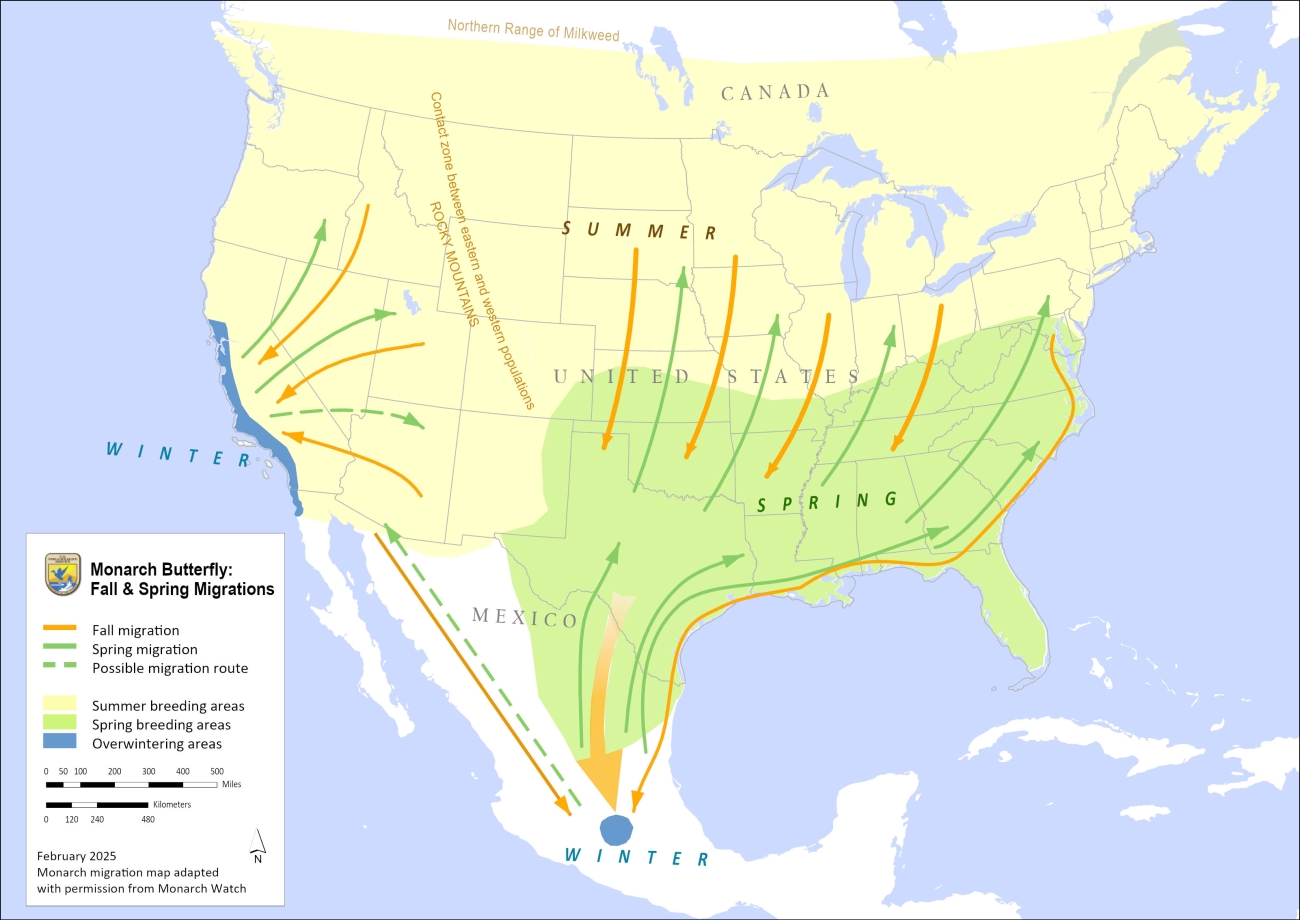
Monarch butterfly migration patterns to coastal California

Credit: USFWS

The Monarch Migration to Pacific Grove

Monarch butterflies travel thousands of miles each year, migrating from colder regions to more temperate coastal climates. Pacific Grove provides one of the ideal winter habitats along the California coast.

The town’s groves of Monterey pine, cypress, and eucalyptus trees create a natural windbreak, while the mild coastal temperatures allow monarchs to conserve energy during the winter months.

These conditions make Pacific Grove a critical stop along the monarch migration route, with butterflies arriving typically in the fall and remaining through late winter.

The Monarch Grove Sanctuary

At the heart of this migration is the Monarch Grove Sanctuary, a protected area within Pacific Grove dedicated to preserving this fragile ecosystem.

The sanctuary represents a long-standing commitment by the community to protect the butterflies and their habitat. In fact, Pacific Grove was one of the first cities in the United States to establish laws protecting monarch butterflies.

Visitors to the sanctuary can observe clusters of monarchs hanging from tree branches—sometimes numbering in the thousands—creating one of the most unique natural displays on the Monterey Peninsula.

A Tradition of Conservation

Pacific Grove’s connection to the monarch butterflies is not accidental. It reflects a broader tradition of environmental stewardship that dates back decades.

Residents have long recognized the importance of protecting both the butterflies and the coastal landscape they depend on. This has influenced local policies, land use decisions, and community values.

That same mindset continues to shape Pacific Grove today, contributing to its preserved character and limited development.

More Than a Seasonal Attraction

While the monarch migration draws visitors each year, its impact goes beyond tourism. It reinforces Pacific Grove’s identity as a place where natural beauty and community values are closely aligned.

The presence of the butterflies adds another layer to the lifestyle here—one that connects residents to seasonal rhythms and the natural world.

It’s part of what makes living in Pacific Grove feel different from other coastal communities.

The Lifestyle Connection

For homeowners, proximity to protected open spaces, coastal trails, and natural landmarks like the Monarch Grove Sanctuary is a meaningful benefit. It enhances daily life in ways that go beyond typical real estate features.

Pacific Grove offers a lifestyle that blends walkability, environmental preservation, and access to the coastline—factors that continue to drive demand in the local market.

To explore homes in this unique coastal setting, visit Pacific Grove homes for sale.

How Butterfly Town Fits Into Pacific Grove’s Story

The monarch butterflies are just one part of Pacific Grove’s broader history—a story that includes its origins as a retreat, its Victorian architecture, and its evolution into a full-time residential community.

Together, these elements create a town that feels both preserved and alive, rooted in tradition while still deeply connected to the natural world.

Explore the complete history of Pacific Grove, California—from its Indigenous roots and Methodist founding to its coastal lifestyle, historic homes, and modern real estate appeal.

For a broader look at the region, explore living on the Monterey Peninsula.

Explore Pacific Grove Real Estate

April 27, 2026

How Pacific Grove Became a Full-Time Coastal Community

Pacific Grove Old Retreat area cottage with ocean views

From Retreat to Residential: How Pacific Grove Became a Full-Time Coastal Community

Pacific Grove did not begin as a typical town. It started as a seasonal Methodist retreat—a place people visited for reflection, community, and time by the sea. Yet over time, it evolved into one of the Monterey Peninsula’s most desirable full-time residential communities.

That transition is key to understanding Pacific Grove today. It explains not only how the town developed physically, but also why it feels so cohesive, why inventory remains limited, and why demand continues to hold steady over time.

If you’re just joining this series, you may want to start with How Pacific Grove Began, explore the role of Lovers Point, or understand the importance of historic architecture in shaping the town.

Pacific Grove Spanish style Bungelow near Lovers PointFrom Seasonal Retreat to Permanent Settlement
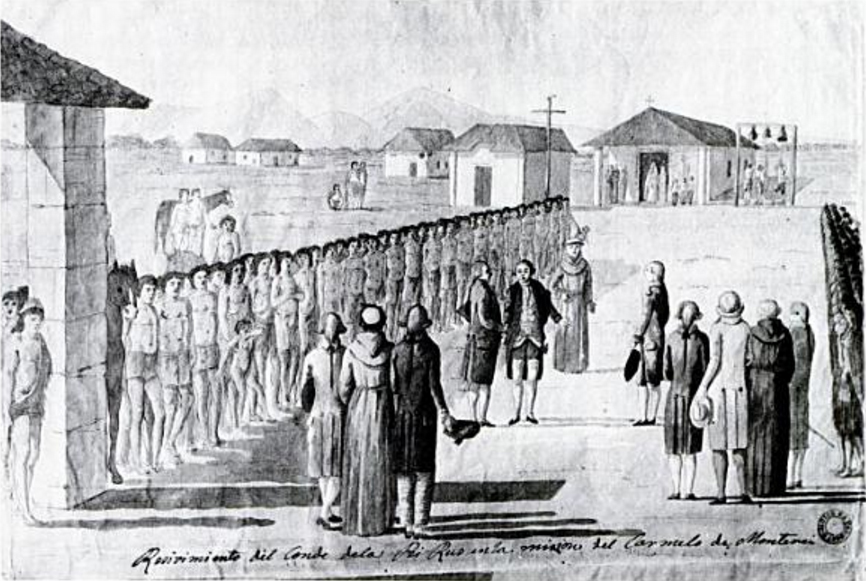
In its earliest years, Pacific Grove was not designed for full-time living. Visitors would arrive during the warmer months, stay in tents or small cottages, and leave when the season ended. The town’s infrastructure reflected this temporary pattern.

Over time, however, that began to change. As more people returned year after year, cottages became more permanent, services expanded, and the idea of year-round living took hold.

This gradual transition created a different kind of town—one that developed organically rather than through large-scale planning or rapid expansion.

The Influence of the Monterey Peninsula

Pacific Grove’s growth was closely tied to broader developments across the Monterey Peninsula. The rise of nearby destinations, including Hotel Del Monte in Monterey, helped bring visitors to the region, many of whom discovered Pacific Grove during their stay.

Transportation improvements and increased accessibility further supported this shift. What began as a remote retreat gradually became part of a connected coastal network, making longer stays—and eventually permanent residence—more practical.

A Town That Grew Without Overbuilding

One of the most important aspects of Pacific Grove’s evolution is what didn’t happen. Unlike many coastal communities in California, Pacific Grove did not undergo large-scale redevelopment or high-density expansion.

Instead, growth remained measured. Neighborhoods filled in gradually, homes retained their original character, and the overall scale of the town stayed consistent.

This has had a lasting impact. Today, Pacific Grove feels cohesive and balanced in a way that is increasingly rare along the California coast.

Why Inventory Remains Limited

The same factors that shaped Pacific Grove’s development continue to influence its housing market today. Preservation guidelines, limited land availability, and a commitment to maintaining the town’s character all contribute to constrained supply.

There are only so many homes in Pacific Grove—and relatively few opportunities to significantly increase that number.

This dynamic is one of the reasons the market tends to remain competitive, particularly for well-located homes near the coastline or within established neighborhoods.

To explore current opportunities, visit Pacific Grove homes for sale.

The Shift to Full-Time Coastal Living

As Pacific Grove matured, it became more than just a seasonal destination. Schools, local businesses, and community institutions developed to support year-round residents, transforming the town into a fully functioning coastal community.

That shift continues to define Pacific Grove today. It offers a different experience than resort-driven markets—one that prioritizes livability, walkability, and a strong sense of local identity.

For buyers, this often translates into a more grounded, community-oriented lifestyle compared to neighboring areas like Monterey Pebble Beach or Carmel.

The Modern Appeal of Pacific Grove

Today, Pacific Grove is defined by a combination of historic charm, coastal access, and limited supply. These factors create a market that behaves differently from more expansive or rapidly developing areas.

Buyers are often drawn to the town for its authenticity—its preserved architecture, its proximity to the ocean, and its sense of continuity over time.

That appeal is not new. It is the result of decades of measured growth and a consistent commitment to maintaining what makes Pacific Grove unique.

Why This Transition Still Matters

The evolution from retreat to residential community is not just a historical footnote—it is central to understanding Pacific Grove’s long-term value.

It explains why the town has avoided overdevelopment, why its neighborhoods feel cohesive, and why demand tends to remain strong even as market conditions shift.

In a broader sense, it highlights what Pacific Grove offers that many coastal communities no longer can: a true balance between place, lifestyle, and long-term sustainability.

Explore the complete history of Pacific Grove, California—from its Indigenous roots and Methodist founding to its coastal lifestyle, historic homes, and modern real estate appeal.

For a broader look at how Pacific Grove fits into the region, explore living on the Monterey Peninsula.

Explore Pacific Grove Real Estate

April 23, 2026

Victorian Pacific Grove: Historic Homes, Architecture & Coastal Charm

example of a Pacific Grove charming Victorian homes that is now the Monterey Peninsula Home Team officea

Photo by Mark Bruno

Victorian Pacific Grove: Architecture, Preservation, and the Town’s Lasting Character

Pacific Grove is often described as one of the most charming coastal towns in California—but what truly sets it apart is its remarkable collection of historic homes. Walk through its neighborhoods and you will find an architectural landscape that feels preserved in time, anchored by Victorian-era cottages, early 20th-century residences, and a deep commitment to protecting the town’s original character.

This architectural identity is not accidental. It is the direct result of Pacific Grove’s early development, its values as a community, and decades of preservation efforts that continue to shape the local real estate market today.

If you’re just beginning to explore the story behind Pacific Grove, start here: How Pacific Grove Began: From Methodist Retreat to America’s Last Hometown and Lovers Point and the Early Social Life of Pacific Grove.

The Rise of Victorian Pacific Grove

As Pacific Grove evolved from its origins as a Methodist retreat in the late 1800s, the town began to take on a more permanent form. Tents gave way to cottages, and those cottages gradually expanded into a diverse collection of Victorian and early coastal homes.

Unlike cities that developed rapidly with industrialization, Pacific Grove grew with intention. Many of the homes built during this period were designed to be modest, functional, and closely tied to the natural surroundings. Over time, however, these structures became part of a larger architectural identity that now defines the town.

Today, Pacific Grove is home to more than 1,300 designated historic structures—a remarkable concentration that continues to influence both its aesthetic appeal and real estate values.

What Defines a Pacific Grove Victorian Home

Victorian homes in Pacific Grove are not always grand in scale, but they are rich in character. You’ll often find intricate woodwork, steep rooflines, decorative trim, and colorful facades that reflect the design sensibilities of the late 19th and early 20th centuries.

Many of these homes are smaller than modern construction, but that is part of their appeal. They were built for a different pace of life—one that emphasized simplicity, proximity to neighbors, and a connection to the outdoors.

This creates a very different living experience compared to newer developments. It’s less about square footage and more about character, location, and lifestyle.

To explore properties that reflect this style, visit Pacific Grove cottages for sale.

Preservation: The Force Behind Long-Term Value

One of the most important factors in Pacific Grove’s real estate market is its commitment to preservation. The city has long prioritized protecting its historic homes and architectural integrity, with guidelines that influence renovations, exterior changes, and new construction.

While this can create additional considerations for homeowners, it also plays a critical role in maintaining the town’s character—and, by extension, its desirability.

In many markets, redevelopment leads to inconsistency. In Pacific Grove, preservation creates continuity. That consistency is a major reason why the town feels cohesive, authentic, and highly livable.

It also contributes to limited inventory. Because large-scale redevelopment is restricted, the supply of homes—particularly historic properties—remains relatively constrained. This dynamic helps support long-term pricing stability and demand.

How Pacific Grove Compares to Neighboring Markets

Each community on the Monterey Peninsula offers something different, and Pacific Grove occupies a very specific niche within that landscape.

Compared to Carmel-by-the-Sea real estate, which is known for its storybook cottages and luxury boutique appeal, Pacific Grove often feels more grounded and residential. It offers similar charm, but with a stronger sense of year-round community.

Compared to Monterey real estate, Pacific Grove tends to feel quieter and more preserved, with less commercial development and a stronger emphasis on historic continuity.

And while Pebble Beach real estate is defined by large estates and gated privacy, Pacific Grove offers a different kind of luxury—one rooted in walkability, proximity to the ocean, and architectural character.

The Buyer Psychology Behind Historic Homes

Buyers drawn to Pacific Grove are often looking for something specific. They are not simply comparing price per square foot—they are searching for authenticity, charm, and a sense of place that cannot be replicated.

Historic homes deliver that experience. They offer a story, a connection to the past, and a living environment that feels distinct from modern construction.

This is why well-positioned homes in Pacific Grove—especially those that maintain their original character while incorporating thoughtful updates—can command strong interest and competitive pricing.

Architecture as a Lifestyle Decision

In Pacific Grove, architecture is not just about design—it is about lifestyle. Living in a historic home often means being closer to the coastline, walking to local shops, and becoming part of a neighborhood that values preservation and community.

Many of the town’s most desirable homes are within walking distance of iconic locations like Lovers Point, reinforcing the connection between architecture and coastal living.

For a deeper look at how lifestyle plays into the broader region, explore living on the Monterey Peninsula.

Pacific Grove Victorian era home in the old retreat part of Pacific Grove

Why Victorian Pacific Grove Continues to Stand Out

Pacific Grove’s historic homes are more than a visual feature—they are a defining element of the town’s identity. The combination of architectural preservation, limited supply, and coastal proximity creates a market that continues to attract buyers who value something beyond the ordinary.

In a world where many coastal communities have evolved toward uniformity, Pacific Grove has held onto its individuality. That is its advantage—and one of the main reasons it remains so desirable today.

Explore the complete history of Pacific Grove, California—from its Indigenous roots and Methodist founding to its coastal lifestyle, historic homes, and modern real estate appeal.

Explore Pacific Grove Real Estate

April 23, 2026

Indigenous History of Pacific Grove & Monterey Peninsula Coast

Dance of (Ohlone) Indians at Mission in San Jose, New California by Wilhelm Gottlieb Tilesius von Tilenau

By Wilhelm Gottlieb Tilesius von Tilenau (from Wikipedia Commons)

The Indigenous Roots of Pacific Grove and the Monterey Peninsula Coast

Long before Pacific Grove became known as “America’s Last Hometown,” this stretch of coastline was home to Indigenous communities whose relationship with the land and sea shaped the region for thousands of years.

Understanding this deeper history adds important context to Pacific Grove’s story. It explains not only how the landscape was used, but why the Monterey Peninsula still feels so balanced, preserved, and connected to nature today.

If you are exploring the early development of the town itself, you can also read How Pacific Grove Began: From Methodist Retreat to America’s Last Hometown and Lovers Point and the Early Social Life of Pacific Grove.

Indians of Mission San Carlos Borromeo are lined up with military precision to greet French expedition led by Jean Francois Galaup, Comte De La Perouse. Watercolor attributed to Tomas de Suria or Jose Cardero, 1791. after a lost original painting at the occasion by Gaspard Duché de Vancy. 1786.

Indians of Mission San Carlos Borromeo are lined up with military precision to greet French expedition led by Jean Francois Galaup, Comte De La Perouse. Watercolor attributed to Tomas de Suria or Jose Cardero, 1791. after a lost original painting at the occasion by Gaspard Duché de Vancy. 1786. (Wikipedia Commons)


The Rumsen Ohlone and the Monterey Peninsula

The land that is now Pacific Grove lies within the traditional territory of the Rumsen Ohlone people. Their presence extended throughout the Monterey Peninsula, including areas around what are now Pacific Grove, Monterey, and Carmel.

Rather than concentrating in dense permanent settlements along the immediate shoreline, the Rumsen Ohlone moved seasonally throughout the region, utilizing coastal, forested, and inland environments as part of a broader system of resource management.

This mobility allowed them to take advantage of the peninsula’s remarkable diversity—harvesting marine resources along the coast, gathering acorns and plants inland, and maintaining a long-term balance with the environment.

The Role of the Coastline

The Monterey Bay has always been one of the most biologically productive marine environments on the California coast. Nutrient-rich waters support an abundance of fish, shellfish, and marine mammals, making the shoreline a critical resource for Indigenous communities.

Protected coves—such as what we now know as Lovers Point—would have provided access points to the ocean, particularly during calmer conditions. These areas offered opportunities for fishing, gathering shellfish, and interacting with the coastal ecosystem in a more controlled setting.

Today, that same coastline continues to define Pacific Grove, offering residents and visitors a direct connection to the ocean and its wildlife.

A Different Approach to Land Use

One of the defining characteristics of Indigenous life on the Monterey Peninsula was a fundamentally different approach to land use. Rather than permanent alteration or large-scale construction, the focus was on sustainability, seasonal use, and long-term stewardship.

Resources were managed carefully, with an understanding of regeneration cycles and environmental limits. This approach helped maintain the natural balance of the region for generations.

While modern development has changed the landscape in many ways, Pacific Grove still reflects aspects of this philosophy through its preserved coastline, limited density, and emphasis on environmental protection.

Disruption and Lasting Impact

The arrival of Spanish explorers and the establishment of the California mission system in the late 1700s brought profound and often devastating changes to Indigenous communities, including the Rumsen Ohlone.

Traditional ways of life were disrupted through forced relocation, disease, and the restructuring of land use under colonial systems. The long-term impact of this period is still part of California’s broader historical narrative.

Today, descendants of Ohlone communities continue efforts to preserve cultural identity, protect ancestral lands, and share their history with future generations.

Why This History Matters Today

Pacific Grove’s modern identity—defined by preserved neighborhoods, protected open space, and a strong connection to the coastline—exists within a much longer timeline of human interaction with this land.

Recognizing that deeper history adds dimension to what makes the area so special. It highlights that the appeal of Pacific Grove is not just architectural or aesthetic—it is also rooted in the natural systems and cultural layers that have shaped it over time.

For many residents and buyers, that sense of place is part of the draw. Pacific Grove offers more than coastal views—it offers continuity.

Explore the complete history of Pacific Grove, California—from its Indigenous roots and Methodist founding to its coastal lifestyle, historic homes, and modern real estate appeal.

Explore Pacific Grove Real Estate