Monterey Peninsula Real Estate Blog

Information about Monterey Peninsula Real Estate including new MLS Real Estate Listings by the Monterey Peninsula Home Team. You will see posts about Monterey Peninsula cities including Monterey, Pacific Grove, Pebble Beach, Carmel, Carmel Valley, Seaside, Marina and the HWY 68 Corridor.  These posts will have stories and information about local issues including real estate, news, and other helpful information, plus anything else we want to write about ;-).


July 1, 2026

Carmel Valley Village History: From Airway Village to Wine Country

Carmel Valley Village welcome sign in California wine country

Carmel Valley Village History: From Airway Village to Wine Country Community

Carmel Valley Village is one of the most distinctive communities on the Monterey Peninsula. Set beneath oak-covered hills in the warmer inland reaches of Carmel Valley, the Village is known today for wine tasting rooms, locally owned restaurants, galleries, small businesses, community events, and a relaxed country atmosphere that feels far removed from the busier California coast.

Yet the Village did not begin as a wine destination or a traditional rural crossroads. Its modern story grew from an ambitious aviation experiment known as Airway Village, developed alongside an early residential airpark where pilots were intended to land their airplanes and taxi directly to their homes.

The evolution from experimental airpark to wine-country community is one of the most unusual chapters in the complete history of Carmel Valley, California. It also helps explain why Carmel Valley Village retains such an independent personality today.

This is the third article in our Carmel Valley history series. The previous article explored Rancho Los Laureles and the Mexican land grant that helped shape Carmel Valley. This article follows that landscape into the 20th century, when aviation, commercial development, tourism, wine, and country living began reshaping the Village.
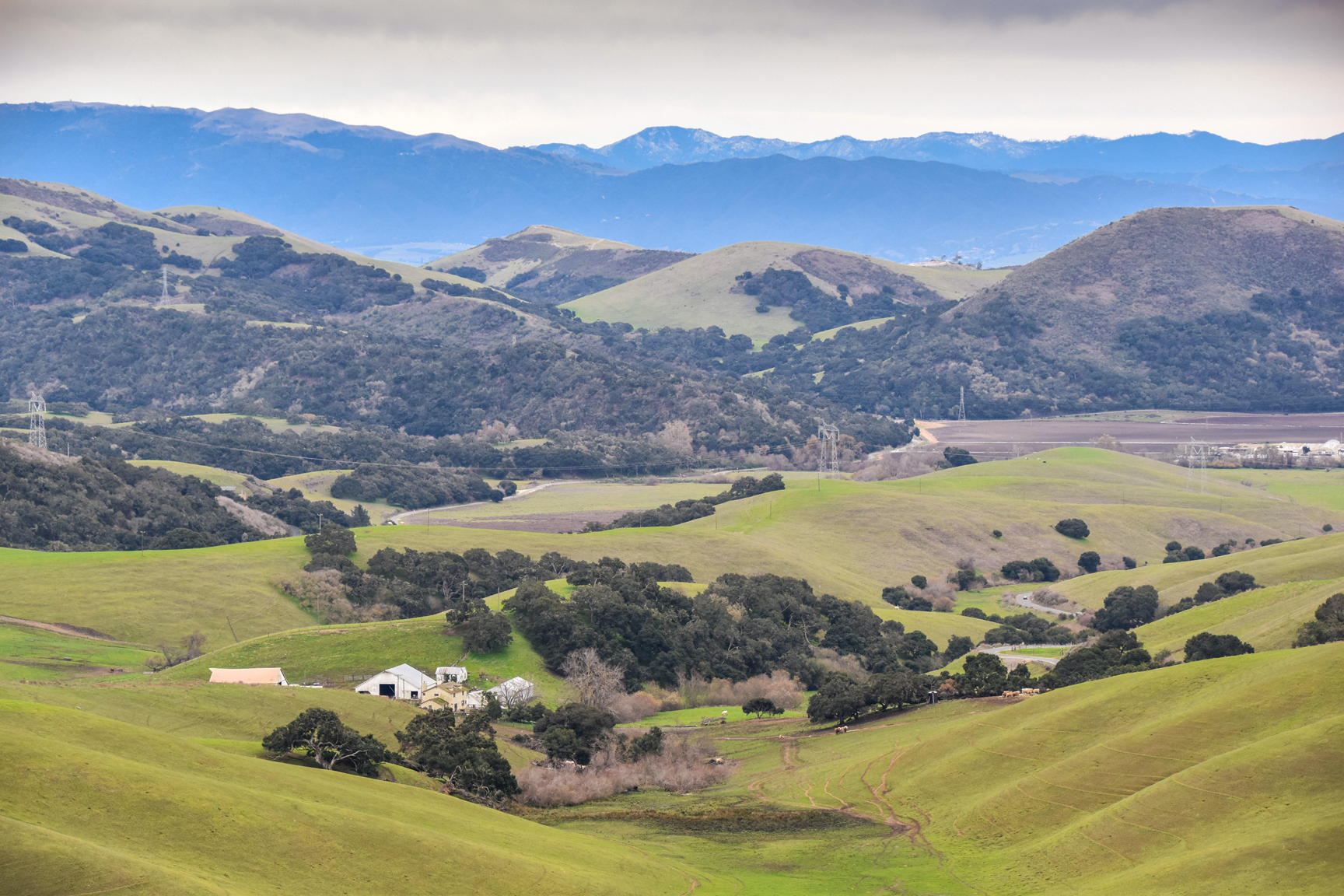
Carmel Valley Village rolling hills and oak treesBefore Carmel Valley Village

Long before there was a Carmel Valley Village, this part of the valley was a landscape of river corridors, oak woodland, grassland, seasonal creeks, and Native homelands. Indigenous communities understood and cared for this landscape for generations before European colonization changed the region’s population, land ownership, and patterns of settlement.

During the Mexican period, much of the surrounding area became part of Rancho Los Laureles, a large land grant extending along the Carmel River. Ranching, cattle, horses, agriculture, family ownership, and regional travel established the valley’s rural identity.

That earlier history remains relevant because Carmel Valley Village did not develop in isolation. It emerged within a landscape that had already been shaped by water, ranching, open land, and movement between the inland valley, Monterey, Salinas, and the coast.

Even today, the Village feels closely connected to the surrounding land. Unlike a conventional downtown surrounded by dense urban development, Carmel Valley Village remains framed by hillsides, ranch properties, trails, vineyards, large residential parcels, and the Carmel River watershed.

Rancho Land Gives Way to a New Carmel Valley

As California’s original ranchos were divided and transferred into new ownership, Carmel Valley gradually entered a different phase of development. Roads improved, residential parcels were created, businesses appeared, and more people began viewing the valley as a place to live rather than primarily as working ranch land.

Its relationship with the coastal Monterey Peninsula also began to change. Carmel-by-the-Sea was developing its identity as an arts-oriented coastal village. Monterey was growing beyond its early role as California’s political and military center. Pebble Beach was becoming internationally known for scenery, resort living, and golf.

Carmel Valley offered something different. The inland valley had more sun, more space, larger parcels, and a rural environment that appealed to people who wanted to remain close to the coast without living directly in the marine climate.

Those qualities attracted a visionary developer named Byington Ford, whose plans would give Carmel Valley Village one of the most unusual origin stories of any community in Monterey County.

Former Carmel Valley Airway Village and vintage airfield

Byington Ford’s Vision for an Airpark Community

Byington Ford was a real estate developer with strong connections to the Monterey Peninsula. He had worked with Del Monte Properties and was familiar with the development of Pebble Beach and the broader Monterey Peninsula real estate market.

Ford believed that small private aircraft would become increasingly common after the Great Depression. He imagined a future in which owning an airplane might become almost as practical as owning a car.

His idea was to create a residential airpark where pilots could land, taxi from the runway, and be home within minutes. Properties could include what became known as hangar homes: residences designed to provide direct access between the homeowner’s aircraft and the airfield.

In approximately 1940, Ford acquired land in Carmel Valley and began developing what he called Airway Ranch. Local historical accounts and airfield preservation advocates have described it as the first residential airpark of its kind.

It was an extraordinarily forward-looking concept. Residential aviation communities later appeared in other parts of the United States, but Ford was attempting to create one before private air travel became widely accessible.

A Grand Opening on December 7, 1941

The grand opening for Ford’s Carmel Valley airpark was scheduled for December 7, 1941.

That same morning, Japan attacked Pearl Harbor.

The United States entered World War II, and civilian aviation along the West Coast was sharply restricted. An opening that was supposed to introduce a new kind of residential community instead coincided with one of the most consequential days in American history.

Ford’s vision for a flourishing community of private pilots was delayed almost immediately. The timing was so unfortunate that some people reportedly referred to the project as “Ford’s Folly.”

Nevertheless, the basic idea survived. The runway and airfield remained, and the postwar years created new opportunities for Ford and his family to develop the surrounding area.

The Creation of Airway Village

In 1946, Byington Ford and his brother, Tirey Ford Jr., developed a small commercial district near the airpark. The community was initially known as Airway Village.

The commercial area was intended to provide convenient services for pilots, nearby residents, travelers, and people purchasing homes in the developing community. Early businesses included a general store, barbershop, drugstore with a soda fountain, beauty shop, bar, and liquor store.

These were practical businesses, but their design gave Airway Village an identity beyond simple convenience. Buildings were arranged within walking distance of the airpark and decorated to suggest an early California or Mexican village.

Artist Bruce Ariss, who was closely connected with the Monterey Peninsula’s artistic community, painted murals on Village storefronts. The visual treatment helped transform a small collection of businesses into a place with atmosphere and personality.

This combination of function, creativity, and informality became part of the Village’s enduring character. Carmel Valley Village was never intended to feel like a conventional shopping center or heavily planned suburban downtown. It grew as a collection of small businesses, gathering places, and locally distinctive buildings surrounded by the rural valley.

From Airway Village to Carmel Valley Village

Airway Village was eventually renamed Carmel Valley Village. The new name connected the community more directly to the surrounding valley and reflected its growing role as the principal commercial and social center of upper Carmel Valley.

The airfield continued to operate for decades. California licensed it in 1949, and it became known over time as the Carmel Valley Airport or Carmel Valley Vintage Airfield.

Although Ford’s larger vision of a fully developed residential flying community was never realized on the scale he imagined, the airport became an important local landmark. Pilots, residents, emergency responders, and community organizations all used the property during its long history.

The airfield formally closed in 2002 after more than 60 years. Even after its closure, the open land continued to hold cultural and community importance. Residents used the former runway area for walking and horseback riding, and the property served as a staging area during emergencies and wildfires.

The airfield’s history gives Carmel Valley Village a compelling connection to the optimism and experimentation of mid-20th-century California. What began as a bold aviation concept ultimately helped create the commercial center that survives today.

The Village Becomes Carmel Valley’s Community Center

As the surrounding population grew, Carmel Valley Village became much more than an extension of the airfield. It developed into the social, commercial, and civic center of the upper valley.

Residents came to the Village for food, household supplies, services, conversation, and community news. Restaurants, shops, galleries, offices, gathering places, and locally owned businesses gradually filled out the commercial district.

The scale remained intimate. Rather than growing into a large incorporated town, Carmel Valley Village retained the atmosphere of an unincorporated rural community. Its businesses were dispersed among small commercial centers, courtyards, older buildings, gardens, and tree-shaded streets.

This lack of rigid uniformity is part of the Village’s charm. Buildings do not all follow the same architectural formula, and the commercial areas do not feel like a modern regional mall. Visitors encounter a combination of rustic structures, adobe-inspired design, outdoor patios, cottage-like spaces, art, landscaping, and informal gathering areas.

That character gives the Village a strong sense of place. It feels like a community that evolved over time rather than one created all at once from a standardized development plan.

Preserving Carmel Valley History

The Carmel Valley Historical Society plays an important role in preserving and interpreting the community’s history. Its Carmel Valley History Center is located at 77 West Carmel Valley Road, near the Village’s community park.

The History Center presents the valley’s story through photographs, artifacts, memorabilia, maps, and exhibits addressing local geology, Indigenous peoples, early settlers, Spanish and Mexican land grants, ranching, transportation, and community development.

The presence of the History Center in Carmel Valley Village is appropriate. The Village is where many chapters of the valley’s history intersect: Indigenous land, the rancho era, rural settlement, aviation, commercial growth, wine, tourism, and modern residential life.

For residents and visitors, the Center provides context that is difficult to gain simply by driving through the valley. It helps show that Carmel Valley is not merely an inland alternative to Carmel-by-the-Sea. It is a community with its own independent history and cultural identity.
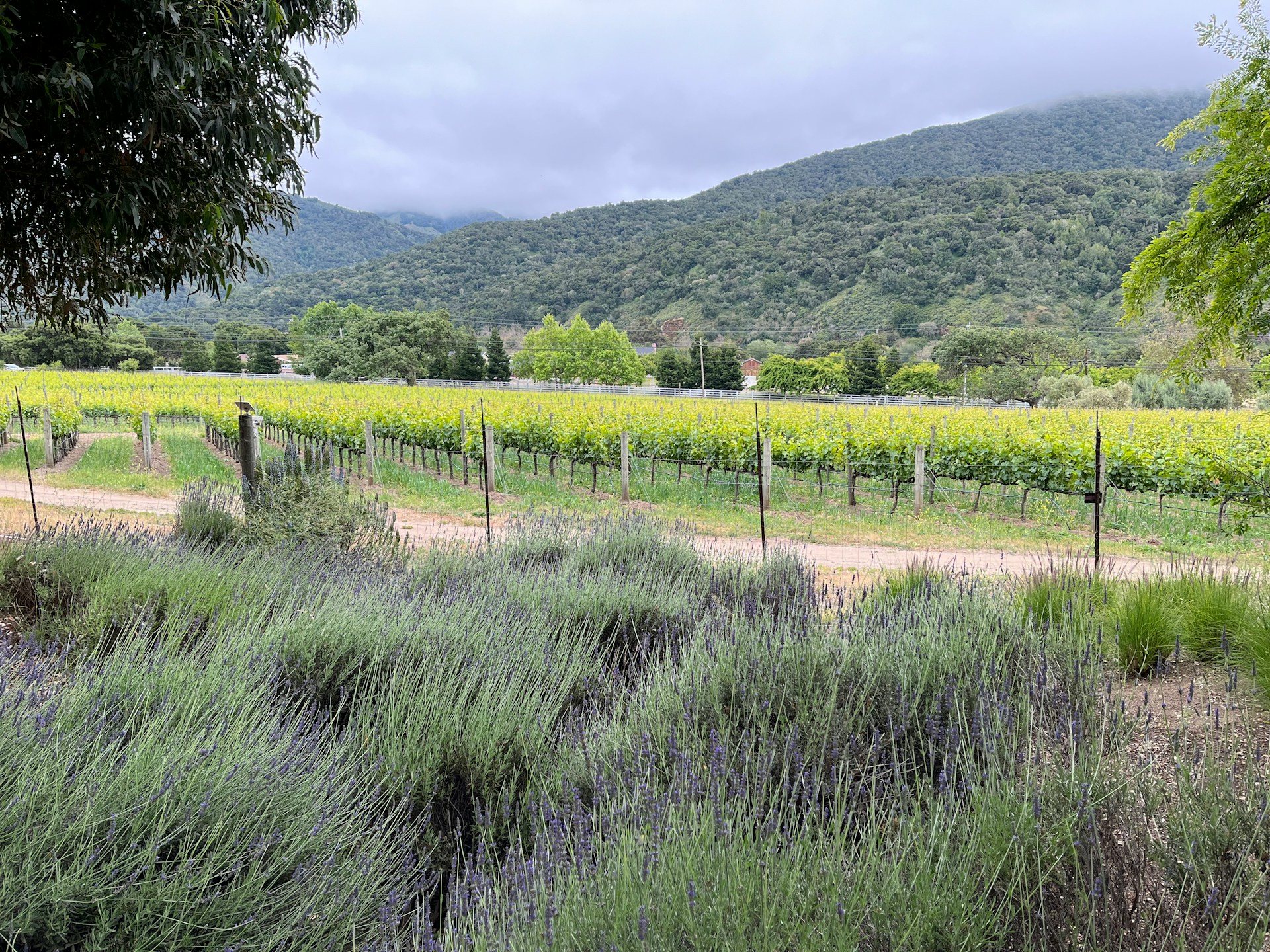
Historic Carmel Valley Village California near the Monterey Peninsula

Photo by Gene Giromini on Unsplash

The Growth of Carmel Valley Wine Country

The next major transformation in Carmel Valley Village came through wine.

Wine grapes had been grown in the broader Carmel Valley area before the Village became a wine-tasting destination. The valley’s climate, elevation changes, varied soils, sunny days, and cooler nighttime temperatures created favorable conditions for viticulture.

In 1982, Carmel Valley received formal recognition as an American Viticultural Area. The Carmel Valley AVA established the area as a federally recognized wine-growing region with a distinct geographical identity.

Over time, vineyards and wineries throughout the deeper valley and Cachagua area produced wines that could be introduced to visitors closer to the population centers of the Monterey Peninsula. Carmel Valley Village became a natural place for tasting rooms.

The Village offered several advantages. It was close enough to Carmel-by-the-Sea, Pebble Beach, Monterey, and Pacific Grove to attract visitors, but far enough inland to provide warmer weather and an authentic country atmosphere. Its small commercial spaces, courtyards, gardens, patios, and locally owned businesses were well suited to intimate wine-tasting experiences.

The result was not a large, heavily commercialized wine district. Carmel Valley Village developed a more relaxed model: visitors could move among small tasting rooms, meet winery representatives, dine outdoors, browse local shops, and enjoy the sunshine without losing the Village’s rural personality.
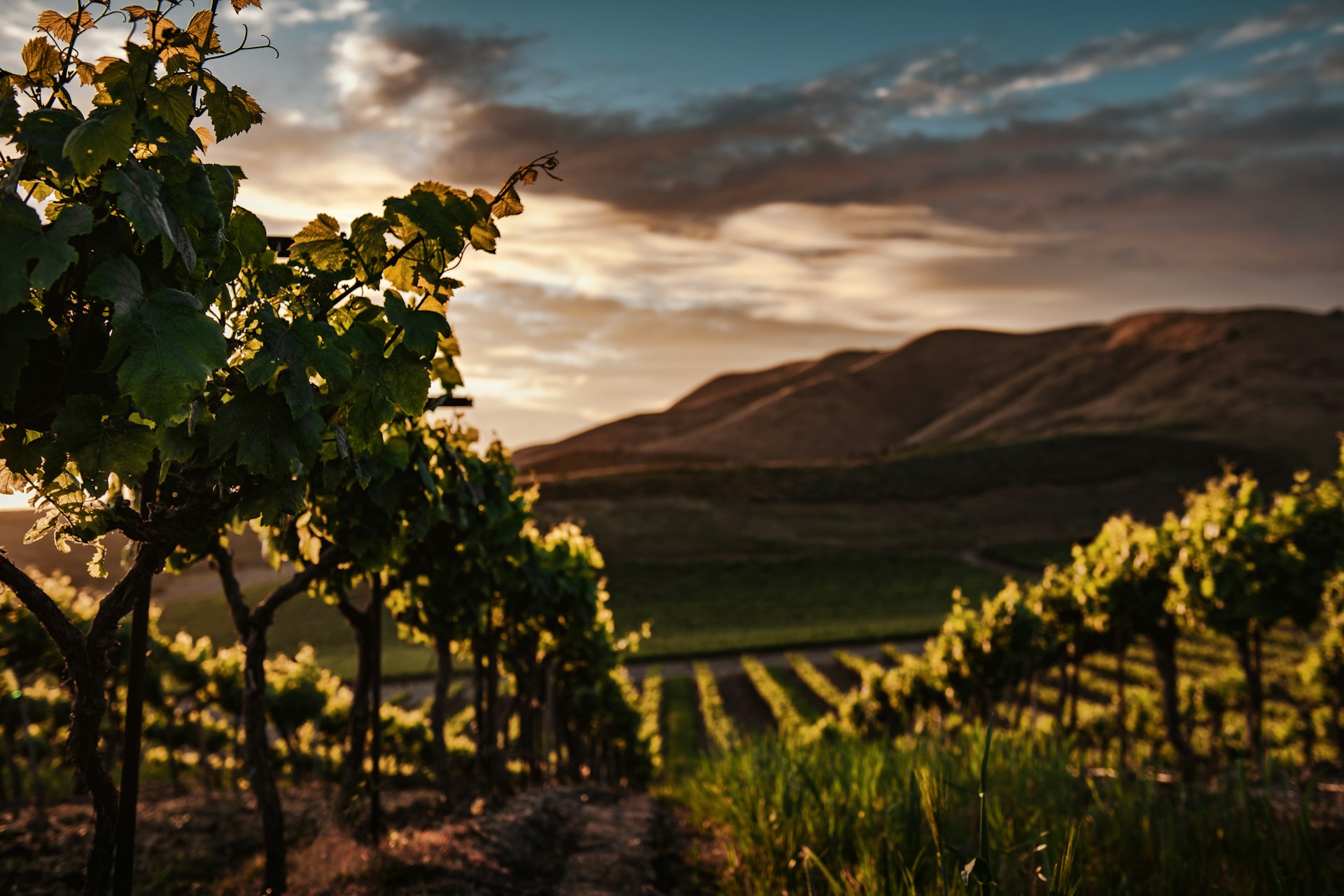
 

Carmel Valley Wine

Photo by Tim Mossholder on Unsplash

How Wine Changed the Village

The growth of wine tasting strengthened the Village’s economy and introduced Carmel Valley to a much wider audience. Visitors who might once have stayed entirely on the coast began traveling inland for warmer weather, tasting rooms, restaurants, and scenery.

This created opportunities for chefs, winemakers, artists, retailers, hospitality businesses, and property owners. Older commercial spaces gained new uses, outdoor patios became valuable amenities, and the Village developed a reputation as a destination rather than merely a service center for local residents.

Wine did not erase Carmel Valley Village’s earlier identity. Instead, it layered a new lifestyle economy over the Village’s rural and aviation-era foundations.

That layering is one reason the Village feels authentic. Its tasting rooms and restaurants are not located in a newly constructed entertainment complex. They occupy a community shaped by ranching, aviation, local commerce, art, and decades of informal development.

Carmel Valley Village wine tasting rooms and restaurants

Photo by Kelsey Chance on Unsplash

Carmel Valley Village Today

Today, Carmel Valley Village combines several identities at once. It is a residential community, a commercial center, a wine-tasting destination, a gathering place, and a gateway to the deeper reaches of Carmel Valley.

Residents can enjoy restaurants, tasting rooms, small businesses, galleries, local events, and community services without leaving the valley. Visitors appreciate the ability to spend an afternoon tasting wine or dining outdoors in a setting that is generally warmer and more relaxed than the immediate coast.

The Village also provides access to the broader Carmel Valley lifestyle. Garland Ranch Regional Park is nearby, and the surrounding area offers hiking, horseback riding, cycling, vineyards, golf, country clubs, ranches, and scenic drives.

Farther east, Carmel Valley Road leads toward Cachagua, vineyard properties, mountain landscapes, and some of the most private rural real estate in Monterey County. To the west, the road connects residents with Carmel-by-the-Sea, Highway 1, Pebble Beach, Monterey, Pacific Grove, and the rest of the Monterey Peninsula.

Learn more about the community and view current properties on our Carmel Valley Village real estate page.

Living Near Carmel Valley Village

Living near Carmel Valley Village offers a distinctive combination of country atmosphere and day-to-day convenience. Properties can feel rural and private while remaining close to restaurants, wine tasting, schools, community services, and outdoor recreation.

The housing stock is diverse. Buyers may encounter older cottages, mid-century ranch homes, remodeled residences, hillside properties, equestrian homes, luxury estates, homes with vineyard potential, and properties with significant acreage.

Some neighborhoods are close enough to make the Village part of everyday life. Other properties sit on surrounding hillsides where residents enjoy greater privacy, views, and separation while remaining only minutes from the commercial center.

Buyers interested in living close to the community center can search homes for sale near Carmel Valley Village. Those looking for elevated properties and broader valley views may also want to explore Village Views real estate.

Mid Valley and the Western Approach to the Village

Mid Valley occupies the area between the coastal end of Carmel Valley and Carmel Valley Village. It offers convenient access to both the Village and the services of the Monterey Peninsula.

Many buyers choose Mid Valley because it provides a balance of warmer weather, larger properties, and a rural atmosphere without requiring a longer drive into the upper valley. Depending on the specific location, residents may be within easy reach of Carmel-by-the-Sea, Highway 1, Carmel Valley Village, golf, shopping, and outdoor recreation.

Mid Valley includes an eclectic mix of residences, from traditional ranch homes to substantial custom estates. As with the Village, value can vary significantly based on lot size, privacy, views, condition, road influence, usable land, and proximity to amenities.

Explore current listings on our Mid Valley Carmel Valley real estate page.

Carmel Valley Equestrian Heritage

Photo by Guillermo Mota on Unsplash

The Village and Carmel Valley’s Equestrian Heritage

Although Carmel Valley Village has developed into a wine and dining destination, the surrounding valley remains deeply connected to horses and ranching.

Equestrian properties can be found throughout Carmel Valley, including homes with barns, paddocks, pastures, riding areas, workshops, and larger parcels. The availability of land and the valley’s rural character make it one of the Monterey Peninsula’s strongest markets for buyers seeking horse property.

This is another way the past remains visible in the modern community. Horses were essential to the rancho period, ranching, transportation, and early settlement. Today, equestrian living is often a lifestyle choice rather than an economic necessity, but it continues the valley’s relationship with land and open space.

Buyers seeking acreage, barns, or riding facilities can explore current Carmel Valley horse properties for sale.

How Carmel Valley Village Differs From Carmel-by-the-Sea

Carmel Valley Village and Carmel-by-the-Sea are sometimes confused by visitors, but they offer very different settings and lifestyles.

Carmel-by-the-Sea is a compact coastal city known for white-sand beaches, storybook cottages, art galleries, restaurants, walkability, hidden courtyards, and a preserved village atmosphere.

Carmel Valley Village is an unincorporated inland community shaped by ranching, aviation, rural commerce, wine, and larger residential properties. It is warmer, less dense, more automobile-oriented, and more closely connected to acreage, hillsides, horses, vineyards, and country living.

Both communities offer charm, restaurants, wine tasting, and access to the broader Monterey Peninsula, but the experiences are distinct. Buyers who prioritize beach proximity and walkability may prefer Carmel-by-the-Sea. Those who want more sun, land, privacy, outdoor living, or equestrian potential may find Carmel Valley more appealing.

For a deeper look at the coastal village, read The Complete History of Carmel-by-the-Sea, California.

Why Carmel Valley Village History Matters to Real Estate

History provides context for Carmel Valley Village real estate because the community did not develop according to a single modern subdivision plan. Properties reflect different eras, land divisions, architectural styles, and intended uses.

Acreage, access, views, topography, sunlight, privacy, water considerations, improvements, outbuildings, road exposure, and proximity to the Village can all affect value. Two homes with similar interior square footage may appeal to different buyers and sell at substantially different prices because of their setting.

The Village’s history also adds emotional value. Buyers are not simply purchasing a house near a commercial district. They are becoming part of a community with roots in ranching, early aviation, local art, independent businesses, wine, and rural Monterey County life.

To follow current activity, visit our Carmel Valley real estate market report, which features active, pending, and recently sold properties.

The Enduring Appeal of Carmel Valley Village

Carmel Valley Village has changed dramatically since Byington Ford imagined pilots landing beside their homes. The airfield is no longer active, and the original Airway Village has evolved into a destination known for wine, food, sunshine, and country living.

Yet something of Ford’s original spirit remains. Carmel Valley Village still attracts people who want a different way of living. It is informal rather than polished, independent rather than standardized, and closely connected to the surrounding landscape.

The Village’s greatest strength may be its ability to evolve without entirely losing its past. Rancho history, aviation, murals, older commercial buildings, equestrian culture, vineyards, and modern hospitality all coexist within the same community.

That combination gives Carmel Valley Village a sense of authenticity that is increasingly difficult to find in desirable California communities.

Thinking About Buying or Selling Near Carmel Valley Village?

Whether you are looking for a cottage close to the Village, a remodeled ranch home, a hillside residence with views, a horse property, a vineyard-style estate, or a private acreage retreat, Carmel Valley offers a broad range of possibilities.

Understanding the differences among Carmel Valley Village, Village Views, Mid Valley, Cachagua, Robles del Rio, Miramonte, and the valley’s other neighborhoods is important. Each area offers a different combination of access, climate, privacy, land, amenities, and buyer demand.

The Monterey Peninsula Home Team can help you evaluate those differences, understand current market conditions, and identify the properties that best match your lifestyle and long-term goals.

Begin your search with the latest Carmel Valley homes for sale, or explore our complete Carmel Valley real estate guide.

Explore More of Carmel Valley

Carmel Valley Village History FAQ

When was Carmel Valley Village founded?

The modern community was developed in 1946 by Byington Ford and his brother, Tirey Ford Jr. It was initially known as Airway Village and was connected to Ford’s nearby residential airpark concept.

Why was it originally called Airway Village?

Airway Village was developed beside an airfield intended to serve private pilots and residents of an aviation-oriented community. Early shops and services were within walking distance of the runway and proposed hangar homes.

Who was Byington Ford?

Byington Ford was a Monterey Peninsula real estate developer who envisioned an early residential airpark in Carmel Valley. He later helped develop the commercial community that became Carmel Valley Village.

What happened to the Carmel Valley airfield?

The Carmel Valley airfield operated for more than 60 years and was licensed by California in 1949. It formally closed in 2002, although the property continued to serve community, recreational, and emergency-response purposes.

When did Carmel Valley become an official wine region?

The Carmel Valley American Viticultural Area was formally established in 1982. Vineyards, wineries, and tasting rooms have since become an important part of the valley’s identity and economy.

Is Carmel Valley Village walkable?

Parts of the commercial Village are walkable, particularly the clusters of tasting rooms, restaurants, galleries, and shops. However, Carmel Valley is a rural area, and a vehicle is generally necessary for reaching surrounding neighborhoods and other Monterey Peninsula communities.

What is Carmel Valley Village known for today?

Carmel Valley Village is known for warm weather, wine tasting, locally owned restaurants, small businesses, galleries, rural scenery, community events, and access to hiking, horseback riding, vineyards, and the deeper Carmel Valley.

How is Carmel Valley Village different from Carmel-by-the-Sea?

Carmel Valley Village is an inland, rural community associated with sunshine, wine, larger properties, horses, and country living. Carmel-by-the-Sea is a compact coastal city known for its beach, walkability, cottages, galleries, restaurants, and preserved village character.

Where can I find homes for sale near Carmel Valley Village?

Current listings can be viewed on the Carmel Valley Village homes-for-sale page.

July 1, 2026

Rancho Los Laureles and the Mexican Land Grant Era in Carmel Valley

Map of Rancho Los Laureles

Rancho Los Laureles: The Mexican Land Grant That Helped Shape Carmel Valley

Carmel Valley is known today for sunshine, vineyards, ranch properties, horse properties, luxury estates, and the relaxed country lifestyle of the 93924 zip code. But long before Carmel Valley became one of the Monterey Peninsula’s most desirable inland communities, it was shaped by land, water, ranching, family ownership, and the rancho culture of early California.

One of the most important chapters in that story is Rancho Los Laureles, a Mexican-era land grant that helped define the physical and cultural identity of Carmel Valley. The history of Rancho Los Laureles connects the Carmel River, early California families, cattle, horses, agriculture, road access, hospitality, and the land-based lifestyle that still influences the Carmel Valley real estate market today.

This article is part of our Carmel Valley history series. For the broader overview, start with The Complete History of Carmel Valley, California.

What Was Rancho Los Laureles?

Rancho Los Laureles was one of the historic Mexican land grants in present-day Carmel Valley, California. The name “Los Laureles” refers to the California bay laurel trees that grow in the area, a fitting name for a valley landscape defined by oaks, laurels, river corridors, grasslands, and hillsides.

The original rancho included thousands of acres along Carmel Valley and the Carmel River. In the rancho era, land was not divided into modern neighborhoods, subdivisions, or residential parcels the way it is today. Instead, large grants supported ranching, livestock, agriculture, family settlement, and regional travel.

That is one reason Rancho Los Laureles remains such an important part of Carmel Valley history. It helps explain why the valley still feels different from more compact Monterey Peninsula communities such as Carmel-by-the-Sea, Pacific Grove, Monterey, and Pebble Beach. Carmel Valley’s roots are tied to land, water, sun, privacy, ranching, and open space.

The Mexican Land Grant Era in California

To understand Rancho Los Laureles, it helps to understand the Mexican land grant era. After Mexico gained independence from Spain in 1821, Alta California gradually moved away from the Spanish mission system and toward private land ownership through large ranchos.

These land grants became central to California’s social and economic life. Ranchos were not simply large pieces of property. They were working landscapes. Families raised cattle and horses, grew crops, hosted travelers, held community gatherings, and created regional relationships that connected Monterey, Carmel, Salinas, the inland valleys, and the coast.

In Monterey County, the rancho era left a deep imprint. Many modern place names, roads, property boundaries, and historic landmarks still reflect this earlier period of land ownership. Carmel Valley’s identity as a ranching and country-living community can be traced directly to this chapter of California history.

Boronda family of Monterey County

The Boronda Family and Rancho Los Laureles

Rancho Los Laureles is closely associated with the Boronda family, one of the important early California families connected to Monterey County history. José Manuel Boronda, his family, and related landholders were part of the rancho story that shaped Carmel Valley’s early settlement and land use.

The Boronda family’s connection to the land helped establish a pattern that would remain important in the valley for generations: family ownership, agriculture, livestock, horses, hospitality, and a close relationship with the land itself.

In the rancho era, Carmel Valley was not a suburban extension of the coast. It was a working inland valley where the river, seasonal rainfall, grazing land, and access routes all mattered. The Boronda family and Rancho Los Laureles helped give the area a more permanent residential and agricultural identity.

Why the Carmel River Mattered

The Carmel River was central to the value and usefulness of Rancho Los Laureles. In early California, land with access to water carried enormous practical importance. Water supported people, livestock, agriculture, trees, gardens, and travel corridors.

The river also helped define movement through the valley. Long before Carmel Valley Road became the main modern route, the valley itself was naturally organized around the river corridor. Settlements, ranches, fields, and later roads followed the logic of the land.

That same relationship still matters today. Modern Carmel Valley buyers often respond to the same natural features that made the valley historically valuable: usable land, sun exposure, privacy, mature trees, views, proximity to the river, and access to open space.

If you are researching the modern market, you can explore the latest Carmel Valley homes for sale.

Horse and equestrian opportunities in Carmel Valley

Ranching, Horses, and the Rural Character of Carmel Valley

Rancho Los Laureles helped establish Carmel Valley as ranch country. Cattle, horses, grazing land, and agriculture were essential parts of daily life. That history still echoes through the valley today.

Unlike coastal Carmel-by-the-Sea, which became known for its walkable village, cottages, art colony, and beach lifestyle, Carmel Valley developed around larger parcels and a more rural rhythm. Land was not just a backdrop. It was the foundation of value.

That rural foundation is one of the reasons Carmel Valley remains one of the Monterey Peninsula’s strongest areas for equestrian and acreage-oriented properties. Buyers who want barns, paddocks, riding areas, pastures, or room for horses often look to Carmel Valley because the land-use history and property patterns are better suited to that lifestyle than many coastal neighborhoods.

To see current examples, visit Carmel Valley horse properties for sale.

How Rancho Los Laureles Connects to Carmel Valley Village

Present-day Carmel Valley Village sits within the broader historical landscape shaped by the rancho era. The Village is now known for tasting rooms, restaurants, shops, galleries, warm weather, and a relaxed local atmosphere, but its location reflects the valley’s older patterns of settlement and movement.

As roads improved and the valley became more connected to the coast, the Village emerged as a natural community center. It offered a gathering point for residents, ranching families, visitors, and later wine-country travelers.

Today, Carmel Valley Village remains the heart of the valley. It is one of the places where history, lifestyle, and real estate value come together. Buyers are often drawn to the area because it offers a rare combination: a sunny country setting with nearby dining, wine tasting, community life, and access to the broader Monterey Peninsula.

You can browse listings near the Village here: Carmel Valley Village homes for sale.

Roads, Ranches, and the Opening of Carmel Valley

As Carmel Valley became more connected to Monterey, Salinas, Carmel, and the coast, road access became increasingly important. Routes through and around the valley helped ranchers move livestock and goods, helped families connect with neighboring communities, and eventually helped make Carmel Valley more accessible for residents, visitors, and second-home owners.

Laureles Grade is one of the road names that still reflects the valley’s rancho heritage. It connects Carmel Valley with the Highway 68 corridor and the Salinas side of Monterey County, reinforcing how the valley has long served as a bridge between inland ranch country and the coastal Monterey Peninsula.

This history matters for modern real estate because Carmel Valley is not one single market. Access, location, road proximity, privacy, views, sun exposure, and distance from the coast can all affect value. A property near Mid Valley may appeal to a different buyer than a property near Carmel Valley Village, Cachagua, Tierra Grande, or the deeper reaches of the valley.

For current market activity, visit the Carmel Valley real estate market report.

From Rancho Land to Modern Carmel Valley Real Estate

Over time, the large rancho holdings of early California were divided, sold, transferred, mapped, and developed into the property patterns we see today. This transition from rancho land to modern ownership is one of the most important real estate stories in Carmel Valley.

The legacy of that transition can still be seen in the types of properties buyers find throughout the valley. Carmel Valley includes ranch-style homes, luxury estates, vineyard properties, horse properties, hillside retreats, gated communities, and rural acreage. The market is more varied than many people realize.

That variety is part of the appeal, but it also makes Carmel Valley a market where local knowledge matters. Two homes with similar square footage can have very different values depending on acreage, usability of land, views, privacy, water considerations, road access, condition, outbuildings, equestrian improvements, and proximity to Carmel Valley Village or the coast.

To better understand the middle part of the valley, explore Mid Valley Carmel Valley homes for sale.

Carmel Valley, California

Why Rancho Los Laureles Still Matters Today

Rancho Los Laureles still matters because it helps explain the soul of Carmel Valley. The valley’s appeal is not based only on its current homes, restaurants, wineries, or tasting rooms. Its appeal comes from something older: land, sunlight, water, horses, trees, open space, and the feeling of being connected to a real California landscape.

Many people discover Carmel Valley because they are looking for a home with more space than they can find along the coast. But they often fall in love with the valley because it feels rooted. The hillsides, ranch roads, mature oaks, historic names, vineyards, and older properties give the area a sense of continuity that cannot be manufactured.

That continuity is especially powerful for buyers looking for a legacy property. A Carmel Valley estate, ranch home, vineyard property, or equestrian property often represents more than a place to live. It can become a family retreat, a gathering place, a lifestyle investment, or a long-term connection to the Monterey Peninsula.

Carmel Valley Village and surrounding ranch history

Rancho Los Laureles and the Modern Luxury Buyer

For today’s luxury buyer, Carmel Valley offers a different kind of Monterey Peninsula lifestyle. Pebble Beach is known for golf, ocean views, and gated prestige. Carmel-by-the-Sea is known for walkability, cottages, art, restaurants, and beach access. Pacific Grove is known for coastal charm, historic homes, and the recreation trail. Monterey is known for history, the harbor, Cannery Row, and city convenience.

Carmel Valley offers something else: sun, land, privacy, space, vineyards, horses, gardens, guest houses, pools, outdoor entertaining, and a more relaxed country setting close to the coast.

That identity is directly connected to the valley’s rancho past. The land was always the point. Today’s buyers may be looking for luxury finishes, updated kitchens, large terraces, wine storage, pool areas, or guest quarters, but the underlying draw remains the same: the rare chance to own land and privacy in one of California’s most beautiful regions.

Explore the broader lifestyle and market here: Carmel Valley real estate.

How Rancho Los Laureles Fits Into the Larger Monterey Peninsula Story

Rancho Los Laureles is also part of a much larger Monterey Peninsula story. Monterey served as an early political and military center of Alta California. Carmel-by-the-Sea grew around mission history, artists, architecture, and village preservation. Pacific Grove developed from a Methodist seaside retreat into one of the area’s most beloved coastal communities. Pebble Beach became internationally known for scenery, golf, and luxury living.

Carmel Valley’s role in this broader story is distinctive. It represents the inland, land-based, ranching, agricultural, and wine-country side of the Monterey Peninsula. Its history gives depth to the entire region and helps explain why buyers have so many different lifestyle choices within a relatively small geographic area.

For more regional context, you may also enjoy:

Thinking About Buying or Selling in Carmel Valley?

If you are considering buying or selling a home in Carmel Valley, history is more than an interesting background story. It helps explain why certain properties are valuable, why land matters, why sun exposure and privacy are so important, and why Carmel Valley attracts a different buyer than the immediate coast.

Whether you are looking for a home near Carmel Valley Village, a Mid Valley property, a private estate, a horse property, a vineyard-style retreat, or a larger acreage opportunity, local expertise is essential. Carmel Valley properties can vary dramatically based on micro-location, land usability, access, views, improvements, water, condition, and lifestyle fit.

The Monterey Peninsula Home Team can help you evaluate those details and understand how Carmel Valley’s unique history and market conditions affect value today.

Start here: Search Carmel Valley homes for sale.

Rancho Los Laureles and Carmel Valley History FAQ

What was Rancho Los Laureles?

Rancho Los Laureles was a historic Mexican land grant in Carmel Valley, California. It included thousands of acres along the Carmel River and helped shape the valley’s early ranching, agricultural, and settlement patterns.

Why is Rancho Los Laureles important to Carmel Valley history?

Rancho Los Laureles is important because it connects Carmel Valley to the Mexican land grant era, early California ranching, the Boronda family, and the land-based identity that still influences the valley today.

Who was associated with Rancho Los Laureles?

Rancho Los Laureles is closely associated with the Boronda family and other early California landholders connected to Monterey County’s rancho period.

How did Rancho Los Laureles influence Carmel Valley real estate?

The rancho era helped establish Carmel Valley as a place defined by land, water, agriculture, horses, and open space. Modern Carmel Valley real estate still reflects those qualities through ranch properties, equestrian estates, vineyard homes, and larger parcels.

Is Carmel Valley still known for ranch and horse properties?

Yes. Carmel Valley remains one of the strongest areas on the Monterey Peninsula for buyers seeking ranch-style homes, horse properties, acreage, privacy, and outdoor living.

Where can I search for Carmel Valley homes for sale?

You can search current Carmel Valley homes for sale at searchmontereypeninsulahomes.com/carmel-valley-homes-for-sale/.

  •  

June 22, 2026

35 Wellings Place | Remodeled Monterey Home With ADU

35 Wellings Pl Monterey Home for sale

35 Wellings Place: A Beautifully Remodeled Craftsman Home in Monterey’s Peter’s Gate Neighborhood

Some homes are improved one project at a time. Others are thoughtfully reimagined from top to bottom. 35 Wellings Place in Monterey, California, belongs in the second category.

Located in Monterey’s highly desirable Monte Regio and Peter’s Gate area, this beautifully remodeled Craftsman offers approximately 1879 square feet of flexible living space, including four bedrooms, three bathrooms including an approximately 273-square-foot legal accessory dwelling unit or guest suite with its own kitchenette.

The result is a turnkey Monterey home that combines classic architectural warmth with the features today’s buyers value most: an open floor plan, updated finishes, flexible guest accommodations, private outdoor space and a central location near downtown Monterey.

Buyers can explore additional properties on our Monterey homes for sale page or view current listings specifically in the Peter’s Gate and Monte Regio neighborhood.

Monterey CA Craftsman home for sale

A Complete Remodel Designed for Modern Monterey Living

Monterey Craftsman home for sale with indoor outdoor livingNearly every part of 35 Wellings Place has been updated, creating a home that feels fresh, cohesive and ready to enjoy from the day its new owner moves in.
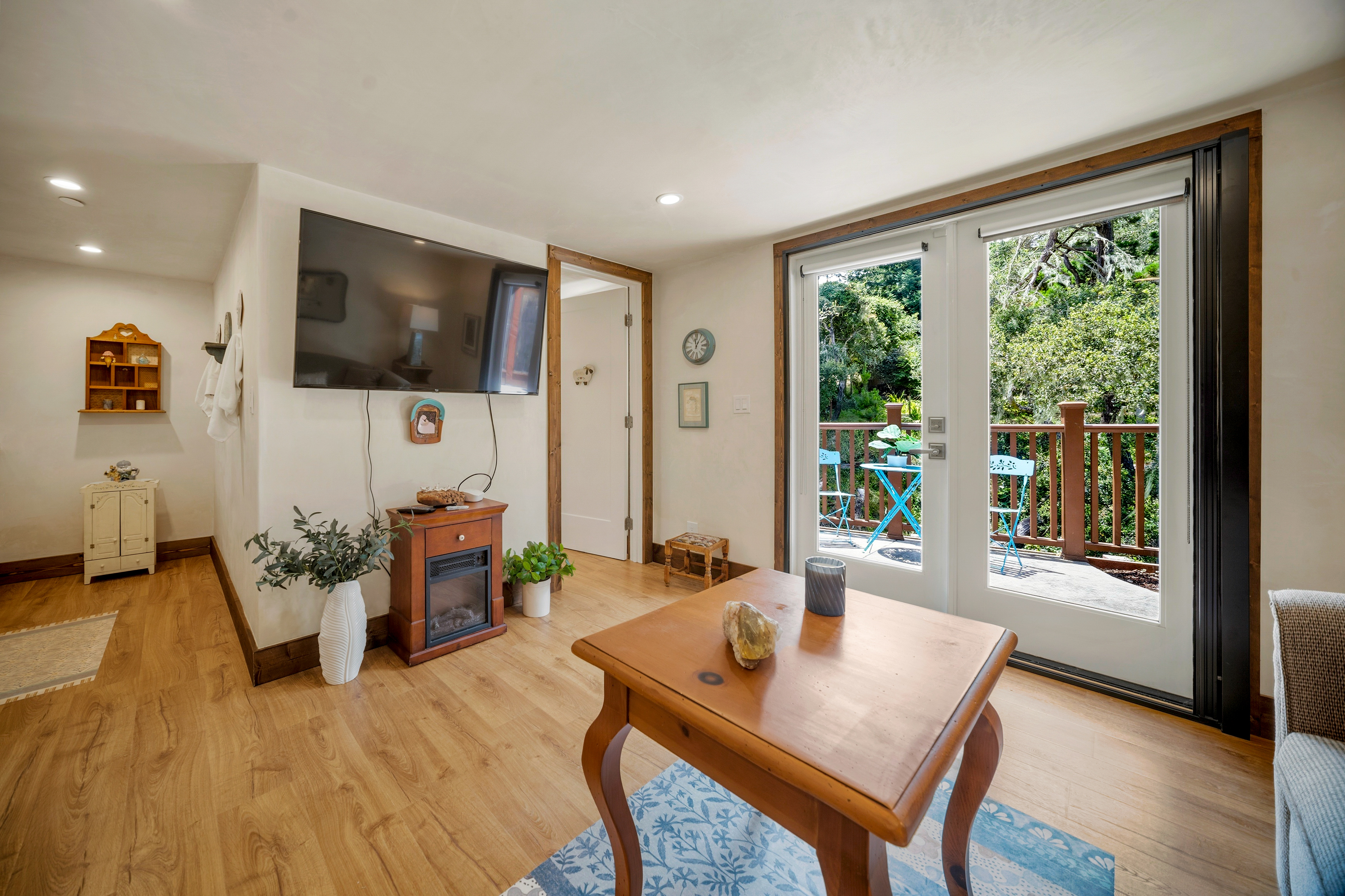
The main living area is centered around a spacious great room where the kitchen, dining area and living room flow together naturally. New wood flooring adds warmth throughout the home, while new windows bring in abundant natural light and help connect the interior with the surrounding landscape.

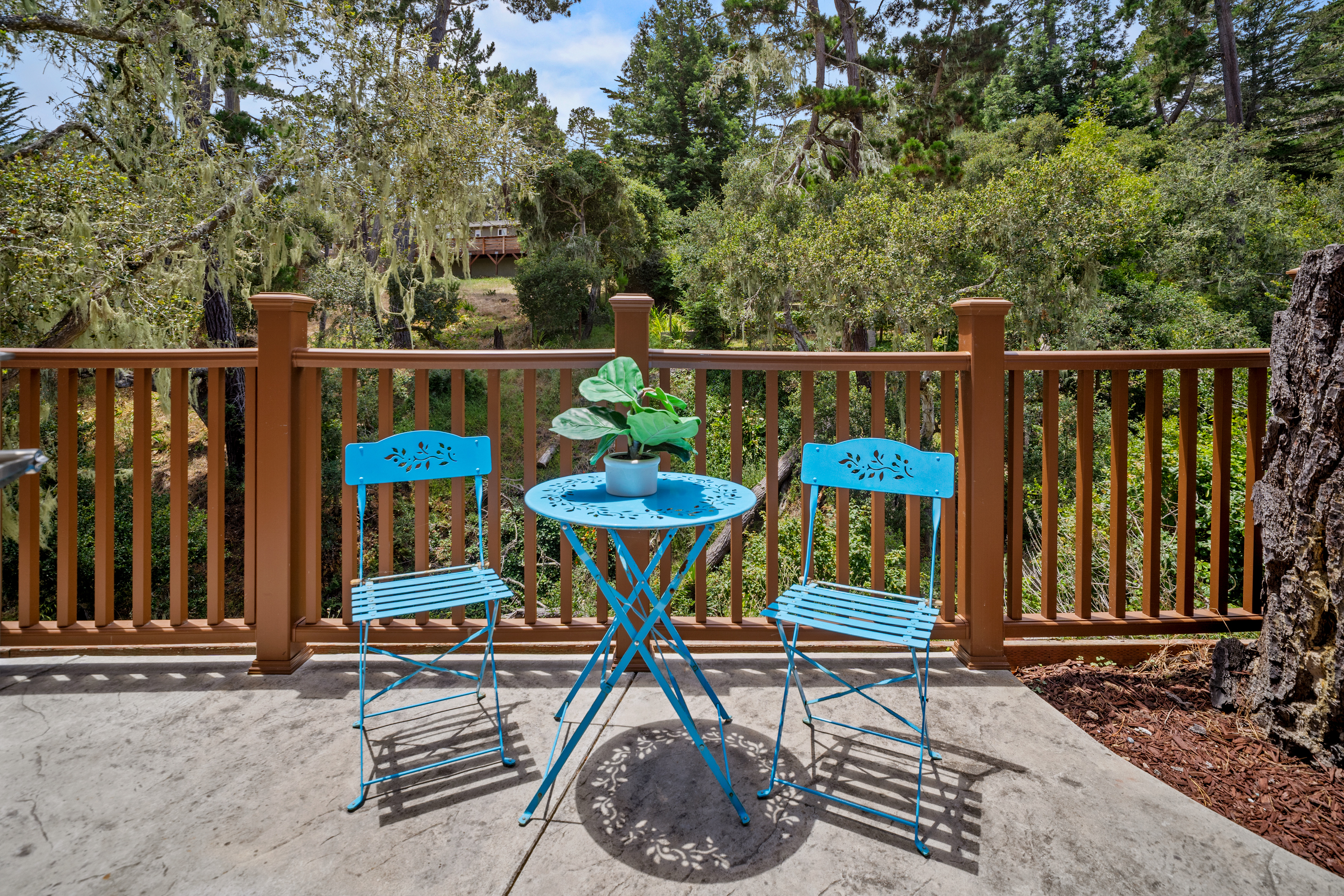
The remodeled kitchen features a clean, contemporary design and opens directly to the main gathering spaces, including a 275 square foot sundrenched deck over looking the forest and seasonal creek below. Whether preparing a quiet 

weekday dinner or hosting friends and family, the layout allows the kitchen to remain part of the activity rather than being separated from it.

A fireplace anchors the living area and provides a welcoming focal point during Monterey’s cooler coastal evenings. The open design also creates flexibility for furniture placement, dining and entertaining.

Four Bedrooms, Three Bathrooms and Flexible Living Space

With four bedrooms and three bathrooms, this home offers considerably more flexibility than many older homes found near downtown Monterey.

The bedroom configuration can accommodate a variety of needs, including a primary residence, home office, guest room, hobby space or multigenerational living arrangement. The newly remodeled bathrooms continue the home’s updated aesthetic and eliminate the need for the major renovation projects often associated with established Monterey properties.

This versatility may be especially appealing to buyers who work remotely, frequently host family or want separate space for different generations of the household.

Monterey Home with legal ADU for sale

A Legal ADU or Guest Suite With Its Own Kitchenette

35 Wellings Place Patio off the Legal ADU

One of the most valuable and distinctive features of 35 Wellings Place is the approximately 273-square-foot legal accessory dwelling unit or guest suite.

Complete with a new kitchenette, the unit provides separation and flexibility while remaining part of the overall property. Depending on the owner’s needs and applicable regulations, the space could work well for extended family, visiting guests, a caregiver, a private office or potential rental use.

Legal guest accommodations are particularly useful in a market where many homes have informal bonus rooms or converted spaces that may not offer the same degree of documented flexibility.

For buyers considering long-term ownership, an ADU can also help a home adapt as personal circumstances change. A space that initially serves as an office or guest suite may later accommodate family members, provide additional privacy or create supplemental income potential.

Indoor-Outdoor Living and a Private Forest Outlook

The home’s large, sun-filled deck expands the living experience outdoors. Overlooking the surrounding forest and wash, the deck provides a peaceful setting for morning coffee, outdoor dining or relaxed afternoons in the Monterey sunshine.

Rather than looking directly into neighboring homes, the rear outlook creates a greater sense of privacy and connection to nature. Mature landscaping enhances the setting and helps the approximately 7,000-square-foot lot feel like a private retreat despite its central location.

The outdoor areas offer space for entertaining, gardening or simply enjoying the mild Central Coast climate. For buyers moving from a more densely developed urban area, this combination of privacy and convenience can be especially compelling.

Air Conditioning: A Rare Monterey Peninsula Feature

Central air conditioning remains uncommon in many Monterey Peninsula homes, particularly in established neighborhoods where residences were built long before cooling systems became a common buyer expectation.

Although Monterey is known for its generally mild coastal climate, warmer days do occur, especially in sunnier inland pockets and during periods when offshore weather patterns bring higher temperatures to the coast. Air conditioning adds comfort during those warmer stretches and can be particularly useful for home offices, guests and year-round residents.

It is one more example of how 35 Wellings Place combines the character of an established Monterey home with the comfort and convenience of a modern residence.

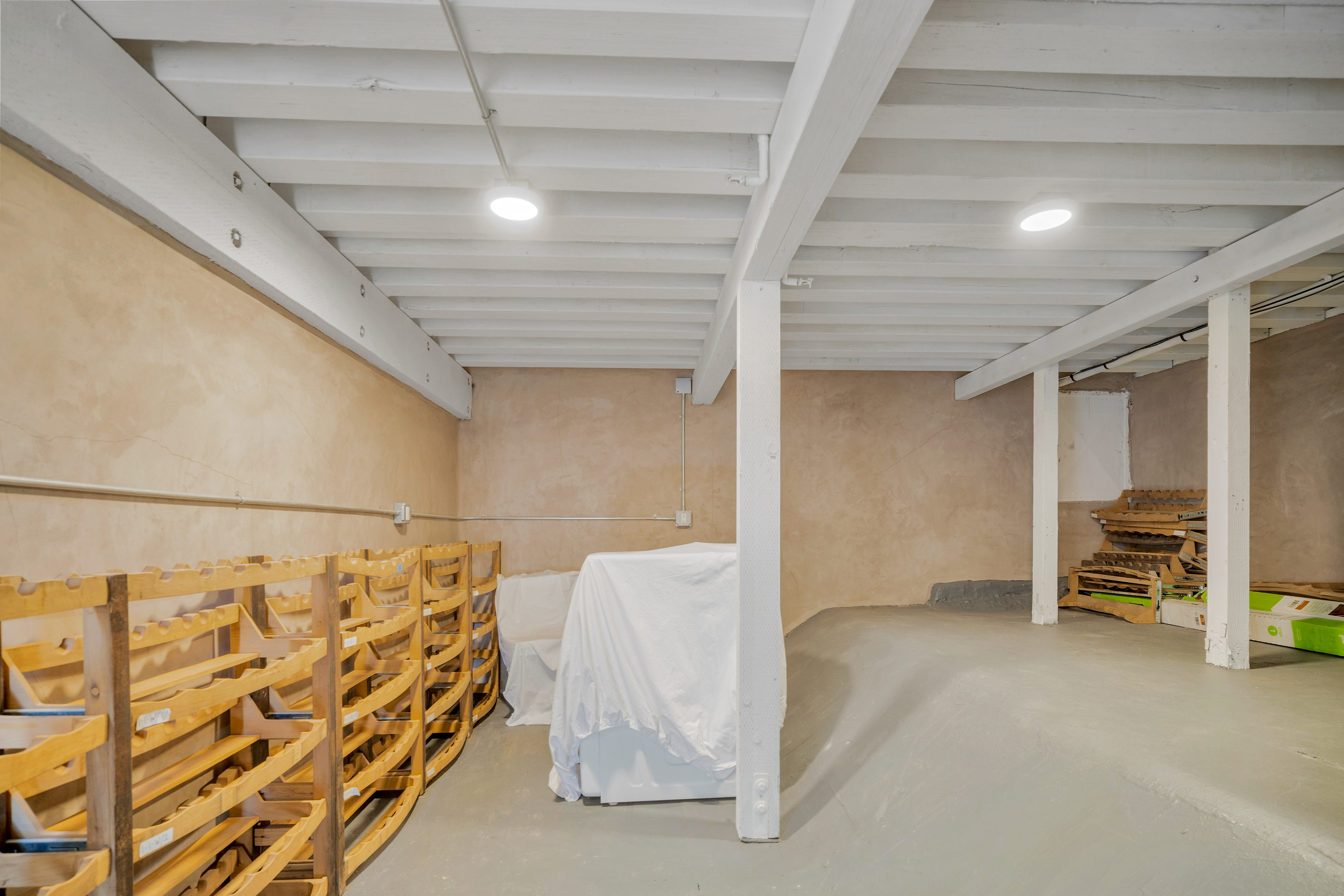
Wine Cellar at 35 Wellings Place in Monterey, CA

Storage, Garage Space and Off-Street Parking

Storage can be difficult to find in older Monterey homes, making the approximately 448-square-foot storage area at 35 Wellings Place a meaningful benefit.

The property also includes a one-car garage and substantial off-street parking. Together, these areas provide room for vehicles, bicycles, sporting equipment, seasonal belongings, tools and the many items associated with an active Monterey Peninsula lifestyle.

For residents who enjoy golf, cycling, kayaking, hiking or trips down the Big Sur coast, having usable storage can make everyday life noticeably easier.

Living in Monte Regio and Peter’s Gate

Monte Regio and Peter’s Gate are among Monterey’s most desirable residential areas because they offer a rare combination of neighborhood character, privacy and proximity to the city’s commercial and cultural center.

Homes in this part of Monterey range from traditional cottages and Craftsman residences to mid-century and custom homes. Mature trees, established landscaping and varied architecture give the area a sense of history that is difficult to reproduce in newer developments.

From 35 Wellings Place, residents are conveniently positioned near downtown Monterey, Del Monte Shopping Center, neighborhood parks, local schools, medical services and Highway 1. This makes it possible to enjoy a peaceful residential setting without feeling removed from the restaurants, shops and services used every day.

View current opportunities and learn more about the area on our dedicated Monte Regio and Peter’s Gate real estate page.

The Monterey Lifestyle

Living in the City of Monterey means being surrounded by history, coastline, outdoor recreation and a remarkably diverse collection of restaurants and cultural attractions.

Downtown Monterey and Old Monterey offer locally owned restaurants, coffee shops, historic adobes and community events. Alvarado Street serves as one of the city’s principal dining and gathering areas, while nearby Fisherman’s Wharf provides waterfront restaurants, harbor views and access to sailing, fishing and whale-watching excursions.

Cannery Row and the Monterey Bay Aquarium are only a short drive away. Residents can also enjoy Del Monte Beach, Window on the Bay, the Monterey Bay Coastal Recreation Trail and miles of shoreline extending toward Pacific Grove and Marina.

Golfers have access to historic Del Monte Golf Course as well as the internationally known courses of Pebble Beach. Boating, kayaking, paddleboarding, cycling, hiking and wildlife viewing are all part of daily life around Monterey Bay.

Monterey also offers a calendar of internationally recognized events, including automotive gatherings, golf tournaments, music festivals and food-and-wine events. Yet outside those major occasions, the city retains the relaxed rhythm of a small coastal community.

Explore more properties and neighborhood information through our complete Monterey real estate guide.

Life Across the Monterey Peninsula

One of the advantages of living in Monterey is that the wider Monterey Peninsula is remarkably accessible. Each nearby community offers a different environment, yet most are only a short drive from 35 Wellings Place.

Pacific Grove

Pacific Grove is known for its Victorian and Craftsman architecture, scenic rocky shoreline, coastal recreation trail and walkable downtown. Lovers Point, Asilomar State Beach and the Pacific Grove Golf Links provide an appealing mix of recreation and natural beauty.

Explore Pacific Grove homes for sale.

Carmel-by-the-Sea

Carmel-by-the-Sea offers white-sand beaches, distinctive architecture, art galleries, boutiques and a celebrated restaurant scene. Its compact downtown is highly walkable, while Scenic Road and Carmel Beach offer some of the Peninsula’s most recognizable coastal views.

Search current Carmel and Carmel-by-the-Sea real estate.

Pebble Beach

Pebble Beach is internationally recognized for its golf courses, forested residential setting and dramatic coastline. The community includes everything from quiet Upper Forest homes to estates near the Lodge, Carmel Bay and the Monterey Peninsula Country Club.

Browse Pebble Beach homes for sale.

Carmel Valley

Travel east from the coast and Carmel Valley offers a warmer, sunnier and more rural lifestyle. The area is known for oak-covered hills, vineyards, resorts, equestrian properties and homes on larger parcels.

View Carmel Valley real estate.

Together, these communities create a lifestyle that can include breakfast in downtown Monterey, an afternoon walk along the Pacific Grove shoreline, dinner in Carmel-by-the-Sea and a weekend of golf in Pebble Beach—all without leaving the Peninsula.

The Current Monterey Real Estate Market

The City of Monterey real estate market remains highly segmented. Citywide statistics include condominiums, smaller cottages, larger single-family residences, luxury properties and homes in neighborhoods with very different views, lot sizes and conditions. As a result, a single median price cannot fully describe the value of an individual Monterey home.

Recent public market indicators have shown Monterey values near the low-$1 million range when all housing types are considered. At the same time, updated single-family homes in sought-after neighborhoods can sell substantially above the citywide median, particularly when they offer privacy, flexible living space, views, larger lots or proximity to downtown.

Inventory has improved from the extremely restricted conditions experienced during the height of the pandemic-era market, giving buyers more choices in some price ranges. However, the number of truly turnkey homes remains limited. Properties with thoughtful renovations, strong presentation and desirable locations can still attract significant attention when they are priced correctly.

Mortgage rates and affordability continue to influence buyer behavior. Today’s buyers tend to scrutinize condition, permits, insurance costs and future improvement needs more carefully than they did during the most competitive years of the market. A home that has already undergone a comprehensive remodel may therefore have a meaningful advantage over a similarly priced property that requires extensive work.

The legal ADU at 35 Wellings Place may also broaden the potential buyer pool. Flexible accommodations have become increasingly important for multigenerational households, remote workers, buyers seeking guest space and owners interested in potential supplemental income.

Because Monterey contains so many distinct micro-markets, buyers and sellers should evaluate current competition and recent sales at the neighborhood level rather than relying exclusively on automated estimates or broad citywide averages.

For continuously updated local MLS information, visit the Monterey real estate market report. The report provides access to recent Monterey sales and helps buyers and sellers follow changing market conditions.

Who Is 35 Wellings Place Best Suited For?

The home’s layout and amenities could appeal to several buyer profiles:

  • Buyers seeking a completely remodeled primary residence near downtown Monterey.
  • Households needing separate accommodations for extended family or guests.
  • Remote professionals who want a private office outside the main living areas.
  • Buyers looking for a legal ADU with possible income-producing potential.
  • Second-home buyers who want turnkey condition and convenient access to the entire Peninsula.
  • Residents who value privacy, outdoor living, parking and usable storage.

Its combination of Craftsman character, modern upgrades and flexible living arrangements makes it difficult to place in a single category. It can function as a traditional family home, a multigenerational residence, a coastal retreat or a property offering both private living space and guest accommodations.

A Rare Turnkey Opportunity in Monterey

35 Wellings Place offers something increasingly difficult to find in Monterey: a home with established neighborhood character that has already been comprehensively modernized.

The open great room, new kitchen, remodeled bathrooms, wood floors, new windows and air conditioning provide the comfort buyers expect from newer construction. The legal ADU, large storage area, garage and additional parking add practical flexibility. Outside, the sun-filled deck, private landscaping and forest outlook create a peaceful retreat close to the center of Monterey.

For buyers who want to enjoy the Monterey Peninsula without first undertaking a lengthy renovation, this property deserves serious consideration.

Explore 35 Wellings Place and Monterey Real Estate

To learn more about 35 Wellings Place, arrange a private showing or request additional property information, contact Mark Bruno or Jeff Davi with the Monterey Peninsula Home Team.

You can also begin exploring the area through the following resources:

Monterey Peninsula Home Team
Keller Williams Coastal Estates
Call Mark Bruno at (831) 917-8190 or Jeff Davi at (831) 594-3290


Property characteristics, square footage, permitted use and availability should be independently verified by buyers and their representatives. Real estate market conditions change frequently, and citywide statistics may not reflect the value or marketability of a specific property.

June 17, 2026

What to Do if Your Home Appraisal Comes in Low

What to Do if Your Home Appraisal Comes in Low - Repost from a Redfin article we are featured in.

Key takeaways

     A low appraisal can delay or derail a home sale because lenders won’t finance more than the appraised value.

     Buyers and sellers have options: renegotiate, challenge the appraisal, contribute cash, or walk away.

     Preparing with comps, repairs, and an experienced real estate agent can help reduce appraisal issues.

What does a low appraisal mean?

A low appraisal happens when the appraiser values the home for less than the purchase price. Because lenders won’t approve loans above the appraised value, this creates a financing gap that can put the deal at risk.

For example, if you offered $400,000 but the home appraisal comes back at $380,000, your lender will only approve a loan based on $380,000. The $20,000 difference has to be resolved between the buyer and seller.

Why appraisals come in low

“It is not uncommon for an appraiser to miss one or more important pieces of the value equation when appraising a home,” states Mark Bruno, realtor and team leader at Monterey Peninsula Home Team. “One of the first things to look at is whether the comparable properties used in the appraisal are truly comparable to the subject property. Are they located in the same city and neighborhood? Were appropriate adjustments made for views, privacy, lot size, condition, location, and other features that can weigh heavily on value here? I have personally seen appraisals use similar properties in different but adjoining cities in a way that reduced the value of the subject property by more than $1 million. On the Monterey Peninsula, small changes in location, view, privacy, or neighborhood can create very large differences in value.”


Several factors can lead to a low appraisal:

     Rising markets: Home prices may be increasing faster than comparable sales data reflects.

     Unique properties: Homes without many recent comps can be harder to appraise accurately.

     Condition issues: Outdated systems, deferred maintenance, or visible defects may lower value.

     Market cooling: In slower markets, appraisals may fall below recent contract prices.

What buyers can do if the appraisal comes in low

1. Renegotiate the purchase price

Buyers can ask the seller to lower the price to match the appraised value. In many cases, sellers agree rather than risk losing the sale. This is often the cleanest solution when the seller is motivated, the appraisal appears reasonable, or the market has cooled since the offer was accepted. The buyer’s agent can use the appraisal report and recent comparable sales to support the request.

2. Cover the difference in cash

If buyers want to proceed at the agreed price, they can pay the gap out of pocket. This often happens in competitive markets. This may work for buyers with extra savings, but it increases the amount of cash needed at closing and can affect emergency reserves. Buyers should confirm with their lender how the additional cash affects loan approval.

3. Challenge the appraisal

If the buyer or agent believes the appraisal is inaccurate, they can request a reconsideration of value by submitting better comparable sales or correcting errors in the report.

“If a home appraisal comes in low, the first step is to carefully review the appraisal report for errors, missing upgrades, or comparable sales that may not accurately reflect the property’s value,” Michael Marchena at Marchena Home Team recommends. “From there, your agent and lender can help determine the best path forward, whether that means requesting a reconsideration of value, renegotiating the purchase price, adjusting the loan terms, or deciding whether the buyer can cover the appraisal gap. The key is not to panic a low appraisal does not always kill the deal, but it does need to be handled strategically and quickly.”

4. Switch lenders or appraisers

Since different lenders may use different appraisal management companies, ordering a new appraisal could yield a higher valuation.

5. Walk away

If the gap can’t be bridged, buyers can use an appraisal contingency to cancel the contract without penalty.

What sellers can do if the appraisal comes in low

1. Lower the price

Agreeing to the appraised value may be the fastest way to keep the deal moving. This may work for buyers with extra savings, but it increases the amount of cash needed at closing and can affect emergency reserves. Buyers should confirm with their lender how the additional cash affects loan approval.

2. Negotiate with the buyer

Sellers can agree to split the difference or cover part of the appraisal gap.

“A low appraisal doesn't have to mean the deal is dead. The first step is to carefully review the appraisal for inaccuracies and gather any relevant comparable sales that may not have been considered,” suggests Andrew Lewis, realtor, listing specialist, and team leader at Performance Real Estate. “From there, buyers and sellers can explore solutions such as appealing the appraisal, adjusting the sales price, or negotiating how the gap will be covered. The most successful outcomes happen when both parties focus on solving the problem rather than reacting emotionally to the number.”

3. Request a second appraisal

If the first appraisal seems flawed, sellers can support the buyer in requesting a new one.

4. Improve the property

Minor updates, repairs, or cosmetic fixes can sometimes help raise the appraised value in a re-evaluation.

5. Relist the home

If the seller believes the appraisal is unreasonably low and no compromise is possible, they may choose to walk away and list again.

How to prevent a low appraisal

While you can’t control every factor, preparation helps reduce risk:

     Work with an experienced real estate agent who knows local comps.

     Provide a list of recent improvements to the appraiser.

     Tidy and maintain the property before the appraisal.

     Be mindful of pricing strategy in fast-changing markets.

     Prep for the home appraisal to secure the best possible valuation.

FAQs about low appraisals

How often do appraisals come in low?

Industry estimates suggest that fewer than 10% of appraisals come in below contract price, but the risk increases in hot or volatile markets.

Can you challenge a low appraisal?

Yes. Buyers or sellers can request a reconsideration of value by submitting stronger comparable sales or pointing out mistakes in the report.

Do sellers have to lower the price after a low appraisal?

No. Sellers aren’t required to reduce the price, but they may need to negotiate if they want to keep the deal alive.

What happens if I can’t cover the appraisal gap?

If neither side can bridge the difference, the deal may fall through unless the contract includes a workaround.

Do cash buyers need an appraisal?

No. Cash buyers don’t need lender appraisals, but some still order one for peace of mind.

Moving forward: When your appraisal came in low

A low appraisal can be a challenging moment, but it’s important to remember that it’s a common hurdle in real estate, not necessarily a deal-breaker. Proactive planning, clear communication, and informed decision-making are key to successfully navigating this situation. When your home appraisal comes in low, connecting with a Redfin agent for their personalized support and expert guidance can make all the difference in achieving your home-buying or selling goals.

June 17, 2026

The Complete History of Carmel Valley, California | Carmel Valley 93924

Fish Ranch in Carmel Valley CA

The Complete History of Carmel Valley, California

Carmel Valley is one of the most distinctive communities on the Monterey Peninsula. Known today for sunshine, vineyards, ranch properties, equestrian estates, Carmel Valley Village, Garland Ranch, and a quieter inland lifestyle just minutes from the coast, Carmel Valley has a history that is much deeper than its modern reputation as wine country and luxury real estate.

The story of Carmel Valley is a story of land, water, climate, and movement. The Carmel River shaped the valley physically and culturally. Oak-studded hillsides, grasslands, seasonal creeks, wildlife corridors, and mountain ridges created a landscape that supported Indigenous communities long before European settlement. Later, Spanish colonial activity, Mexican land grants, ranching, agriculture, road building, tourism, wine production, and estate development each added another layer to the valley’s identity.

For anyone exploring Carmel Valley homes for sale, understanding this history helps explain why the area feels so different from neighboring Carmel-by-the-Sea, Pebble Beach, Pacific Grove, and Monterey. Carmel Valley is part of the Monterey Peninsula, but it has always had its own character: warmer, more rural, more spacious, more private, and more directly tied to land, ranching, horses, vineyards, and open space.

Ohlone color map bands

Before Carmel Valley: The First People and the Natural Landscape

Long before Carmel Valley was associated with ranches, vineyards, resorts, or country estates, it was part of an Indigenous cultural landscape. The Carmel River, valley floor, oak woodlands, ridgelines, grasslands, and nearby coastal areas supported Native communities who understood the land through seasonal movement, gathering, hunting, trade, ceremony, and stewardship.

The broader Monterey Peninsula and Central Coast region is historically connected to Indigenous peoples including the Rumsen Ohlone, Esselen, Salinan, and neighboring Native communities. For these first people, the valley was not a rural retreat or future real estate market. It was homeland. The river, wildlife, plants, hills, and coastal access formed part of a living system that supported community life for generations.

This first chapter matters because it reminds us that Carmel Valley’s history did not begin with Spanish settlement, land grants, or ranch ownership. Those later chapters were built on a much older human landscape.


Carmel River

The Carmel River and the Geography That Shaped the Valley

The Carmel River is one of the defining features of Carmel Valley. It helped shape settlement, agriculture, ranching, transportation, and the valley’s identity. From the higher inland reaches of the watershed, the river moves west toward the coast, creating the corridor around which much of Carmel Valley life developed.

In a region where microclimates matter enormously, Carmel Valley’s geography created a very different living environment from the coastal towns just a few miles away. While Carmel-by-the-Sea, Pacific Grove, and Monterey often experience summer fog and marine influence, much of Carmel Valley sits far enough inland to enjoy warmer, sunnier conditions. That climate difference became one of the valley’s defining lifestyle advantages.

Today, that geography still drives demand for Carmel Valley real estate. Buyers are often drawn to the same natural qualities that shaped the valley historically: sun, space, privacy, views, access to trails, room for gardens or horses, and a slower pace of life close to the coast.

Spanish Colonial Influence and the Mission Era

Spanish colonial activity on the Monterey Peninsula began in the late 18th century, with Monterey serving as a political and military center and nearby Carmel Mission becoming one of the most important mission sites in Alta California. Although Carmel Valley developed differently from the coastal mission settlement, the mission era affected the entire region.

The Spanish mission system changed land use, labor patterns, religion, agriculture, and Native life throughout Alta California. The Carmel River area was especially important because of water, agricultural potential, grazing land, and proximity to Monterey and Carmel Mission.

Understanding Carmel Valley’s mission-era context helps connect it to the larger history of the Monterey Peninsula. The same forces that shaped early Monterey and Carmel-by-the-Sea also influenced the inland valleys, ranch lands, and transportation routes that would later become central to Carmel Valley’s identity.

For more regional context, you may also enjoy reading The Complete History of Monterey, California and The Complete History of Carmel-by-the-Sea, California.

The Mexican Rancho Era and Rancho Los Laureles

One of the most important chapters in Carmel Valley history is the Mexican rancho period. After Mexico gained independence from Spain, mission lands throughout Alta California were secularized and large private land grants became central to California’s social, economic, and agricultural life.

In Carmel Valley, Rancho Los Laureles became one of the defining land grants. The ranch was named for the California bay laurel trees that grow in the area and originally included thousands of acres along Carmel Valley. Its history is closely tied to José Manuel Boronda, Vicente Blas Martínez, and the broader rancho culture of early California.

Rancho Los Laureles helped establish the valley’s identity as ranch country. Cattle, horses, wheat, hospitality, family networks, and large-scale land ownership shaped the way people lived and moved through the valley. This was a period when land was not divided into modern neighborhoods, subdivisions, or residential parcels. It was a working landscape defined by ranching, grazing, agriculture, water, and access.

The rancho era also created a lasting sense of place. Even today, names like Los Laureles, Boronda, and Laureles Grade echo through the valley, connecting modern roads, properties, and landmarks to the region’s earlier history.

For a more indepth look at this era in Carmel Valley, CA 93924, visit my post, Rancho Los Laureles, The Mexican Land Grant That Helped Shape Carmel Valley.

Ranching, Agriculture, and the Rural Identity of Carmel Valley

After California became part of the United States, land ownership patterns changed, but Carmel Valley remained deeply rural. Ranching, farming, livestock, orchards, barns, fences, and unpaved roads defined much of the valley’s physical and cultural character.

Unlike the more compact coastal communities of the Monterey Peninsula, Carmel Valley developed around larger parcels, working land, open space, and distance. The valley was not designed as a walkable village-by-the-sea like Carmel-by-the-Sea. It was a place where land mattered, and where privacy, water, sun, and access shaped value.

This rural identity is still one of Carmel Valley’s greatest strengths. Modern buyers may be looking for a luxury estate, a vineyard property, a horse property, or a peaceful home with room to breathe, but they are often responding to the same underlying qualities that made the valley desirable in earlier generations.

If you are interested in the equestrian side of the valley, you can explore current Carmel Valley horse properties for sale.

Roads, Access, and the Opening of the Valley

As roads improved, Carmel Valley became more connected to the coast, Monterey, Salinas, and the broader Central Coast. Carmel Valley Road became the primary corridor through the valley, while routes such as Laureles Grade connected Carmel Valley with the Highway 68 corridor and the Salinas side of Monterey County.

These roads changed the valley’s future. Improved access made it easier for residents, ranchers, visitors, and later second-home owners to move between Carmel Valley and the rest of the Monterey Peninsula. The valley could remain rural while still being connected to Carmel-by-the-Sea, Pebble Beach, Monterey, Pacific Grove, and regional employment centers.

That balance remains one of Carmel Valley’s greatest lifestyle advantages. Many residents choose the valley because they want space, sun, and privacy without feeling disconnected from restaurants, beaches, golf, shopping, schools, medical services, and the cultural life of the Monterey Peninsula.

Carmel Valley Village: The Heart of the Valley

Carmel Valley Village became the social and commercial heart of the valley. Smaller in scale and more relaxed than Carmel-by-the-Sea, the Village developed its own identity around local shops, restaurants, tasting rooms, community gathering places, and a distinctly inland sense of charm.

The Village gives Carmel Valley a center without making the area feel urban. It is a place where residents can meet for lunch, taste local wines, visit small businesses, attend community events, or simply enjoy the warmer inland climate. For buyers, Carmel Valley Village offers a compelling blend of convenience and country atmosphere.

Real estate near the Village can be especially attractive because it combines proximity to amenities with the broader benefits of Carmel Valley living. Buyers often like being close to wine tasting, dining, shops, Garland Ranch, and Carmel Valley Road while still enjoying larger lots and a quieter setting than the coast.

To explore more of the history of Carmel Valley, check out the post about Carmel Valley Village History: From Airway Village to Wine Country.

You can view current listings in and around the Village here: Carmel Valley Village homes for sale.

Garland Ranch and the Outdoor Legacy of Carmel Valley

No modern history of Carmel Valley is complete without Garland Ranch Regional Park. Located along Carmel Valley Road, Garland Ranch has become one of the valley’s most beloved outdoor destinations, offering trails, river access, oak woodlands, meadows, ridgelines, and sweeping views.

Garland Ranch represents more than recreation. It reflects Carmel Valley’s long relationship with land and open space. The park helps preserve the outdoor character that makes the valley special and gives residents and visitors a direct connection to the landscape.

For many people, Garland Ranch is part of the reason Carmel Valley feels different from other Monterey Peninsula communities. It reinforces the valley’s appeal to hikers, horseback riders, trail runners, bird watchers, families, and anyone who wants daily access to nature without leaving the area.

In real estate terms, this outdoor lifestyle is one of Carmel Valley’s strongest value drivers. Buyers are not simply purchasing a house. They are often buying into a way of life built around sun, trails, wildlife, views, horses, gardens, and open space.

To explore more about how Garland Ranch Regional Park became one of the defining landmarks of Carmel Valley, check out our post, Garland Ranch History: Preserving Carmel Valley’s Outdoor Heritage.


Cachagua and the Deeper Carmel Valley

Farther inland, Cachagua represents another side of Carmel Valley history. More remote, rugged, and private than the lower valley, Cachagua has long appealed to people who want space, independence, natural beauty, and a deeper connection to the land.

Cachagua’s identity is not the same as Carmel Valley Village or the mid-valley neighborhoods closer to the coast. It has a more rural and self-reliant character, with properties that may include acreage, vineyards, ranch land, mountain views, and a quieter relationship with the surrounding landscape.

For some buyers, Cachagua is exactly what makes Carmel Valley compelling. It offers privacy and a country lifestyle while still being connected to the broader Carmel Valley and Monterey Peninsula market. This part of the valley is especially relevant for buyers looking for acreage, retreat properties, vineyard potential, or a more secluded rural setting.

Be sure explore Cachagua and upper Carmel Valley if this part of Carmel Valley interests you.

The Rise of Carmel Valley Wine Country

Carmel Valley’s modern wine identity is one of the most important chapters in its recent history. The valley’s warm days, cooler nights, mountain influence, and varied terrain helped establish it as one of Monterey County’s notable wine-growing regions.

The Carmel Valley American Viticultural Area gave formal recognition to the valley’s wine-growing identity. Over time, vineyards, wineries, and tasting rooms helped transform Carmel Valley into a destination for wine lovers while preserving much of its rural charm.

Unlike larger wine regions that can feel commercial or heavily developed, Carmel Valley wine country remains intimate and approachable. Tasting rooms in and around Carmel Valley Village, vineyard estates, scenic roads, and hillside properties give the area a refined but relaxed wine-country personality.

This wine-country identity also affects real estate. Buyers searching for Carmel Valley homes may be drawn to properties with vineyard views, acreage, guest quarters, outdoor living areas, wine storage, gardens, privacy, and entertaining spaces. The appeal is not only the house itself, but the lifestyle that surrounds it.

If you want to go deeper into this chapter of Carmel Valley, you can read Carmel Valley Wine Country History: Vineyards, AVA and Village

Carmel Valley as a Luxury Lifestyle Market

Carmel Valley real estate has evolved from ranch land and rural homesteads into one of the Monterey Peninsula’s most desirable lifestyle markets. But unlike Carmel-by-the-Sea or Pebble Beach, Carmel Valley’s luxury appeal is usually not based on walkability to the beach or proximity to golf alone. It is based on land, sun, privacy, views, acreage, and lifestyle flexibility.

Carmel Valley buyers often want things that are harder to find in the coastal towns: larger lots, outdoor entertaining areas, pools, gardens, guest houses, vineyards, workshops, barns, horse facilities, and room for multi-generational living or extended stays. Many are also looking for better weather than the immediate coast, especially during the summer months when marine fog can be common closer to the ocean.

This makes Carmel Valley especially attractive to buyers coming from Silicon Valley, the Bay Area, the Central Valley, Southern California, and other high-cost markets where privacy, land, and lifestyle flexibility are increasingly valuable. Some buyers choose Carmel Valley as a primary residence. Others see it as a second home, retreat, legacy property, or long-term lifestyle investment.

To explore current market activity, visit the Carmel Valley real estate market reportThe evolution of Carmel Valley real estate is a must read if you are looking to purchase here.

How Carmel Valley Differs From Carmel-by-the-Sea

One of the most common questions buyers ask is how Carmel Valley differs from Carmel-by-the-Sea. The answer begins with history and geography.

Carmel-by-the-Sea developed as a compact coastal village known for art, architecture, storybook cottages, walkability, beach access, and preservation. Carmel Valley developed inland, shaped by the river, ranchos, agriculture, roads, vineyards, estates, and open space.

Both are highly desirable, but they offer different lifestyles. Carmel-by-the-Sea is charming, walkable, coastal, and village-oriented. Carmel Valley is warmer, sunnier, more spacious, and more rural. One is defined by its relationship to the beach and village character. The other is defined by its relationship to land, weather, views, and privacy.

That distinction is important for buyers. A person who wants to walk to dinner and the beach may prefer Carmel-by-the-Sea. A person who wants acreage, a pool, horses, gardens, vineyards, or more privacy may be better suited to Carmel Valley.

Dive deeper into Why people choose Carmel Valley.

Why Carmel Valley History Still Matters Today

Carmel Valley’s history still shapes its real estate market. The valley’s value is not based only on square footage, bedroom count, or recent upgrades. It is shaped by setting, land, microclimate, privacy, usable outdoor space, water considerations, views, proximity to the Village, access to Garland Ranch, and the emotional appeal of country living near the coast.

Many Carmel Valley properties cannot be evaluated in the same way as more standardized suburban homes. Two homes with similar square footage can have very different values depending on acreage, sun exposure, privacy, views, road access, water, usable land, equestrian facilities, guest quarters, condition, and proximity to Carmel Valley Village or the coast.

This is why local knowledge matters. Carmel Valley is not a one-size-fits-all market. Mid Valley, Carmel Valley Village, Miramonte, Robles Del Rio, Los Tulares, Rancho Tierra Grande, Cachagua, and other areas can each attract different buyers and support different pricing strategies.

If you are considering buying or selling in Carmel Valley, it is important to work with someone who understands not only the numbers, but the lifestyle and history behind the market.

Living in Carmel Valley Today

Today, Carmel Valley offers one of the most compelling lifestyle combinations on the Monterey Peninsula. Residents enjoy a rural atmosphere, sunny weather, wine tasting, restaurants, hiking, horseback riding, cycling, golf nearby, access to Carmel-by-the-Sea, and a quieter pace than the immediate coast.

The valley can feel peaceful and private, yet it remains close to many of the Monterey Peninsula’s major attractions. Carmel Beach, Pebble Beach, downtown Carmel, Monterey, Pacific Grove, Big Sur, and the Highway 68 corridor are all part of the broader lifestyle picture.

For many homeowners, Carmel Valley represents the best of both worlds: a country lifestyle with access to one of the most beautiful coastal regions in California.  

Thinking About Buying or Selling in Carmel Valley?

If you are considering a move in Carmel Valley, understanding the area’s history can help you better understand the market. Carmel Valley is not just another 93924 zip code. It is a layered landscape shaped by Indigenous history, the Carmel River, Spanish and Mexican-era land use, ranching, open space, wine country, equestrian culture, and generations of residents who valued sun, privacy, and connection to the land.

Whether you are looking for a home near Carmel Valley Village, a private estate, a horse property, a vineyard-style retreat, or a sunny alternative to the coastal towns, the Monterey Peninsula Home Team can help you understand the options and make a smart decision.

Start your search here: Carmel Valley homes for sale.

You can also explore:

Carmel Valley History FAQ

Where is Carmel Valley, California?

Carmel Valley is located east of Carmel-by-the-Sea on the Monterey Peninsula in Monterey County, California. The 93924 zip code includes Carmel Valley Village, mid-valley neighborhoods, rural residential areas, vineyard properties, ranch land, and more remote areas such as Cachagua.

What is Carmel Valley known for?

Carmel Valley is known for sunny weather, vineyards, wine tasting, Carmel Valley Village, Garland Ranch, horseback riding, hiking, ranch properties, luxury estates, and larger parcels of land compared with the coastal towns of the Monterey Peninsula.

What was Rancho Los Laureles?

Rancho Los Laureles was one of the important Mexican-era land grants in Carmel Valley. It was associated with early California ranching, agriculture, hospitality, cattle, horses, and the larger rancho culture that shaped the valley’s early identity.

When did Carmel Valley become a wine region?

Carmel Valley became formally recognized as an American Viticultural Area in the early 1980s. Since then, vineyards, wineries, and tasting rooms have become an important part of the valley’s lifestyle and identity.

How is Carmel Valley different from Carmel-by-the-Sea?

Carmel-by-the-Sea is a compact coastal village known for walkability, beach access, cottages, art galleries, and restaurants. Carmel Valley is inland, warmer, more spacious, and more rural, with larger lots, vineyards, ranch properties, horse properties, and greater privacy.

Is Carmel Valley considered part of the Monterey Peninsula?

Yes. Carmel Valley is commonly considered part of the greater Monterey Peninsula lifestyle market, along with Carmel-by-the-Sea, Pebble Beach, Pacific Grove, Monterey, and nearby communities. It offers a more rural and sunny alternative to the immediate coast.

Why do buyers choose Carmel Valley real estate?

Buyers often choose Carmel Valley for its warmer weather, larger parcels, privacy, views, outdoor living, wine-country feel, equestrian options, and proximity to Carmel-by-the-Sea, Pebble Beach, Monterey, and Big Sur.

June 16, 2026

Carmel-by-the-Sea and Carmel Beach First-Time Visitor Guide

Carmel-by-the-Sea and Carmel Beach from the air

Carmel-by-the-Sea and Carmel Beach: A First-Time Visitor’s Guide

Few places on the California coast balance charm, beauty, and understated luxury as gracefully as Carmel-by-the-Sea. The village is compact, walkable, romantic, and deeply connected to the beach below it.

For a first-time visitor to the Monterey Peninsula, Carmel-by-the-Sea and Carmel Beach are essential. The experience is not simply about sightseeing. It is about wandering through courtyards, discovering small shops and galleries, walking down Ocean Avenue, and reaching one of the most beautiful white-sand beaches in California.

This guide is part of our larger article on the 5 must-see places on the Monterey Peninsula for a first-time visitor. If Pebble Beach feels legendary and Point Lobos feels wild, Carmel feels personal, romantic, and quietly luxurious.

Why Carmel-by-the-Sea Is a Must-See

White sands and blue water of Carmel Beach

Carmel-by-the-Sea is one of California’s most distinctive coastal villages. It is known for storybook cottages, art galleries, courtyards, boutique shopping, restaurants, wine tasting rooms, and a planning tradition that has preserved much of its intimate village character.

For visitors, the pleasure of Carmel is that it does not need to be over-planned. You can start near Ocean Avenue, wander through side streets, discover hidden passageways, stop for coffee or wine, and eventually follow the slope of the village down to the sea.

To understand the village’s deeper evolution, read The Complete History of Carmel-by-the-Sea, California. For a more focused look at the coast, visit Carmel Beach and Scenic Road.

Start With Ocean Avenue

Ocean Avenue is the natural spine of Carmel-by-the-Sea. It leads from the village toward Carmel Beach and gives first-time visitors an easy way to experience the town’s charm. Along and around Ocean Avenue, you will find restaurants, galleries, courtyards, tasting rooms, boutiques, bakeries, and small architectural details that give Carmel its storybook personality.

The best approach is to walk slowly. Carmel rewards curiosity. Some of the most memorable places are tucked slightly off the main route: a quiet courtyard, a garden passageway, an independent shop, or a small restaurant that feels more discovered than advertised.

End at Carmel Beach

At the foot of Ocean Avenue, Carmel-by-the-Sea opens to Carmel Beach. The beach is broad, pale, and beautifully framed by cypress trees and views toward Pebble Beach and Carmel Point. It is one of the defining landscapes of the Monterey Peninsula.

Sunset at Carmel Beach is one of the classic first-time visitor experiences. Locals and visitors gather along the sand and bluff as the light turns gold over the Pacific. Dogs play in the surf, families settle into the evening, and the village seems to exhale toward the ocean.

Carmel Beach is more than a place to visit. It is a lifestyle anchor. The ability to walk from a cottage or village inn to one of California’s most beautiful beaches is central to Carmel’s enduring appeal.

Scenic Road and Carmel Point

If you have extra time, continue toward Scenic Road and Carmel Point. This area offers some of the most coveted coastal views in Carmel and a deeper sense of how the village relates to the beach, the bay, and the surrounding coastline.

Scenic Road is also important from a real estate perspective. The relationship between home, bluff, beach, and view helps explain why Carmel oceanfront real estate and Carmel ocean view homes are so highly valued.

Carmel Cottage along Scenic Drive in Carmel-by-the-Sea

The Real Estate Connection

Carmel’s visitor experience and real estate appeal are deeply connected. People often fall in love with the village first, then begin imagining what it would be like to live within walking distance of Ocean Avenue, Carmel Beach, or the quieter residential lanes above town.

Some buyers focus on Carmel Golden Rectangle homes, prized for their proximity to both town and beach. Others prefer Carmel walk-to-town homes, Carmel cottages for sale, or more private settings in the surrounding Carmel area.

For broader pricing context, visit the Carmel real estate market report. You can also browse all Carmel homes for sale.

A Suggested Carmel First-Time Visitor Itinerary

Begin with a late-morning walk through the village. Explore Ocean Avenue, side streets, courtyards, galleries, and tasting rooms. Enjoy lunch in town, then walk or drive down to Carmel Beach in the afternoon.

Before sunset, spend time along the sand or bluff. If you want to extend the day, continue along Scenic Road before returning to the village for dinner. Carmel is at its best when the schedule is loose enough to allow discovery.

Pair Carmel With Nearby Attractions

Carmel pairs beautifully with Point Lobos, 17-Mile Drive and Pebble Beach, and Carmel Highlands. A perfect first-time itinerary might include Point Lobos in the morning, Carmel village in the afternoon, and Carmel Beach at sunset.

For a broader overview, return to our complete guide to the 5 must-see places on the Monterey Peninsula.

Carmel-by-the-Sea and Carmel Beach FAQ

Is Carmel-by-the-Sea worth visiting on a first trip to the Monterey Peninsula?

Yes. Carmel-by-the-Sea is one of the essential first-time stops because it combines village charm, art galleries, boutique shopping, fine dining, distinctive architecture, and immediate access to Carmel Beach.

Can you walk from downtown Carmel to Carmel Beach?

Yes. Ocean Avenue leads from downtown Carmel directly to Carmel Beach. The walk from village to beach is one of the defining pleasures of visiting Carmel-by-the-Sea.

What is the best time of day to visit Carmel Beach?

Late afternoon and sunset are especially memorable, although mornings can be quieter and beautiful. For first-time visitors, sunset at Carmel Beach is a classic Monterey Peninsula experience.

Where should I walk in Carmel-by-the-Sea?

Start on Ocean Avenue, explore the courtyards and side streets, continue to Carmel Beach, and then walk along Scenic Road if you want coastal views and a deeper sense of the village’s oceanfront character.

Why is Carmel real estate so desirable?

Carmel real estate is desirable because of its village charm, beach access, limited inventory, architecture, walkability, coastal scenery, and enduring reputation as one of California’s most beloved small towns.

June 15, 2026

Lovers Point to Asilomar Pacific Grove Coastal Guide

Lovers Point in Pacific Grove, CA

Lovers Point to Asilomar: The Essential Pacific Grove Coastal Experience

Pacific Grove is one of the Monterey Peninsula’s most charming coastal communities, and the walk from Lovers Point toward Asilomar is one of the best ways to understand its appeal. It is scenic, relaxed, historic, and a little quieter than the more famous visitor destinations nearby.

For a first-time visitor, this stretch of coastline offers a beautiful contrast to Carmel’s village romance, Monterey’s waterfront energy, and Pebble Beach’s polished resort atmosphere. Pacific Grove feels local, nostalgic, and deeply connected to the sea.

This guide is part of our larger article on the 5 must-see places on the Monterey Peninsula for a first-time visitor. If you want to experience the Peninsula at a slower pace, Lovers Point and Asilomar deserve your time.

Why Pacific Grove Belongs on a First-Time Visitor Itinerary

Pacific Grove has a different personality from the rest of the Peninsula. It is known for Victorian architecture, historic cottages, rocky coastline, monarch butterflies, walkable neighborhoods, and a strong hometown identity. It feels less like a resort destination and more like a real coastal town.

That is exactly why many visitors fall in love with it. Pacific Grove is scenic without being overly polished, sophisticated without being formal, and close to everything while still feeling distinct.

To explore more of the town’s backstory, visit our Pacific Grove history articles. For a deeper lifestyle piece, read Lovers Point Pacific Grove Luxury Lifestyle.

Lovers Point Beach in Pacific Grove

Start at Lovers Point

Lovers Point is one of Pacific Grove’s most beloved coastal landmarks. It offers a protected cove, sandy beach areas, rocky outcrops, picnic spaces, walking paths, and views across Monterey Bay. It is a natural gathering place for locals and visitors alike.

For first-time visitors, Lovers Point is approachable and rewarding. You do not need a long hike or complicated plan. You can simply arrive, walk, photograph, sit by the water, or continue along the coastal trail.

The setting also helps explain the appeal of nearby homes. Pacific Grove’s coastline is not just a visitor attraction. It is part of everyday life for many residents who walk, bike, photograph, and enjoy the waterfront throughout the year. And be sure to check out the Point Pinos Lighthouse. It has quite a story.

Rocks at the Asilomar State Beach

Continue Toward Asilomar

As you move west from Lovers Point, the coastline gradually becomes more open and rugged. The path passes rocky shoreline, pocket beaches, changing ocean views, and neighborhoods that reflect Pacific Grove’s historic residential character.

By the time you reach Asilomar, the atmosphere feels more spacious and natural. Asilomar State Beach includes dunes, a coastal trail, rocky tidepools, and broad Pacific views. It is one of the most peaceful places on the Peninsula to experience sunset, ocean air, and the elemental beauty of the Central Coast.

Asilomar also connects to important architectural and cultural history through the Asilomar Conference Grounds and the legacy of Julia Morgan. For real estate and lifestyle purposes, the area around Asilomar is especially appealing to buyers who want a quieter coastal setting with easy access to Pacific Grove, Pebble Beach, and Carmel.

How to Enjoy the Walk

You do not need to walk the entire route to appreciate it. Many visitors begin at Lovers Point, walk as far as their time and energy allow, and then return. Others continue toward Asilomar and arrange transportation back, especially if they want a longer coastal experience.

Bring layers. Pacific Grove’s coastline can be cool, breezy, foggy, sunny, or all of those in the same afternoon. Comfortable shoes are helpful, and a camera is almost mandatory if you enjoy coastal photography.

Morning can be peaceful, but late afternoon is especially beautiful when the light softens across the bay and shoreline.

The Real Estate Connection

Pacific Grove real estate has a strong relationship to charm, walkability, history, and proximity to the coast. The homes here are often smaller than in Pebble Beach or Carmel, but many offer character, location, and a sense of community that is difficult to duplicate.

Buyers often search for Pacific Grove homes for sale, Pacific Grove cottages for sale, Pacific Grove waterfront homes, or historic properties near downtown and the coastline.

Neighborhoods such as Washington Park and Marino Pines appeal to buyers who want access to Pacific Grove’s character while still being close to Asilomar, downtown, and neighboring Pebble Beach.

For current pricing and market context, visit the Pacific Grove real estate market report.

Suggested First-Time Visitor Itinerary

Start with breakfast or coffee in Pacific Grove. Walk or drive to Lovers Point, then follow the coastline west toward Asilomar. Stop frequently for views, photos, and quiet moments along the water.

Afterward, continue into Pebble Beach via 17-Mile Drive or return to downtown Pacific Grove for lunch. If you are planning a full Peninsula day, pair this experience with 17-Mile Drive and Pebble Beach or with Monterey Bay Aquarium and Cannery Row.

Lovers Point and Asilomar FAQ

Is Pacific Grove worth visiting on a first trip to the Monterey Peninsula?

Yes. Pacific Grove is worth visiting because it offers a quieter coastal experience with historic architecture, scenic walking paths, rocky shoreline, beaches, and a strong local character.

Can you walk from Lovers Point to Asilomar?

Yes. The coastal route from Lovers Point toward Asilomar is one of the most scenic walks on the Monterey Peninsula, with bay views, rocky shoreline, beaches, dunes, and excellent photography opportunities.

What is the best time of day to visit Lovers Point?

Morning is peaceful, and late afternoon offers beautiful light. Lovers Point is also unusual on the West Coast because its orientation can make sunrise over the water especially memorable.

What makes Asilomar different from Lovers Point?

Lovers Point feels more like a classic neighborhood gathering place with a protected cove and park setting. Asilomar feels more open, natural, windswept, and spacious, with dunes, rocky shoreline, and broader Pacific views.

Why do buyers like Pacific Grove real estate?

Buyers are drawn to Pacific Grove for its coastal access, historic homes, small-town character, walkability, proximity to Monterey and Pebble Beach, and relative sense of community compared with more resort-oriented areas.

To continue planning your trip, return to our complete guide to the 5 must-see places on the Monterey Peninsula.

June 15, 2026

Monterey Bay Aquarium and Cannery Row Visitor Guide

Panorama of Monterey Bay Aquarium decks in October 2016

Monterey Bay Aquarium and Cannery Row: A First-Time Visitor’s Guide

For many first-time visitors, Monterey’s waterfront is the natural starting point for understanding the Monterey Peninsula. The bay is immediate, the history is visible, and the experience is easy to enjoy in a single memorable day.

At the center of that experience are the Monterey Bay Aquarium and Cannery Row. Together, they connect visitors to marine life, literary history, the sardine era, waterfront dining, coastal trails, and the ongoing reinvention of Monterey as one of California’s most beloved coastal towns.

This guide is part of our larger article on the 5 must-see places on the Monterey Peninsula for a first-time visitor. If Carmel is romantic and Pebble Beach is refined, Monterey’s waterfront is historic, energetic, and deeply tied to the bay.

Why Monterey Bay Aquarium and Cannery Row Are Must-See Stops

The Monterey Bay Aquarium is one of the signature attractions of the Monterey Peninsula. Set directly on the bay, it gives visitors a powerful connection to the marine environment just beyond its windows. The Aquarium’s setting is part of the experience: it sits in the historic Cannery Row district, where Monterey’s industrial past has been transformed into a waterfront destination.

Cannery Row was once associated with sardine canneries, working waterfront culture, and the literary world of John Steinbeck. Today, it offers hotels, restaurants, shops, wine tasting, galleries, ocean views, and access to the Monterey Bay Coastal Recreation Trail.

For more historical context, read Cannery Row, Monterey CA and The Complete History of Monterey, California. You may also enjoy Monterey as the Capital of Alta California.

School of sardines at the Monterey Bay Aquarium (12056)

Start With the Monterey Bay Aquarium

The Monterey Bay Aquarium is a natural first stop, especially if you are visiting with family, guests, or anyone who wants to better understand Monterey Bay. The exhibits create a direct connection to the region’s kelp forests, sea otters, jellyfish, deep-sea life, and ocean conservation story.

Even for adults traveling without children, the Aquarium is worth visiting. Its setting, scale, and presentation make it more than a family attraction. It is one of the most elegant and educational ways to experience the living bay.

For a refined visit, go early, take your time, and avoid treating the Aquarium as something to check off quickly. The best experience comes from slowing down and letting the exhibits connect back to the coastline outside.

Cannery Row in Monterey, CA

Walk Cannery Row After the Aquarium

After the Aquarium, take time to walk Cannery Row. The street blends Monterey’s past and present in a way that is easy for visitors to understand. Historic industrial buildings, oceanfront hotels, restaurants, shops, tasting rooms, and bay views all sit within a short distance of one another.

This is also a good place to connect to the Monterey Bay Coastal Recreation Trail. From Cannery Row, you can walk or bike toward Pacific Grove, Lovers Point, Old Fisherman’s Wharf, or downtown Monterey, depending on your schedule and energy level.

For another visitor-focused Monterey article, read 4 Unique Monterey, CA Things to Experience.

Hotels and amazing views on Cannery Row

Dining, Hotels, and Waterfront Atmosphere

Cannery Row has a more active visitor atmosphere than Carmel or Pacific Grove. It is busier, but that is part of its appeal. If you want waterfront dining, bay views, hotel convenience, and easy access to the Aquarium, this is one of the most practical areas on the Peninsula.

For a more luxurious experience, choose a waterfront lunch or dinner, then take a slow walk along the trail as the afternoon light shifts over Monterey Bay. The combination of marine life, history, and coastal scenery makes this one of the most complete first-time visitor experiences in Monterey.

The Real Estate Connection

Monterey’s real estate appeal is different from Carmel, Pebble Beach, or Pacific Grove. It offers a broader mix of housing, neighborhoods, convenience, history, and proximity to both the bay and everyday services. For some buyers, Monterey is attractive because it feels more practical for full-time living while still providing immediate access to the Peninsula lifestyle.

Buyers exploring the area may want to start with Monterey homes for sale, Monterey homes for sale with live MLS listings, Monterey luxury real estate, or New Monterey homes for sale.

For pricing trends, visit the Monterey real estate market report.

Suggested First-Time Visitor Itinerary

Start at the Monterey Bay Aquarium in the morning. Afterward, walk Cannery Row and choose a waterfront lunch. In the afternoon, follow the coastal trail toward Pacific Grove or return toward Old Fisherman’s Wharf and downtown Monterey.

If you are planning a broader Monterey Peninsula day, you can pair the Aquarium and Cannery Row with Lovers Point and Asilomar or save Carmel and Pebble Beach for a separate day.

Monterey Bay Aquarium and Cannery Row FAQ

Is the Monterey Bay Aquarium worth visiting for adults?

Yes. The Monterey Bay Aquarium is excellent for adults as well as children. Its bayfront setting, marine exhibits, conservation focus, and immersive design make it one of the most rewarding attractions on the Monterey Peninsula.

Can you visit the Aquarium and Cannery Row on the same day?

Yes. The Monterey Bay Aquarium is located on Cannery Row, making it easy to visit both in one outing. Many visitors tour the Aquarium, walk Cannery Row, enjoy a meal, and continue along the coastal trail.

What else is near Cannery Row?

Cannery Row is close to the Monterey Bay Coastal Recreation Trail, San Carlos Beach, Old Fisherman’s Wharf, downtown Monterey, Pacific Grove, and Lovers Point.

Is Cannery Row good for a first-time Monterey visitor?

Yes. Cannery Row is one of the easiest places for first-time visitors to experience Monterey’s waterfront, restaurants, hotels, history, and bay views in one compact area.

What makes Monterey real estate different from Carmel or Pebble Beach?

Monterey offers a broader range of homes, neighborhoods, and full-time living conveniences. It has historic districts, bay access, practical amenities, and close proximity to Pacific Grove, Pebble Beach, Carmel, and Highway 1.

To continue planning your trip, return to our complete guide to the 5 must-see places on the Monterey Peninsula.

June 12, 2026

Visiting Point Lobos: Monterey Peninsula Coastal Guide

Point Lobos viewed from the Pebble Beach coast;ine

Visiting Point Lobos: The Crown Jewel of the Monterey Peninsula Coast

Just south of Carmel-by-the-Sea, Point Lobos State Natural Reserve offers one of the most memorable coastal experiences on the Monterey Peninsula. It is wild, protected, dramatic, and quietly refined in a way that feels perfectly matched to the region around it.

This is not a place to hurry through. Point Lobos is best experienced slowly, with time to walk the trails, listen to the surf, watch for wildlife, and absorb the way the light changes across the coves, cliffs, and Monterey cypress trees.

Point Lobos is part of our larger guide to the 5 must-see places on the Monterey Peninsula for a first-time visitor. If 17-Mile Drive reveals the Peninsula’s polished resort side, Point Lobos reveals its natural soul.

Why Point Lobos Belongs on Every First-Time Visitor Itinerary

Point Lobos is one of those rare places where the landscape feels both powerful and intimate. Rocky headlands extend into the Pacific. Protected coves glow blue and green in the right light. Sea lions call from offshore rocks. Birds move along the cliffs. Cypress trees frame the ocean in shapes that look almost sculpted by time.

For visitors, it offers sightseeing, photography, walking, wildlife viewing, and a sense of immersion in the Central Coast’s natural beauty. For homeowners and future buyers, it helps explain why the southern edge of the Monterey Peninsula carries such emotional and real estate value. Views, privacy, proximity to protected land, and the feeling of being close to something timeless all matter here.

To understand more of the local history and lifestyle significance of this landmark, read Point Lobos Carmel: Scenic Beauty, History & Luxury Views.

Point Lobos 17

Brocken Inaglory, CC BY-SA 3.0, via Wikimedia Commons

Best Things to See at Point Lobos

Cypress Grove Trail

Cypress Grove Trail is one of the classic Point Lobos walks. The trail moves through one of the area’s most distinctive coastal settings, where Monterey cypress trees, ocean views, and rocky shoreline create an unforgettable sense of place.

Sea Lion Point

Sea Lion Point offers coastal drama, open views, and the possibility of hearing or seeing marine life offshore. It is one of the more accessible and rewarding stops for first-time visitors who want a strong sense of the reserve without committing to a long hike.

China Cove and Bird Island

China Cove and the Bird Island area are among the most photographed sections of Point Lobos. The water can appear strikingly blue or emerald depending on the light, and the trail offers one of the most memorable coastal scenes in the reserve.

Whalers Cove

Whalers Cove connects visitors to the human history of Point Lobos as well as its natural beauty. It offers a quieter, more contemplative side of the reserve and is a good reminder that the Monterey Peninsula’s coastline has long been tied to work, exploration, conservation, and recreation.

How Much Time Should You Spend at Point Lobos?

For a first visit, allow at least two to three hours. That gives you enough time to enjoy one or two trails, stop for photographs, and experience the character of the reserve without feeling rushed.

If you love photography, birding, wildlife, painting, or quiet coastal walks, you may want to spend half a day. Point Lobos rewards patience. The best moments are often not the most obvious ones: a changing patch of light, a sea otter offshore, fog lifting from a cove, or the sound of waves moving through the rocks below.

Pairing Point Lobos With Carmel

One of the great advantages of Point Lobos is its proximity to Carmel-by-the-Sea. A beautiful first-time itinerary is to visit Point Lobos in the morning, then return to Carmel for lunch, shopping, wine tasting, and a walk down to Carmel Beach.

For more Carmel background, read The Complete History of Carmel-by-the-Sea, California and Carmel Beach and Scenic Road.

If you are exploring the area as a future homeowner, Point Lobos also pairs naturally with visits to Carmel Highlands, Carmel ocean view homes, and Carmel Golden Rectangle homes.

The Real Estate Connection

Point Lobos helps explain the enduring appeal of Carmel and the southern Monterey Peninsula. Buyers are not simply purchasing square footage. They are often buying proximity to beauty, privacy, coastal access, architecture, and a lifestyle that feels deeply connected to the natural landscape.

Near Point Lobos, interest often centers on Carmel homes for sale, Carmel Highlands real estate, Carmel ocean view homes, and estate properties that offer a quieter relationship to the coast.

For broader context, visit the Carmel real estate market report or explore our guide to Living on the Monterey Peninsula.

Suggested First-Time Visitor Itinerary

Arrive early and begin with one of the classic coastal walks. Visit Cypress Grove, Sea Lion Point, or Bird Island, depending on your energy level and interests. Bring layers, comfortable walking shoes, and a camera.

After your visit, drive back into Carmel-by-the-Sea for lunch or an afternoon walk through town. Finish with sunset at Carmel Beach if time allows. This creates one of the most memorable natural-and-village combinations on the Monterey Peninsula.

Point Lobos FAQ

Is Point Lobos worth visiting on a first trip to the Monterey Peninsula?

Yes. Point Lobos is one of the essential first-time stops because it captures the wild beauty, wildlife, protected coastline, and scenic drama that define the southern Monterey Peninsula.

How long should I spend at Point Lobos?

Plan on two to three hours for a first visit. If you enjoy photography, hiking, wildlife viewing, or quiet coastal scenery, half a day is even better.

What are the best trails at Point Lobos for first-time visitors?

Cypress Grove Trail, Sea Lion Point, Bird Island, and the China Cove area are among the most popular and rewarding areas for first-time visitors.

Can I visit Point Lobos and Carmel on the same day?

Yes. Point Lobos and Carmel-by-the-Sea pair beautifully. Many visitors explore Point Lobos in the morning and then spend the afternoon in Carmel village or at Carmel Beach.

Why does Point Lobos matter to Monterey Peninsula real estate?

Point Lobos reinforces the value of protected coastal beauty, ocean views, privacy, and proximity to natural landmarks. Those qualities help shape demand for Carmel, Carmel Highlands, and nearby luxury real estate.

To continue planning your visit, return to our complete guide to the 5 must-see places on the Monterey Peninsula.

June 11, 2026

First-Time Visitor’s Guide to 17-Mile Drive and Pebble Beach

18th Hole at Pebble Beach with Carmel-by-the-Sea and Point Lobos in the background

A First-Time Visitor’s Guide to 17-Mile Drive and Pebble Beach

For many visitors, 17-Mile Drive is the first place where the Monterey Peninsula’s reputation begins to make complete sense. The road curves through Pebble Beach, past windswept coastline, Monterey cypress trees, hidden coves, world-famous golf courses, and some of the most valuable real estate on the Central Coast.

It is scenic, certainly. But it is also atmospheric. 17-Mile Drive has a rhythm that is difficult to duplicate: ocean, forest, golf, architecture, history, and resort elegance all layered together in one polished coastal experience.

This guide is part of our larger article on the 5 must-see places on the Monterey Peninsula for a first-time visitor. If you only have time for a few classic experiences during your visit, 17-Mile Drive belongs near the top of the list.

17 Mile Drive in Pebble Beach at the Lone Cypress Tree

Why 17-Mile Drive Is a Must-See

17-Mile Drive is not simply a scenic road. It is one of the defining experiences of Pebble Beach and one of the most recognizable drives in California. The route includes oceanfront viewpoints, forested stretches, dramatic rocky coastline, resort landmarks, and access to places that have helped shape Pebble Beach’s global identity.

For first-time visitors, the drive offers a concentrated introduction to the Peninsula’s luxury coastal lifestyle. You can see Spanish Bay, the Lone Cypress, Bird Rock, Fanshell Beach, Stillwater Cove, and Pebble Beach Golf Links in a single outing, while also experiencing the private, residential atmosphere that makes Pebble Beach so distinctive.

For those interested in the deeper story behind the road, read The History of 17-Mile Drive. For a closer look at the area’s most famous tree, visit The Lone Cypress in Pebble Beach.

Best Stops Along 17-Mile Drive

Spanish Bay

Spanish Bay offers one of the most dramatic introductions to Pebble Beach. The shoreline is broad, windswept, and beautiful, with dunes, ocean views, and a resort atmosphere centered around The Inn at Spanish Bay. It is an excellent place to begin or end the drive, especially if you want to linger over lunch, cocktails, or sunset.

Bird Rock

Bird Rock is one of the classic wildlife stops along the route. Depending on the season and conditions, visitors may see seabirds, harbor seals, sea lions, and offshore activity. It is a reminder that Pebble Beach’s polish still sits directly beside a vibrant marine environment.

The Lone Cypress

The Lone Cypress is one of the most photographed landmarks in California and a defining symbol of Pebble Beach. Perched above the Pacific, it captures the resilience and sculptural beauty of the Monterey cypress and has become inseparable from the identity of the Peninsula.

Stillwater Cove and Pebble Beach Golf Links

Stillwater Cove and Pebble Beach Golf Links bring the resort identity of Pebble Beach into focus. This is where golf history, ocean views, and luxury hospitality meet. Even for non-golfers, the setting is extraordinary.

For a more detailed look beyond the postcard stops, read Hidden Gems Along 17-Mile Drive in Pebble Beach.

How to Experience 17-Mile Drive Like a First-Time Visitor With Good Taste

The mistake many visitors make is treating 17-Mile Drive as a quick loop. It is better experienced as a half-day outing, with time to stop, walk, photograph, and enjoy the resort setting.

A relaxed itinerary might begin in Pacific Grove, enter Pebble Beach, follow the coastline toward Spanish Bay and the Lone Cypress, continue toward The Lodge, and then finish in Carmel-by-the-Sea. This gives you a beautiful transition from Pacific Grove’s hometown coastline to Pebble Beach’s private resort landscape and finally to Carmel’s village charm.

For a more luxurious experience, schedule lunch or dinner at Pebble Beach, then continue to Carmel Beach for sunset. The combination of 17-Mile Drive, The Lodge, and Carmel Beach is one of the classic Monterey Peninsula days.

The Real Estate Connection

Pebble Beach luxury ocean view real estate 17-Mile Drive is also one of the best places to understand why Pebble Beach real estate occupies such a rare position in the California market. The appeal is not only the homes themselves. It is the setting: ocean, forest, golf, privacy, and history.

Buyers are drawn to different lifestyle pockets within Pebble Beach. Some want Pebble Beach oceanfront homes near the coastline. Others prefer Pebble Beach ocean view real estate, Pebble Beach golf course homes, the Pebble Beach Lodge area, or the privacy of the Upper Forest.

For current pricing and trends, visit the Pebble Beach real estate market report.

Suggested First-Time Visitor Itinerary

Begin in Pacific Grove or Carmel, depending on where you are staying. Enter 17-Mile Drive in the morning or late afternoon, when the light is softer. Stop at Spanish Bay, Bird Rock, Fanshell Beach, the Lone Cypress, and The Lodge at Pebble Beach. If time allows, include lunch or drinks at the Pebble Beach Market or one of the resort properties.

After the drive, continue into Carmel-by-the-Sea for a walk through town or down to Carmel Beach. This combination gives you one of the most elegant and scenic half-day experiences on the Monterey Peninsula.

17-Mile Drive and Pebble Beach FAQ

Is 17-Mile Drive worth it for a first-time visitor?

Yes. 17-Mile Drive is one of the most iconic Monterey Peninsula experiences because it combines coastline, golf, forest, wildlife, landmarks, and the luxury atmosphere of Pebble Beach.

How long should I allow for 17-Mile Drive?

Allow at least two hours if you plan to stop at the main viewpoints. For a more relaxed experience with lunch, photography, and time around The Lodge or Spanish Bay, plan on half a day.

What are the best stops on 17-Mile Drive?

The best-known stops include Spanish Bay, Bird Rock, Fanshell Beach, the Lone Cypress, Stillwater Cove, and Pebble Beach Golf Links. Visitors who want a deeper experience should also explore the less crowded viewpoints and forested sections.

Can I combine 17-Mile Drive with Carmel or Pacific Grove?

Yes. 17-Mile Drive connects naturally with both Pacific Grove and Carmel-by-the-Sea. Many visitors enjoy starting in Pacific Grove, driving through Pebble Beach, and ending in Carmel for shopping, beach time, or dinner.

Why is Pebble Beach real estate so desirable?

Pebble Beach real estate is desirable because it combines coastal scenery, privacy, golf, resort amenities, limited inventory, ocean views, forested settings, and one of the most recognized luxury addresses on the West Coast.

To explore more of the Peninsula, return to our full guide to the 5 must-see places on the Monterey Peninsula.